
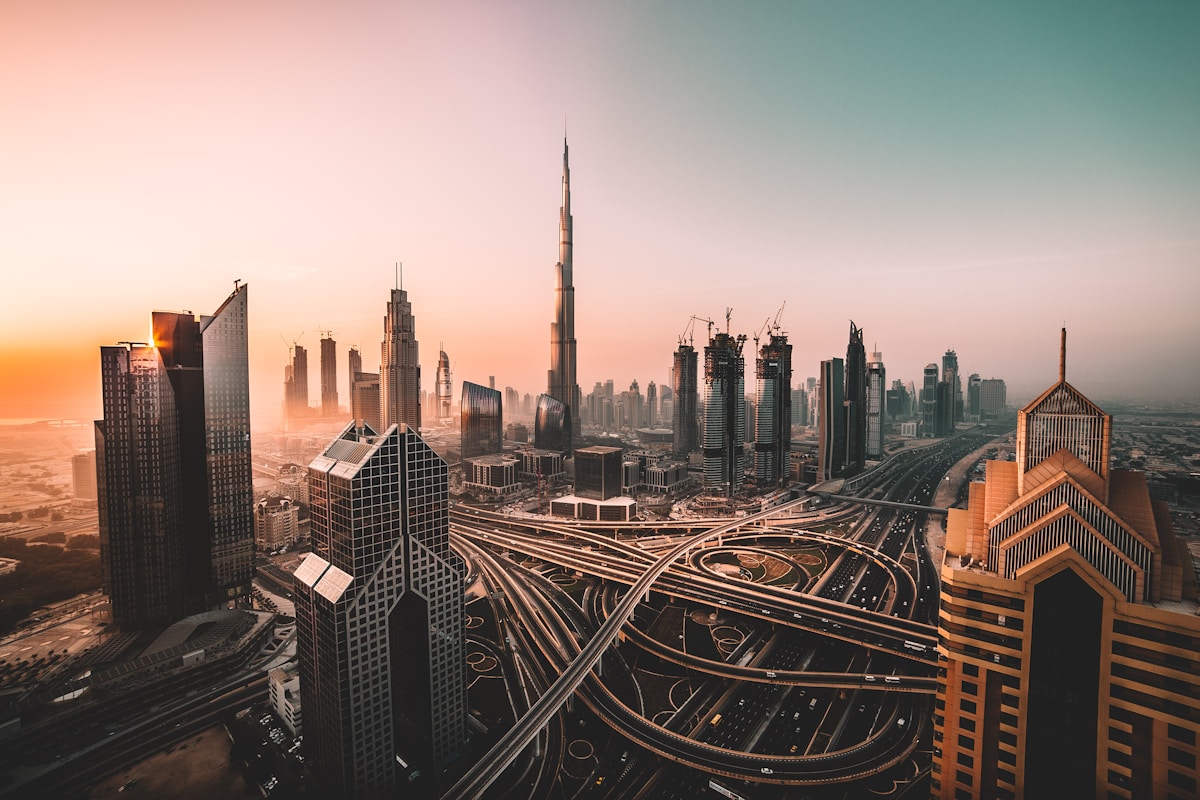
An Iranian drone strike targeted the Dubai International Financial Centre early this morning, shattering the glass facade of multiple buildings and sending shockwaves through the global business community that has made the Emirates its Middle Eastern hub.
Smoke was visible rising near the Burj Khalifa following the confirmed attack, which struck the heart of Dubai's carefully cultivated business district. Videos circulating on social media showed blown-out windows and debris scattered across the DIFC complex, home to hundreds of international banks, investment firms, and multinational corporations.
The strike represents a direct challenge to the UAE's economic model—one built over decades on positioning Dubai as a safe haven for international business in an often volatile region. The attack targeted not just infrastructure, but the fundamental promise the Emirates has sold to global capital: security and stability amid regional turbulence.
"This isn't just about property damage," said one international business consultant based in the DIFC who spoke on condition of anonymity. "This is about whether multinationals can justify keeping operations here when Iranian drones can reach downtown Dubai."
The attack comes amid escalating tensions between Iran and Gulf states, particularly following the UAE's deepening diplomatic and economic ties with Israel through the Abraham Accords. Tehran has long viewed the UAE's hosting of foreign military assets and its regional partnerships as provocative.
No casualties have been officially reported, though UAE authorities have been characteristically tight-lipped about damage assessments. The government issued only a brief statement confirming an "incident" at the DIFC and promising a full investigation.
In the Emirates, as across the Gulf, ambitious visions drive rapid transformation—turning desert into global business hubs. But this morning's strike exposes a vulnerability that no amount of diversification planning anticipated: the Emirates' location in a region where conflicts can arrive by drone before markets even open.

Financial analysts are already questioning the potential impact on Dubai's carefully managed reputation. "The DIFC has been marketed as the London of the Middle East," noted one regional economist. "But London doesn't face drone strikes from neighboring capitals."
The timing could not be worse for the UAE's economic ambitions. Dubai has invested billions in infrastructure—from the recently concluded Expo 2020 to ongoing mega-projects—all designed to cement its position as the region's undisputed business capital. Tourism, real estate, and financial services form the core of the diversification strategy meant to prepare the Emirates for a post-oil future.
Now that strategy faces its most significant test. International companies with regional headquarters in Dubai will be reassessing risk calculations. Insurance premiums for DIFC properties are likely to spike. And expatriate professionals—the workforce that powers Dubai's service economy—are already expressing concern on social media about personal safety.
The broader Gulf Cooperation Council will be watching closely. What happens in Dubai—the region's commercial flagship—affects perceptions of security across the entire Gulf. If international business confidence erodes in the Emirates, neighboring capitals from Riyadh to Doha may struggle to position themselves as alternatives.
Regional diplomacy will likely intensify in coming days. The UAE has historically maintained more pragmatic relations with Iran than Saudi Arabia, despite recent tensions. Whether Abu Dhabi responds with military escalation or renewed diplomatic engagement will signal much about the Gulf's strategic direction.
For now, the message is clear: the UAE's transformation from oil dependency to diversified business hub—impressive as it has been—cannot insulate the Emirates from regional conflicts that increasingly employ precision weapons capable of striking the glass towers that symbolize Gulf modernity.
The drone strike on the DIFC is more than an attack on buildings. It's an attack on the business model that has made Dubai synonymous with Middle Eastern ambition and success.