Iranian authorities have forced the family of a young man killed during anti-government protests to pay for the bullet that killed him, according to human rights activists and family members—a grotesque form of state intimidation that underscores the regime's systematic campaign of collective punishment against dissent.
The family of Javad Rouhi, a 24-year-old protester shot dead by security forces during demonstrations in the northwestern city of Naqadeh in 2022, was recently presented with a bill for the ammunition used to kill their son, along with charges for "damage to state property" related to his participation in protests. The details were first reported by Sky News, citing Iranian human rights organizations and family statements.
"They killed my son, and now they want us to pay for his murder," Rouhi's mother said in an audio message circulated on social media. "This regime has no humanity. They want to destroy us completely."
To understand today's headlines, we must look at yesterday's decisions. The practice of charging families for the execution or killing of political prisoners has historical precedent in authoritarian regimes, most notoriously in China during the 1990s when families of executed prisoners were billed for bullets. Iran has occasionally employed similar tactics, but the Rouhi case appears to mark a systematic expansion of the policy following the 2022-2023 protest wave.
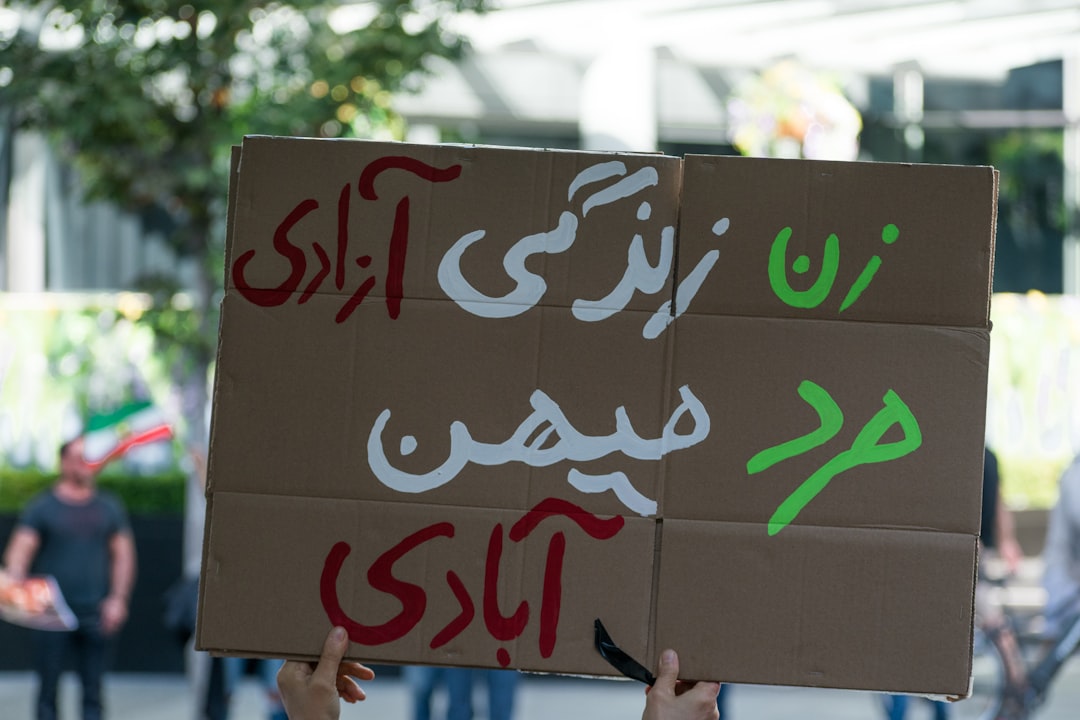
The "Woman, Life, Freedom" protests that swept Iran beginning in September 2022—sparked by the death in custody of Mahsa Amini, a 22-year-old woman arrested for allegedly wearing her hijab improperly—represented the most significant challenge to the Islamic Republic since its founding in 1979. Security forces responded with lethal violence, killing at least 551 protesters according to human rights organizations, though the true toll is likely higher.
Since the protests were suppressed, the regime has pursued a campaign of retribution designed not only to punish participants but to terrorize their families and communities. Tactics have included lengthy prison sentences, torture, forced confessions broadcast on state television, and at least seven executions of individuals convicted in summary trials lacking due process.
The financial demands on victims' families represent an additional layer of cruelty. Several families have reported being presented with bills for "administrative costs" related to their loved ones' detention, prosecution, or killing. In some cases, authorities have refused to release bodies for burial unless families agree to accept the charges and sign statements absolving security forces of responsibility.
"This is collective punishment in its purest form," said Hadi Ghaemi, executive director of the Center for Human Rights in Iran, based in New York. "The regime wants to ensure that every family, every community understands that dissent carries costs not just for individuals but for everyone connected to them. It's designed to break social solidarity."
The practice violates multiple provisions of international human rights law, including prohibitions on arbitrary deprivation of life, collective punishment, and the right to remedy for victims of state violence. Iran is a signatory to the International Covenant on Civil and Political Rights, though it has systematically violated its obligations under the treaty.
Iranian authorities have not publicly acknowledged the policy of charging families for bullets or prosecution costs. State media has not reported on the Rouhi case or similar incidents. However, activists have documented at least a dozen comparable cases in recent months, suggesting a coordinated strategy rather than isolated incidents.
The international community has responded with condemnation but limited practical consequences. The European Union and United States have imposed targeted sanctions on Iranian officials involved in the crackdown, including members of the Islamic Revolutionary Guard Corps and judiciary. However, broader diplomatic and economic leverage remains constrained by competing priorities, including negotiations over Iran's nuclear program.
For the Rouhi family and others like them, the financial demands compound the psychological trauma of losing loved ones to state violence. Many families cannot afford to pay, yet refusing risks further reprisals, including denial of burial rights or additional criminal charges.
"They want us to choose between honoring our son and protecting our surviving children," said one father, speaking anonymously for fear of retaliation. "What kind of choice is that?"
The use of economic punishment as a tool of repression reflects the Islamic Republic's evolution in managing dissent. As international attention has focused on executions and torture, the regime has developed subtler methods of social control—leveraging financial pressure, denial of employment and education, and restrictions on movement to enforce compliance without attracting the scrutiny that mass killings would provoke.
Iranian civil society has responded with acts of quiet resistance. Anonymous donors have created networks to help families pay extortionate charges, and activists have worked to document cases for future accountability efforts, potentially including prosecution before international tribunals.
Whether such accountability will ever materialize remains uncertain. For now, families like the Rouhis are left to navigate a system designed to punish them twice: first through violence, then through the bureaucratic cruelty of demanding they pay for their own suffering. It is a testament to authoritarianism's capacity for innovation in repression—and a reminder that even when protests fade from headlines, the regime's vengeance continues.