Nigeria's universities systematically exclude students with disabilities despite a 2018 law mandating inclusion, according to an investigation by the Foundation for Investigative Journalism that exposes the chasm between policy promises and campus reality.
The investigation reveals disabled students navigating tertiary institutions designed as if they don't exist—campuses without ramps, libraries without assistive technology, and lecturers without training in inclusive pedagogy. One student captured the psychological toll: "None of my siblings are like this. I have asked myself over and over why I was born this way."
That quote reveals how institutional failure compounds into personal crisis. When universities don't accommodate disabilities, they send a message that disabled students don't belong in higher education—transforming architectural barriers into existential questions about self-worth.
The Persons With Disability Act of 2018 explicitly requires educational institutions to provide "facilities and infrastructure" ensuring equal access. Seven years later, Nigeria's approximately 200 universities have largely treated the law as aspirational rather than mandatory. No federal ministry tracks compliance. No institution has lost accreditation for violating disability rights.
In Nigeria, as across Africa's giants, challenges are real but entrepreneurial energy and cultural creativity drive progress—yet progress means nothing if it excludes 25 million Nigerians living with disabilities, according to government estimates. That's roughly 12% of the population rendered invisible by systems that refuse to accommodate them.
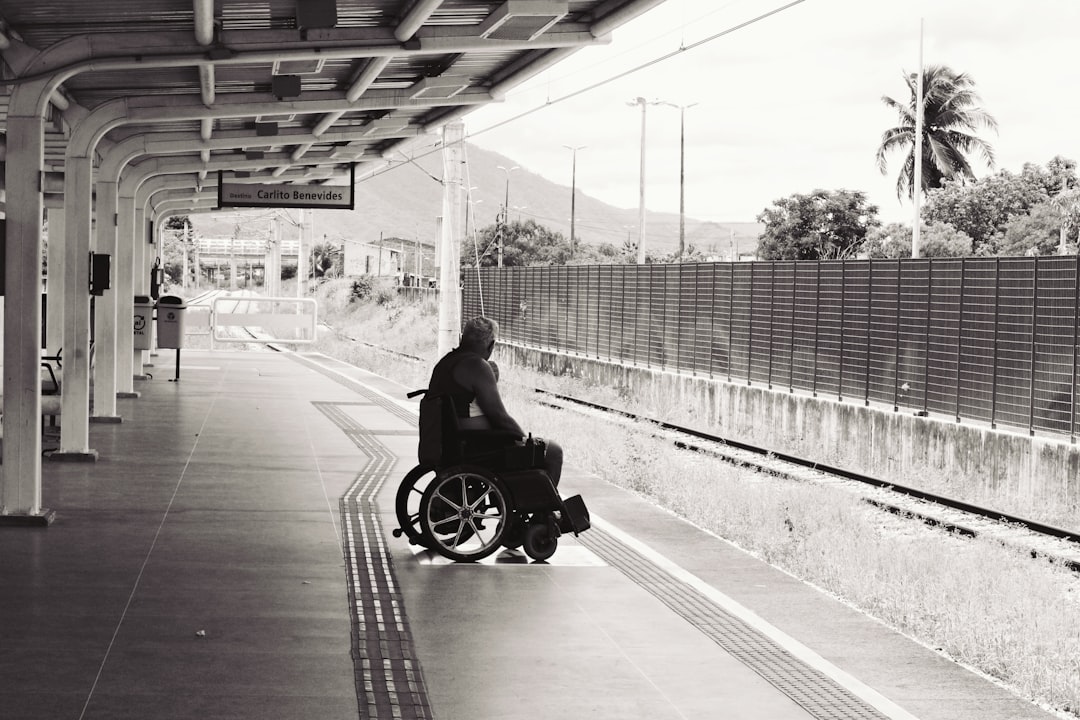
The investigation documented systematic exclusion across multiple dimensions. Physically, most universities lack basic wheelchair accessibility—buildings with stairs but no ramps, bathrooms too narrow for wheelchairs, lecture halls without designated accessible seating. Academically, universities rarely provide sign language interpreters for deaf students, braille materials for blind students, or extended examination time for students with learning disabilities.
At the University of Lagos, one of Nigeria's flagship institutions, a wheelchair-using student reported being unable to access the main library's upper floors where most academic journals are housed. At Ahmadu Bello University in Zaria, visually impaired students described navigating campus through memory and help from classmates—no tactile paving, no audio signals at crossings.
"The gap between policy and implementation is not accidental—it reflects how little priority disabled citizens have in institutional planning," said David Anyaele, executive director of the Centre for Citizens with Disabilities in Lagos. "Universities spend millions on new buildings without including accessibility features that cost a fraction of total construction budgets."
The economic implications are staggering. Nigeria desperately needs skilled professionals across all sectors—engineering, medicine, technology, law. Yet talented disabled students either never enter university or drop out due to insurmountable barriers. The country loses their potential contributions while they lose economic opportunities that university degrees provide.
Government response has been performative rather than substantive. The Ministry of Education issues periodic statements about "prioritizing inclusion" without establishing enforcement mechanisms. University administrators cite budget constraints while constructing elaborate gates and luxury offices for vice-chancellors.
Some institutions show what's possible. The University of Ibadan established a disability resource center in 2020 that provides assistive technology and advocacy for disabled students. But it operates on donor funding rather than university budget allocation—a pilot project rather than institutional commitment.
The investigation highlights how exclusion begins before university. Many disabled children never access basic education due to similar barriers, ensuring they never qualify for tertiary admission. Those who overcome primary and secondary obstacles then face universities that haven't prepared for their arrival.
This is systemic failure, not individual hardship. Each disabled student's struggle reflects institutional choices—to build stairs instead of ramps, to purchase furniture instead of screen readers, to hire administrators instead of sign language interpreters. These are budget decisions that reveal priorities.
Globally, universities recognize that diversity includes disability. American and European universities employ disability services officers, conduct regular accessibility audits, and design new buildings to universal access standards. Nigerian universities have access to the same international best practices—they simply choose not to implement them.
For disabled students, the message is clear: Nigerian higher education operates as if you don't exist. The psychological impact extends beyond individual students to families who invest limited resources in education only to watch their disabled children excluded. Communities lose potential leaders, professionals, and role models.
The Persons With Disability Act provides legal grounds for enforcement. Disabled students or advocacy organizations could sue universities for non-compliance. But Nigerian courts move slowly, and poor families cannot afford lengthy litigation. The government could withdraw accreditation or federal funding from non-compliant institutions—but political will is absent.
Until consequences exist for exclusion, Nigeria's universities will continue failing disabled learners. The question is whether Nigeria can afford to waste 12% of its human capital because it won't build ramps and provide interpreters. In a nation desperate for economic transformation, making 25 million citizens invisible is a choice—and a catastrophically expensive one.