
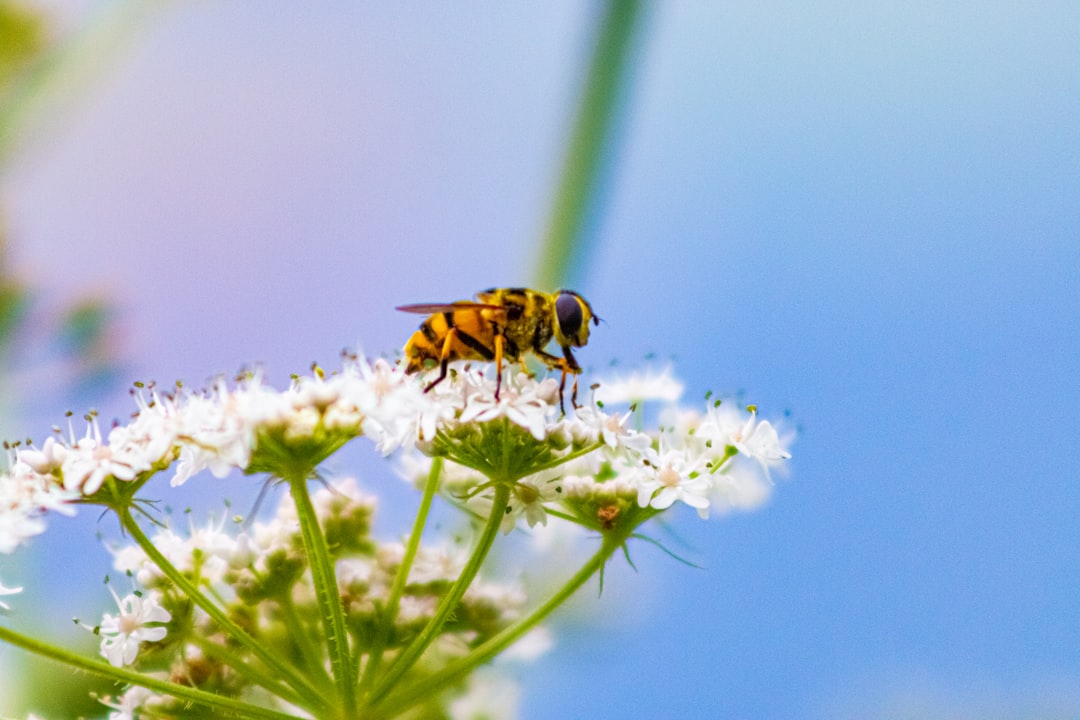
The insect apocalypse has crossed from ecological crisis to public health emergency, with researchers establishing the first direct causal link between pollinator decline and human malnutrition in vulnerable communities.
A groundbreaking study published this week quantified how collapsing insect populations translate into food insecurity, surveying ten farming villages in Nepal where pollinator abundance directly determines crop yields and nutritional outcomes.
The research marks a watershed moment in understanding biodiversity loss—transforming abstract warnings about insect decline into measurable human consequences. In climate policy, as across environmental challenges, urgency must meet solutions—science demands action, but despair achieves nothing.
Farmers in the studied regions depend heavily on pollinator-dependent crops including fruits, vegetables, and nuts that provide essential micronutrients. As bee populations and other pollinators have declined by 25-50% in some agricultural areas over the past two decades, yields of these nutrient-dense foods have collapsed correspondingly.
The result: communities facing severe micronutrient deficiencies, particularly in vitamin A, folate, and iron—nutrients critical for child development and maternal health. What distinguishes this study is its direct measurement of the causal pathway from insect abundance to crop production to nutritional status, rather than inferring connections.
The crisis disproportionately affects South Asia, Sub-Saharan Africa, and parts of Latin America—regions where smallholder farmers lack access to alternative food sources or irrigation systems that might compensate for pollination failures. These are precisely the populations least responsible for the pesticide use, habitat destruction, and climate disruption driving insect collapse.
Global insect biomass has declined by an estimated 2.5% annually over the past three decades, with pollinator species showing particularly steep drops. The crisis stems from industrial agriculture's reliance on neonicotinoid pesticides, monoculture farming that eliminates wildflower habitat, and climate-driven phenological mismatches between flowering plants and pollinator lifecycles.
Yet the study's authors emphasize that solutions exist and work quickly. Habitat restoration programs in Europe and North America have demonstrated that wild bee populations can recover within 3-5 years when flowering meadows are restored near agricultural land. The costs are modest—typically under $200 per hectare for native wildflower establishment.
Integrated pest management approaches that reduce neonicotinoid use while maintaining agricultural productivity have proven effective across multiple crop systems. France and several other EU nations banned certain neonicotinoids in 2018, with subsequent studies showing pollinator population stabilization without significant yield losses when farmers adopted alternative pest control strategies.
The UN Food and Agriculture Organization has called for pollinator-friendly agricultural subsidies that reward farmers for maintaining habitat corridors and reducing pesticide application. Such programs already operate successfully in Switzerland, where payments for ecological services have increased farmland bee diversity by 40% since 2010.
Climate justice advocates emphasize that wealthy nations must fund pollinator restoration in vulnerable regions experiencing malnutrition impacts. The Global Environment Facility has proposed a $500 million pollinator protection fund, though current commitments fall far short of that target.
For subsistence farming communities in Nepal and similar regions, the immediate need involves technical assistance and seed access for establishing pollinator habitat alongside crops. Research demonstrates that even small wildflower strips—occupying just 2-5% of farmland—can increase pollinator abundance sufficiently to restore crop yields.
The study arrives as policymakers prepare for the next Convention on Biological Diversity meeting, where insect protection frameworks will face debate. Previous biodiversity agreements have lacked enforcement mechanisms and adequate financing, contributing to continued decline despite rhetorical commitments.
Some agricultural economists argue that technological substitutes—including hand pollination or managed honeybee deployment—could address crop production gaps. But researchers counter that such approaches remain economically unfeasible for smallholder farmers and fail to address the broader ecosystem collapse that insect decline represents.
The malnutrition crisis underscores how environmental degradation and human health form inseparable systems. Insects pollinate 75% of global crop species and 35% of crop production by volume. Their collapse reverberates through food systems, hitting hardest those with least dietary diversity and economic resilience.
But the study also demonstrates that solutions need not be complex or expensive. Native habitat restoration, pesticide reduction, and agroecological farming practices can reverse insect decline while improving food security—if political will and financing align with scientific evidence.
Urgency must meet solutions. The insect apocalypse has become a malnutrition crisis, but the tools to address both exist and await deployment.