
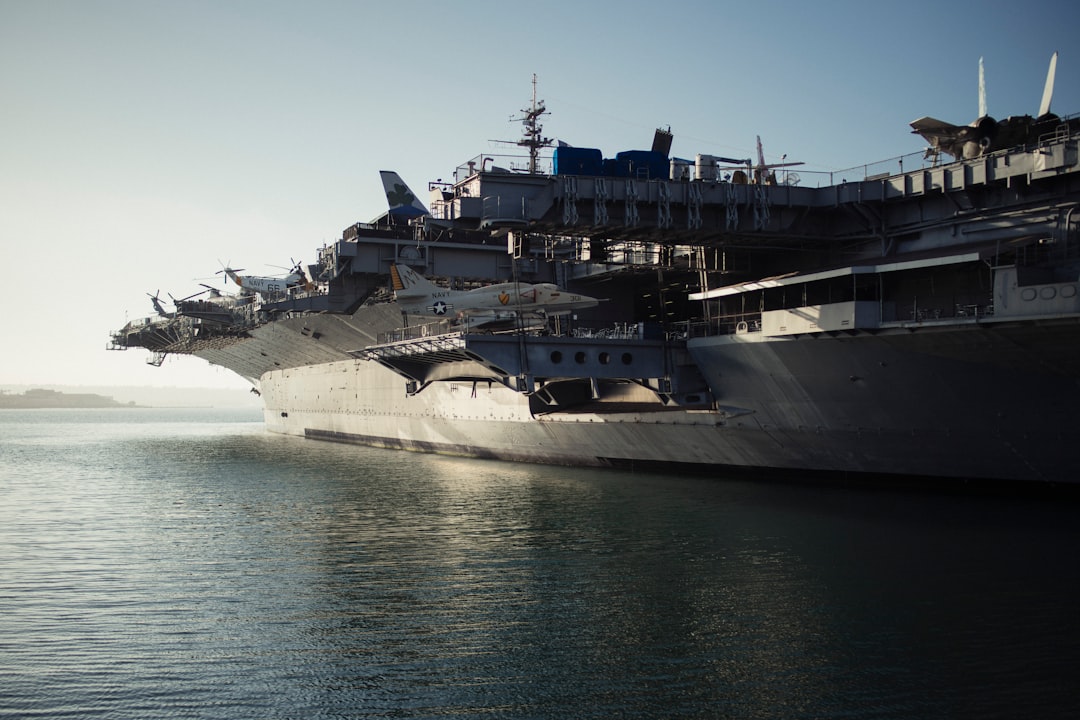
Italy's Ministry of Defense approved the donation of the aircraft carrier Giuseppe Garibaldi to Indonesia this week, providing the Southeast Asian nation with a symbolic but aging platform as regional navies pursue capabilities extending far beyond coastal defense.
The Giuseppe Garibaldi, commissioned in 1985, served as Italy's flagship until the newer carrier Cavour entered service in 2009. The 14,000-ton vessel can operate helicopters and short-takeoff aircraft, though its operational utility for Indonesia remains unclear given the country's limited carrier-capable aircraft inventory.
Italy will transfer the ship as a donation rather than a sale, sparing Indonesia acquisition costs but leaving Jakarta to cover refitting, maintenance, and operational expenses that could run into hundreds of millions of dollars over the vessel's remaining service life.
The transfer reflects Europe's growing engagement with Southeast Asian defense sectors as regional nations modernize their militaries amid South China Sea tensions and broader maritime security concerns. France sold Rafale fighters to Indonesia in 2022. Germany supplies submarines to Singapore. the UK negotiates naval cooperation with the Philippines and Malaysia.
For Indonesia, the carrier acquisition fits an erratic naval expansion pattern. The Indonesian Navy operates a diverse, often incompatible fleet assembled from Russian, Dutch, South Korean, and Chinese suppliers. Maintenance and logistics remain chronic challenges, with significant portions of the fleet frequently non-operational due to spare parts shortages or budget constraints.
The Giuseppe Garibaldi will likely serve primarily as a helicopter platform rather than a true fixed-wing carrier. Indonesia lacks carrier-capable fighter aircraft and has shown no indication it plans to acquire them. The vessel could embark helicopters for anti-submarine warfare, search and rescue, or disaster response missions—roles where Indonesia's vast archipelago creates genuine operational requirements.
But whether Indonesia can sustain another high-maintenance capital ship remains questionable. The navy already struggles to keep its existing fleet operational. Adding a 40-year-old European carrier with specialized maintenance requirements and limited regional support infrastructure could strain budgets further.
The broader pattern across Southeast Asia shows accelerating naval investments. Vietnam operates Kilo-class submarines from Russia. Singapore commissioned advanced stealth frigates and submarines exceeding what pure defense requires. Thailand ordered a Chinese aircraft carrier, though the project faces delays. the Philippines acquired modern frigates from South Korea.
Those acquisitions reflect South China Sea tensions, where China's expanding presence has prompted ASEAN nations to enhance maritime capabilities. Indonesia does not claim South China Sea features but disputes China's nine-dash line as it overlaps Indonesia's exclusive economic zone around the Natuna Islands. Chinese coast guard and fishing vessels regularly operate in waters Indonesia considers its sovereign territory.
A helicopter carrier could theoretically extend Indonesia's maritime domain awareness and response capabilities in those contested waters. The vessel could serve as a mobile command platform, coordinate patrol aircraft and surface vessels, and project Indonesian presence in disputed areas without the escalatory implications of combat aircraft.
But operational realities temper such scenarios. The Giuseppe Garibaldi requires substantial crew training. Indonesia has no experience operating carriers. The vessel's age means maintenance issues will arise frequently. Fuel costs alone for a ship that size could strain operational budgets.
European defense engagement in Southeast Asia also carries geopolitical overtones. Italy, France, Germany, and the UK frame their regional presence as supporting a "free and open Indo-Pacific" and countering authoritarian expansion—language that aligns with U.S. framing of the region's strategic competition.
For ASEAN nations, European suppliers offer alternatives to dependence on U.S. or Chinese equipment. Diversifying defense suppliers allows countries like Indonesia to avoid choosing sides in U.S.-China competition while still enhancing capabilities. European equipment often comes with fewer geopolitical strings than U.S. or Chinese alternatives, though at typically higher prices.
The Giuseppe Garibaldi transfer timeline remains unclear. The Italian defense ministry's approval document, circulated on Indonesian defense forums, indicates the donation is approved but does not specify handover dates or conditions. Refitting the vessel for Indonesian service could take months or years depending on the scope of modifications required.
Indonesia's navy publicly frames the acquisition as enhancing disaster response and humanitarian assistance capabilities rather than military power projection. That messaging aligns with Indonesia's foreign policy tradition of non-alignment and ASEAN centrality, avoiding language that could provoke China or suggest closer Western security alignment.
Ten countries, 700 million people, one region—and Indonesia acquiring a European aircraft carrier it may struggle to operate, in a naval arms race no one admits is happening.