
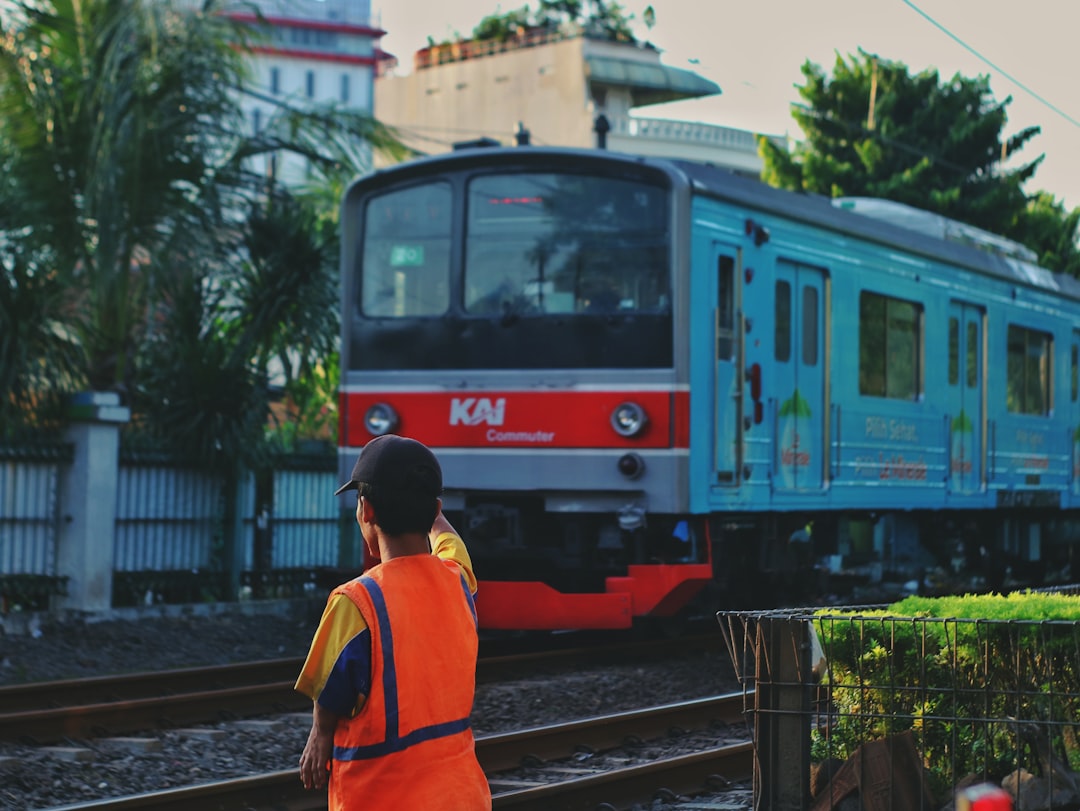
Indonesia's government has announced an ambitious Rp1,200 trillion ($86 billion) plan to add 14,000 kilometers of railway lines across the archipelago, an infrastructure vision that collides immediately with fiscal constraints and raises questions about financing models and debt sustainability.
The plan, outlined by Transportation Minister Agus Harimurti Yudhoyono, includes both new construction and reactivation of colonial-era lines that have fallen into disuse across Java, Sumatra, Kalimantan, and Sulawesi. If completed, it would more than triple Indonesia's current railway network of approximately 6,000 kilometers.
Infrastructure Ambition vs. Fiscal Reality
The announcement exemplifies the tension between Indonesia's infrastructure needs and its fiscal capacity. As Southeast Asia's largest economy and fourth most populous nation, Indonesia requires massive transportation investment to connect its 17,000 islands and support economic development beyond Java.
Yet $86 billion represents roughly 6.5 percent of Indonesia's GDP and exceeds the government's entire annual budget for infrastructure across all sectors. The plan's sheer scale immediately raises questions about whether this represents a genuine roadmap or an aspirational vision divorced from fiscal constraints.
The Financing Question
Yudhoyono, son of former President Susilo Bambang Yudhoyono and known by his initials AHY, indicated the government would pursue mixed financing including state budget allocations, state-owned enterprise investment, and public-private partnerships. Notably absent from initial announcements: specific financing commitments or timelines.
The most likely source of large-scale railway financing remains China, which has already provided most funding for the Jakarta-Bandung high-speed rail and has expressed interest in additional Indonesian infrastructure projects. Yet Indonesia's experience with Chinese lending on the high-speed rail—cost overruns, deadline delays, and questions about long-term debt burden—suggests caution about expanding this model.
President Prabowo Subianto's administration faces debt constraints inherited from predecessor Joko Widodo's infrastructure push. Total government debt stands at approximately 39 percent of GDP, below the 60 percent legal limit but rising. International creditors and rating agencies scrutinize fiscal discipline as Indonesia seeks to maintain investment-grade status.
Regional Competition Context
The railway expansion plan arrives as Southeast Asian nations compete for manufacturing investment relocating from China. Vietnam has won electronics assembly facilities. Thailand focuses on electric vehicle production. Malaysia attracts semiconductor investment. Indonesia's pitch emphasizes its large domestic market and resource endowments, but investors consistently cite infrastructure gaps as a constraint.
Railway expansion, particularly on Sumatra and Kalimantan, could unlock resources including coal, palm oil, and nickel that currently face high logistics costs. The economic logic is sound: better connectivity reduces costs and enables development. The challenge is financing construction on a timeline that captures investment opportunities rather than arriving after supply chains have already consolidated elsewhere.
The Reactivation Component
Part of the 14,000-kilometer plan involves reactivating lines built during Dutch colonial rule but abandoned in recent decades as road transport dominated. Sumatra once had an extensive railway network connecting plantation regions; much of it now sits overgrown.
Reactivation is theoretically cheaper than new construction—rights-of-way exist, some infrastructure remains—but decades of neglect mean substantial investment is still required. Whether this portion of the plan proves more fiscally feasible than greenfield construction remains unclear.
Achievable or Fantasy?
Transport economists note that China at the peak of its railway expansion added roughly 3,000-4,000 kilometers annually with vastly greater fiscal resources. India, despite decades of railway investment, expands its network by 1,000-2,000 kilometers per year. Indonesia's plan to add 14,000 kilometers without a specified timeline or confirmed financing raises skepticism about implementation.
Yet even if the plan proves over-ambitious, it signals priorities for Prabowo's administration and may attract financing for portions of the network. Ten countries, 700 million people, one region—and for now, one country betting that infrastructure vision, even if unrealized in full, can position it ahead in the regional competition for investment and development.