In a rare display of successful pressure against Viktor Orbán's government, Hungarian truckers secured a dramatic reversal of planned toll increases after organizing protests that threatened to paralyze the country's highways ahead of elections.
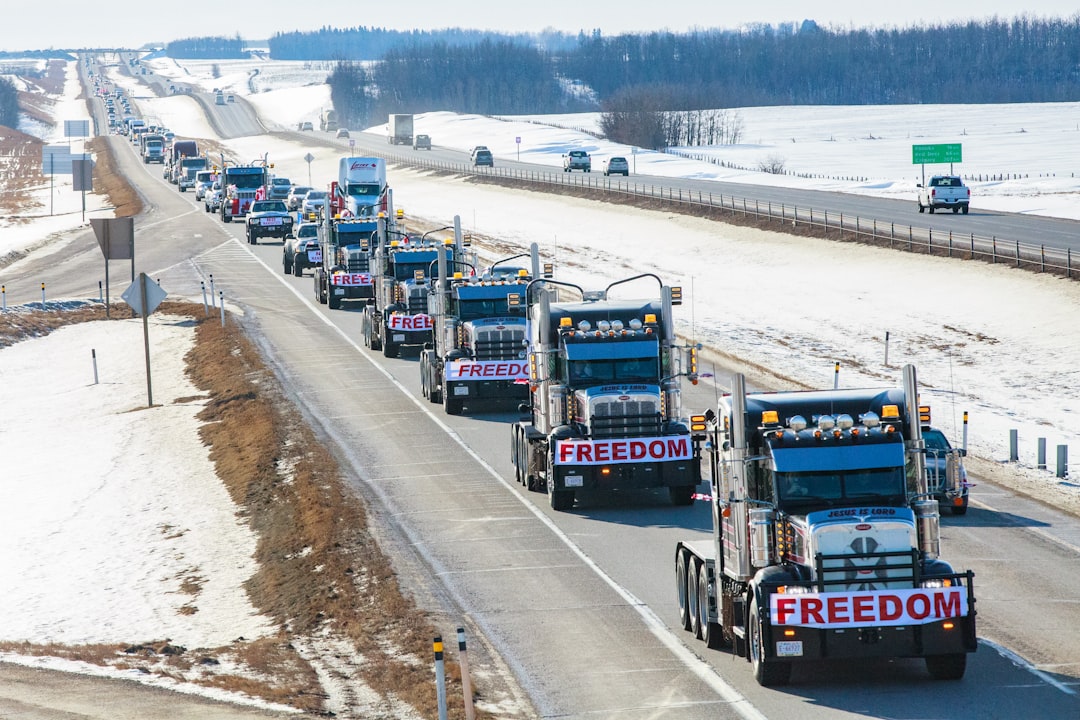
Transport Minister János Lázár announced the government would limit road toll increases to 4.5 percent—matching inflation—after initially proposing a 54 percent hike that would have devastated Hungary's transport sector. The reversal, announced quietly in the official gazette, came as hundreds of trucks organized into convoys to demonstrate their opposition.
"The government tried to negotiate after seeing our determination," said protest organizer István Fazekas in a video message to supporters. "Lázár attempted to compromise at 35 percent, but we held firm. This shows that organized, decisive action can achieve results even against this government."
Opposition MP Ákos Hadházy emphasized the broader implications beyond the transport sector. "This contradicts the narrative that the Fidesz government is politically invulnerable," he wrote on social media. "It wasn't the trucks that mattered—it was the determination and resolve. Others can learn from this."
The proposed toll increase would have come atop existing pressures on Hungary's transport industry, which faces rising fuel costs, driver shortages, and intense competition from Western European carriers. Industry representatives warned the 54 percent hike would have forced many small operators out of business, particularly family-owned firms that form the backbone of Hungary's logistics sector.
The government's capitulation reveals electoral sensitivities as Hungary approaches parliamentary elections. While Fidesz maintains a strong position in polls, economic discontent has created openings for opposition forces. The transport sector employs tens of thousands of Hungarians and represents a constituency the government cannot afford to alienate.
Government officials justified the original toll increase as necessary to fund road maintenance and infrastructure improvements, pointing to Hungary's extensive highway network that requires substantial upkeep. The reduced increase will force the government to find alternative revenue sources or scale back planned investments.
In Hungary, as across the region, national sovereignty and European integration exist in constant tension. The trucking industry, which operates across EU borders daily, represents both Hungary's integration into European supply chains and domestic economic interests that the government must balance.
Industry analysts note that even the 4.5 percent inflation-linked increase maintains real-terms costs rather than providing relief. Hungarian truckers still face competitive disadvantages compared to carriers from countries with lower operating costs and better infrastructure. However, avoiding the 54 percent shock allows businesses to continue operations without immediate crisis.
The successful protest demonstrates that organized economic interests can still influence government policy, even in Hungary's centralized political system. Whether this example encourages broader civic action ahead of elections remains uncertain, but it establishes a precedent that determined opposition can achieve concrete results.
For the Orbán government, the reversal represents a rare public retreat from announced policy. While the government frames the reduced increase as responsive listening to stakeholder concerns, critics see electoral calculation driving the decision. The incident reveals limits to the government's room for maneuver when facing coordinated economic resistance from essential sectors.