

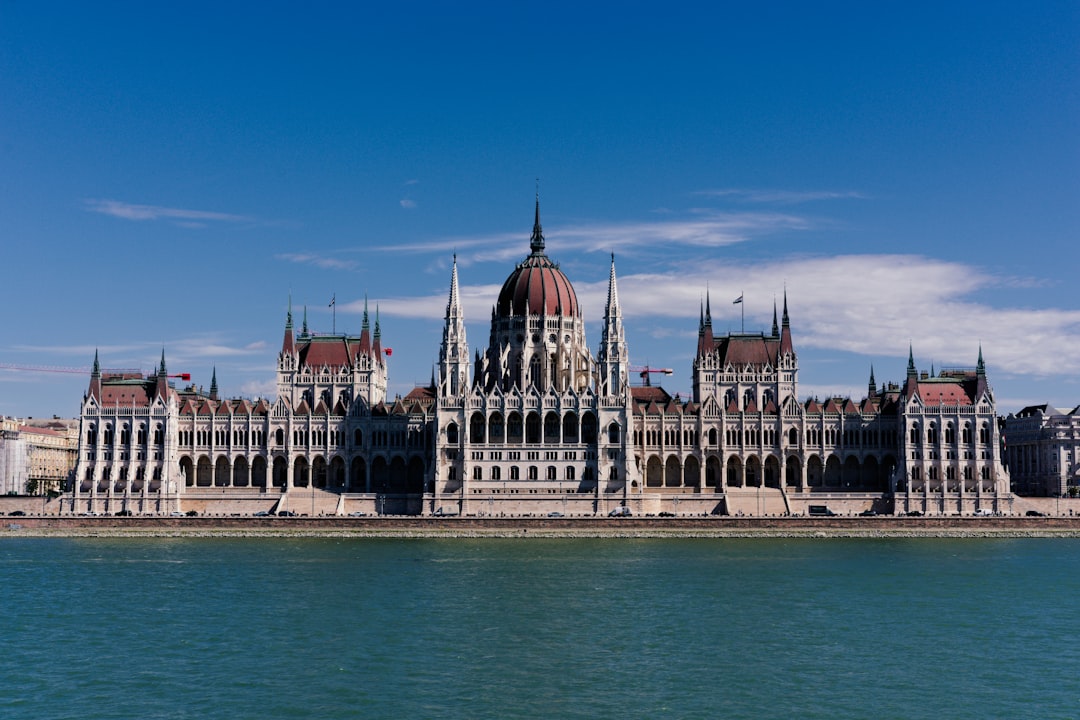
Peter Magyar, leader of Hungary's center-right TISZA party, has publicly alleged that Russian military intelligence operatives are stationed in Budapest to influence the country's pivotal April 12 parliamentary elections—an extraordinary claim that underscores the geopolitical stakes in a contest that could reshape Central Europe's political landscape.
At a campaign rally in the southern city of Pécs that drew approximately 10,000 supporters, Magyar delivered a pointed message to the crowd: "Viktor Orbán is the new János Kádár," drawing a deliberate parallel to the Soviet-backed communist leader who ruled Hungary for over three decades following the crushed 1956 uprising against Soviet occupation.
"Agents of Russia's military intelligence service, the GRU, are stationed in Budapest under diplomatic cover to influence the elections," Magyar told the assembled crowd, according to Polish broadcaster TVP World. He led supporters in chants of "Russians go home!" and warned that the campaign ahead would be "unprecedentedly brutal."
In Russia, as in much of the former Soviet space, understanding requires reading between the lines. Magyar's allegations—made without presenting specific evidence—arrive at a moment when his TISZA party leads Prime Minister Viktor Orbán's ruling Fidesz party in independent polling, representing the most serious electoral challenge to Orbán since he returned to power in 2010.
Orbán has maintained notably Kremlin-friendly policies throughout his tenure, repeatedly criticizing European Union sanctions on Russia while opposing European military aid to Ukraine. Hungary has emerged as Moscow's most reliable voice within both the EU and NATO, creating tensions with Western allies and neighboring countries supporting Kyiv.
The prime minister's government has characterized such criticism as interference in Hungarian sovereignty, while Magyar positions himself as returning Hungary to its Western orientation after what he describes as years of authoritarian drift and Russian influence.
Magyar's invocation of János Kádár carries particular historical weight in Hungary. Kádár led the country from 1956 until 1988, installed by Soviet forces after crushing the Hungarian Revolution. While his later years saw modest economic liberalization—the so-called —his rule began with repression and remained fundamentally subordinate to Moscow.
/file/attachments/2991/P1Estellehantaviruscover_411095.jpg)


