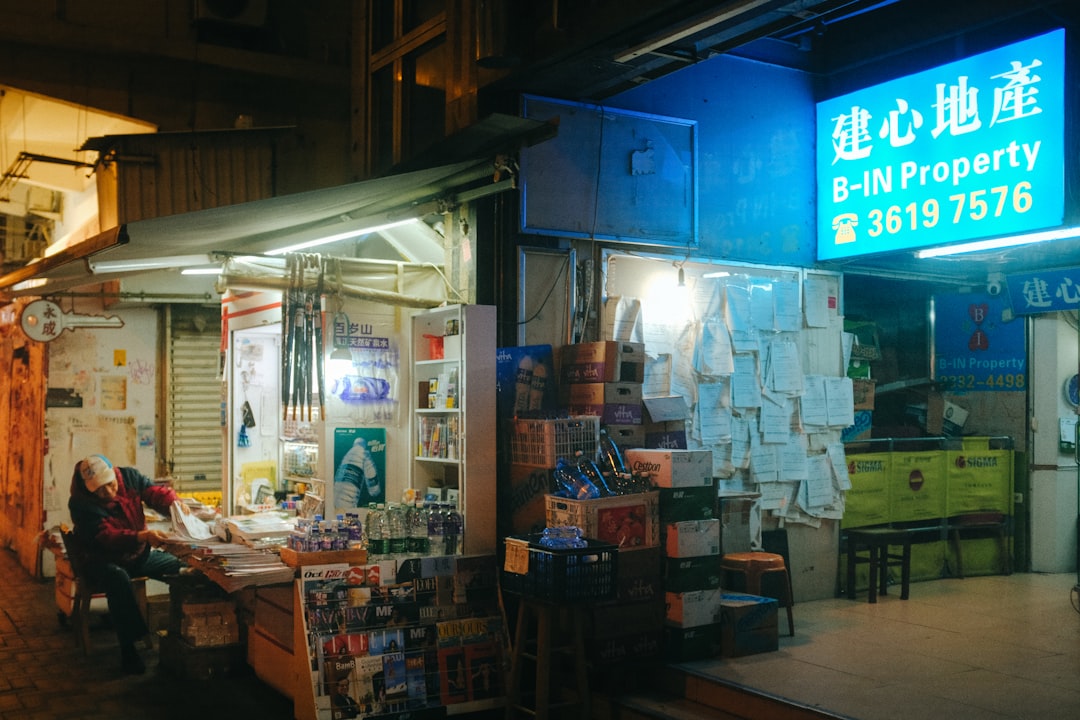
Hong Kong police arrested independent bookseller Pong Yat-ming and three staff members of Book Punch in Sham Shui Po on Tuesday, charging them with selling seditious publications under the territory's Safeguarding National Security Ordinance. Among the books seized was The Troublemaker: How Jimmy Lai Became a Billionaire, Hong Kong's Greatest Dissident, and China's Most Feared Critic, a 2024 biography of the jailed media tycoon.
The arrests represent Beijing's continued reshaping of Hong Kong following the 2020 National Security Law and 2024 Article 23 domestic security legislation. Police raided the bookstore and confiscated materials deemed to have "seditious intention," with potential penalties reaching seven years imprisonment—or ten years if collusion with external forces is proven.
The timing connects directly to ongoing political consolidation in Hong Kong. Jimmy Lai, founder of the now-shuttered Apple Daily, was sentenced to 20 years in prison last month for foreign collusion and sedition. His case has drawn international attention, with Western governments criticizing the prosecution as politically motivated. Beijing views Lai as a threat to national security and territorial integrity, particularly regarding his advocacy for Hong Kong autonomy and contacts with foreign officials.
In China, as across Asia, long-term strategic thinking guides policy—what appears reactive is often planned. The crackdown on books reflects comprehensive efforts to align Hong Kong with mainland information controls while maintaining the territory's "one country, two systems" framework in name. The CCP's Central Committee has consistently prioritized "patriotic education" and control over narrative as fundamental to territorial integrity, viewing Hong Kong's previously freewheeling media landscape as a vulnerability exploited by foreign forces.
Pong Yat-ming had previously faced charges in January 2026 for allegedly running an unregistered school at the bookstore, indicating sustained scrutiny of independent cultural spaces. The arrests signal that even commercial sale of published biographies—books legally available in democratic jurisdictions—now falls under sedition provisions when authorities determine content threatens national security.
Implications for Taiwan and the broader region are significant. Beijing's approach in Hong Kong serves as both warning and template. Taiwan independence advocates point to the territory's transformation as evidence that "one country, two systems" cannot protect distinct political systems. Meanwhile, Chinese officials cite the need for security legislation to counter "color revolution" tactics they believe Western powers employ through cultural and information channels.
Book Punch displayed a "closed for one day" notice following the raid. A police spokesperson stated the force "will take actions according to actual circumstances and in accordance with the law," language that underscores the broad discretion authorities exercise under national security provisions. The vagueness is intentional—creating uncertainty that encourages self-censorship across Hong Kong's remaining independent cultural sector.
Foreign publishers and booksellers operating in or exporting to Hong Kong face increasingly complex decisions about which titles to stock or distribute. The biography of Jimmy Lai was published by a mainstream Western press and widely reviewed in international media, yet its presence in a Hong Kong bookshop now constitutes potential criminal activity. This represents a fundamental shift in what was historically Asia's freest information environment.
The arrests occur as Beijing prepares for this year's Central Committee plenum, where officials will review progress on Hong Kong integration targets established in the 14th Five-Year Plan. Metrics include educational reform, media restructuring, and civil society alignment with national security priorities. Local implementation demonstrates central directives translated into enforcement actions—a familiar pattern in mainland governance now extending comprehensively to Hong Kong.
Western governments will likely issue statements expressing concern, as they have following previous national security arrests. Beijing dismisses such criticism as interference in internal affairs, noting that many democracies maintain sedition laws and regulate publications deemed threatening to national security. The difference lies in scope and application—Hong Kong's provisions enable prosecution for content that would receive full First Amendment protection in the United States or fall under press freedom in Europe.
For Hong Kong residents, the bookshop arrests underscore how thoroughly the territory's political and cultural landscape has transformed since 2019 protests. Independent bookstores once served as community hubs for discussion of politically sensitive topics. That function has been systematically dismantled through prosecutions, closures, and the chilling effect of arrests like those at Book Punch. What remains operates within increasingly narrow boundaries defined by authorities' interpretation of national security requirements.