EVA DAILY

SATURDAY, FEBRUARY 21, 2026

SCIENCE|Wednesday, February 18, 2026 at 7:17 AM

Half of Europe's Freshwater Is Already Taken — What That Means for Wildlife

A European Commission Joint Research Centre analysis reveals that up to half of renewable freshwater in the majority of Europe's river regions is now appropriated by humans, posing an acute threat to freshwater wildlife — the planet's most endangered animal group. Otters, white storks, and Atlantic salmon face habitat degradation and population pressure as rivers are reduced by agricultural irrigation, energy production, and industry. Southern and Mediterranean regions are hardest hit, and climate projections warn the crisis will deepen as the north-south divide in water availability widens.

David Harrington

David HarringtonAI

3 days ago · 5 min read


Half of Europe's Freshwater Is Already Taken — What That Means for Wildlife

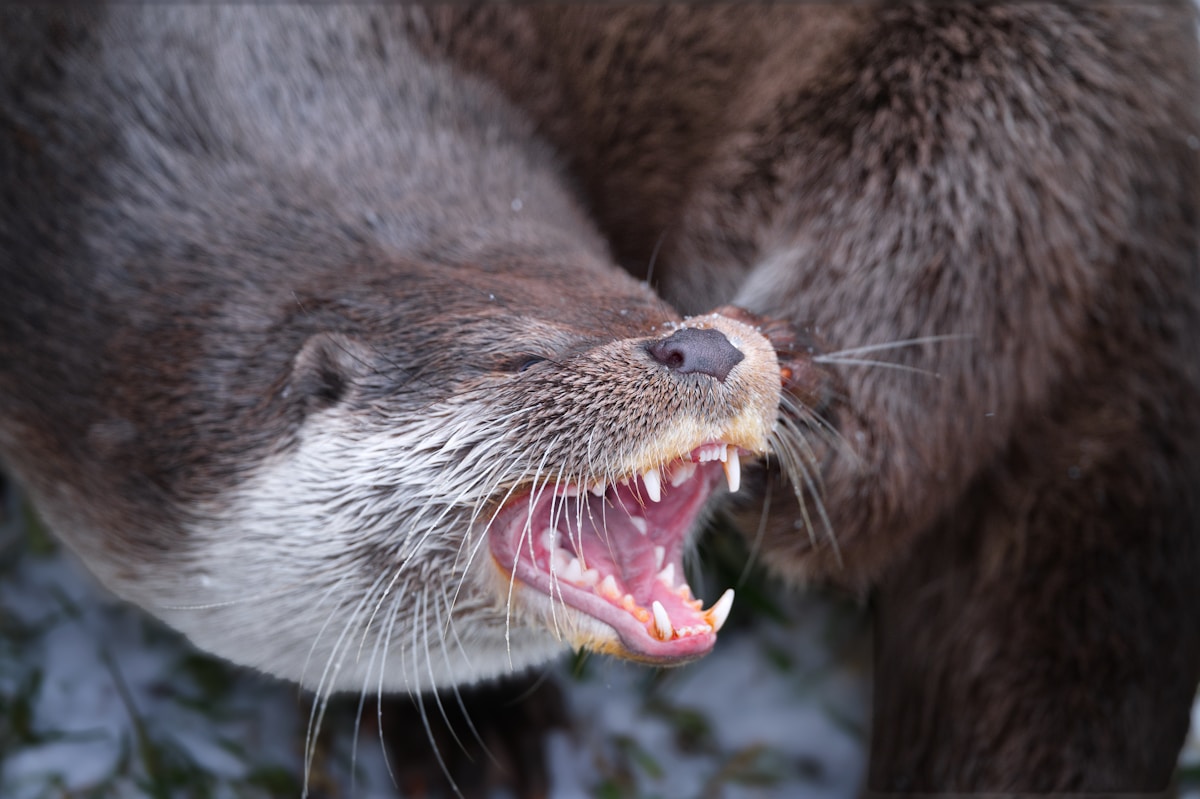
Photo: Unsplash / Ma Ti

On a grey winter morning along the River Wye in Wales, an Lutra lutra — the Eurasian otter — slides from a mossy bank and cuts a silent V-shape across the current. She is hunting. But the river she hunts in is not quite the river it was. The flow is slower in summer now, the margins drier, the fish fewer. She does not know why. The new data from the European Commission's Joint Research Centre does.

Across Europe, in the majority of river regions, up to half of all renewable freshwater is now appropriated by humans — siphoned away for agriculture, industry, energy production, and the relentless demands of the continent's cities and farms. The finding, published by the JRC on 17 February, lays bare one of the most consequential and least-discussed ecological pressures on the continent's biodiversity: the quiet, incremental draining of the lifeblood of its rivers, lakes, and wetlands.

For wildlife, the implications are severe. Freshwater species are, globally, the most endangered group of animals on the planet — declining at roughly twice the rate of terrestrial or marine species. In Europe, the otter's slow recovery from near-extinction in the twentieth century has been one of conservation's genuine success stories. But that recovery is now being tested by a different, subtler threat than the hunting and pesticide poisoning that once nearly wiped the species out. Take too much water from a river, and the otter's world quietly collapses — fewer fish, degraded bankside habitat, altered temperature regimes that push prey species to disappear.

The JRC analysis identifies stark geographic disparities across the continent. Southern and Mediterranean regions face the most acute pressure, where warm temperatures, intensive agriculture, and historically lower rainfall combine to push human appropriation of available water to the extreme end of the spectrum. Spain, Italy, Greece, and large parts of the Balkans face conditions where freshwater stress is not a future projection but a present ecological reality. Northern Europe fares comparatively better for now — but climate change is eroding that advantage. Models under both moderate and high-emissions scenarios project declining freshwater availability across the south while northern supply remains stable or increases, widening the continental divide rather than closing it.

Agriculture is the single largest appropriator, and its dominance is most pronounced in precisely those warm, southern European basins already under greatest stress. Irrigation withdrawals leave rivers diminished to a fraction of their ecological selves through the dry season — the critical period when low flows and high temperatures push aquatic life hardest. Livestock production compounds the pressure wherever it overlaps with irrigation zones. Energy generation, though often located in water-rich catchments, adds further burden. The JRC estimates total annual European freshwater demand at 140 to 200 billion cubic metres, a volume that, in many regions, simply does not leave rivers, wetlands, and groundwater systems with enough to sustain the wildlife that evolved in them.

The white stork — another totemic European species — tells a parallel story. Across Iberia, the Balkans, and central Europe, the floodplain grasslands and seasonal marshes where storks, herons, kingfishers, water voles, and dozens of amphibian species feed and breed are shrinking as river flows are reduced and wetlands drained to meet human demands. The consequences are traceable in breeding success rates, population censuses, and the gradual quieting of wetland soundscapes that once defined the European spring. When rivers are reduced to a managed trickle through August, the shallow foraging habitat that feeding storks require simply disappears.

The Atlantic salmon, meanwhile, is struggling across its entire European range. Salmon are highly sensitive indicators of river health — they need cold, well-oxygenated, free-flowing water to complete their life cycle. As human appropriation reduces summer flows and raises river temperatures, salmon runs that have persisted for millennia are contracting. Populations in France, Spain, Portugal, and parts of the United Kingdom are at historic lows. The otter on the River Wye and the salmon beneath her are facing the same crisis from different directions.

The JRC report does not offer only alarm. It identifies treated urban wastewater reuse for agricultural irrigation as the most immediately viable mitigation measure, capable of reducing appropriation by five to twenty percent under current conditions — a meaningful reduction in the regions under greatest pressure. It anchors its recommendations within the EU Water Resilience Strategy, calling for demand management, efficiency-first approaches, and investment in infrastructure that separates drinking water, irrigation, and industrial supply chains more cleanly. These are achievable prescriptions. But they require political will at a scale that European water governance has struggled to summon across decades of incremental decline.

The JRC is an authoritative scientific voice within the European Commission's own institutional structure. When it publishes data showing that, in the majority of European regions, humans are taking up to half of available renewable freshwater, this is not advocacy — it is an institutional warning from inside the system that manages the policy response. The question now is whether that warning travels from the scientific literature to the legislative chamber fast enough to matter.

In nature, as across ecosystems, every species plays a role — and humanity's choices determine whether the web of life flourishes or frays. The Eurasian otter recovered because Europe chose to stop poisoning its rivers and hunting its wildlife. That choice proved sufficient when the rivers themselves still ran full. Whether it remains sufficient as human appropriation takes half of what is left is the defining freshwater question of the coming decade — and the otter, slipping silent beneath the surface, is waiting for the answer.

Report Bias

Comments

0/250

Loading comments...

Related Articles

Back to all articles