
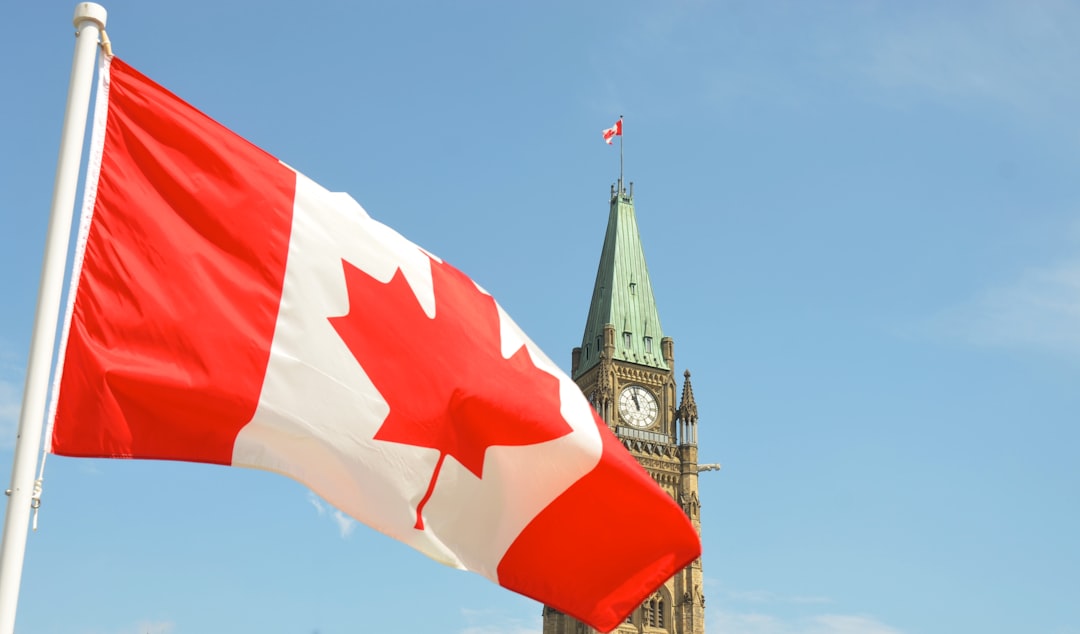
Steven Guilbeault, Canada's outgoing Environment and Climate Change Minister, announced his resignation from Parliament on Wednesday, delivering a stark warning that the country is backsliding on climate action just as the federal election approaches.
The departure of Guilbeault, reported by CBC News, represents the loss of the Liberal government's most prominent climate advocate at a critical moment. The former Greenpeace activist turned cabinet minister cited frustration with what he described as insufficient progress on environmental policy, despite Canada's international commitments under the Paris Agreement.
"We are not doing enough," Guilbeault said in his resignation statement. "After years of pushing for stronger climate action, I believe Canada is moving in the wrong direction on the defining issue of our generation."
In Canada, as Canadians would politely insist, we're more than just America's neighbor—we're a distinct nation with our own priorities. Yet Guilbeault's resignation highlights a familiar tension: balancing environmental ambition with economic realities in a resource-dependent economy.
Guilbeault's tenure as Environment Minister was marked by both ambitious policy proposals and fierce political battles. He championed Canada's 2030 Emissions Reduction Plan, which aimed to cut greenhouse gas emissions by 40 to 45 percent below 2005 levels by the end of the decade. He also oversaw the implementation of the federal carbon pricing system, navigating provincial resistance and Supreme Court challenges.
But his departure comes as Prime Minister Justin Trudeau's Liberal government faces mounting political pressure ahead of what polls suggest could be a difficult election. The Liberals have been trailing the Conservatives in recent surveys, and the government has visibly softened its climate rhetoric in favor of economic messaging about affordability and job creation.
"This resignation is a clear signal that the Liberals are retreating on climate policy," said Catherine Abreu, executive director of Destination Zero, a climate policy organization. "Guilbeault was the cabinet's environmental conscience, and his departure suggests the party is prioritizing electoral calculations over climate leadership."
The timing is particularly significant. Canada recently approved the Bay du Nord offshore oil project off Newfoundland, a decision that environmental groups condemned as incompatible with climate goals. The government has also faced criticism for falling short on promised methane emission reductions and for continuing subsidies to the fossil fuel sector.
Provincial reactions to Guilbeault's resignation varied along predictable lines. Alberta Premier Danielle Smith called it "welcome news," arguing that his policies had been "hostile to Western Canada's energy sector." Meanwhile, environmental groups in British Columbia and Quebec expressed alarm at losing a cabinet ally.
The resignation highlights the distinctive challenges of Canadian climate policy. Unlike the United States, where environmental politics often break along clear partisan lines, Canada's federal structure creates complex regional dynamics. Western provinces with oil and gas industries have sharply different interests from the manufacturing-focused Ontario or the hydroelectric-powered Quebec.
Guilbeault's Montreal constituency, Laurier—Sainte-Marie, has been a Liberal stronghold, but his departure opens questions about succession. The seat's progressive voting base has been receptive to aggressive climate policy, making Guilbeault's warnings about backsliding particularly resonant there.
Climate policy experts note that Canada has consistently struggled to meet its international commitments. The country failed to achieve its Kyoto Protocol targets in the 2000s and fell short of its Copenhagen Accord pledges. Current projections suggest Canada will miss its 2030 Paris Agreement targets without significantly stronger action.
"The pattern is clear: Canada sets ambitious targets, then pulls back when political or economic costs become apparent," said Mark Jaccard, an environmental economist at Simon Fraser University. "Guilbeault's resignation is another chapter in that story."
The resignation also comes as Canada navigates complex international dynamics. With the United States under President Donald Trump rolling back climate regulations, some Canadian political strategists have argued that aggressive environmental policies put the country at a competitive disadvantage. That argument appears to be gaining traction within the Liberal government.
Conservative Leader Pierre Poilievre, currently leading in polls, has pledged to "axe the carbon tax" if elected, framing climate policy as an affordability issue. His messaging has resonated with voters facing high housing costs and inflation, creating political pressure that appears to have influenced the Liberal government's recent pivot.
For the New Democratic Party, Guilbeault's departure presents an opportunity to position itself as the true climate champion. NDP Leader Jagmeet Singh has accused the Liberals of abandoning their environmental commitments, though the NDP's own support agreement with the Liberal government has complicated its ability to draw sharp distinctions.
Environmental organizations are now mobilizing to ensure climate policy remains a central election issue. Groups like Environmental Defence and the David Suzuki Foundation have announced campaigns to hold all parties accountable on their climate plans, with Guilbeault's resignation serving as a rallying point.
"This is a wake-up call," said Keith Brooks, program director at Environmental Defence. "If even the Environment Minister believes we're moving backwards, Canadians need to demand better from all parties."
The resignation also raises questions about Trudeau's cabinet strategy. Guilbeault was one of the government's most recognizable ministers, frequently representing Canada at international climate conferences. His departure creates both a policy vacancy and a communications challenge as the Liberals head into campaign mode.
Industry groups, meanwhile, have responded with measured statements. The Canadian Association of Petroleum Producers acknowledged Guilbeault's tenure while emphasizing the need for "balanced" climate policy that supports both environmental goals and economic growth—a formulation that environmental advocates view as code for weakened regulations.
As Canada approaches what could be a transformative election, Guilbeault's resignation crystallizes the central tension in Canadian climate politics: Can the country reconcile its climate ambitions with its economic structure? Or will electoral pressures and regional divisions continue to produce the pattern of bold commitments followed by modest action?
The answer will likely define not just the outcome of the coming election, but Canada's role in global climate leadership for years to come. Guilbeault's parting warning—that the country is backsliding precisely when it should be accelerating—suggests he believes that answer is headed in the wrong direction.