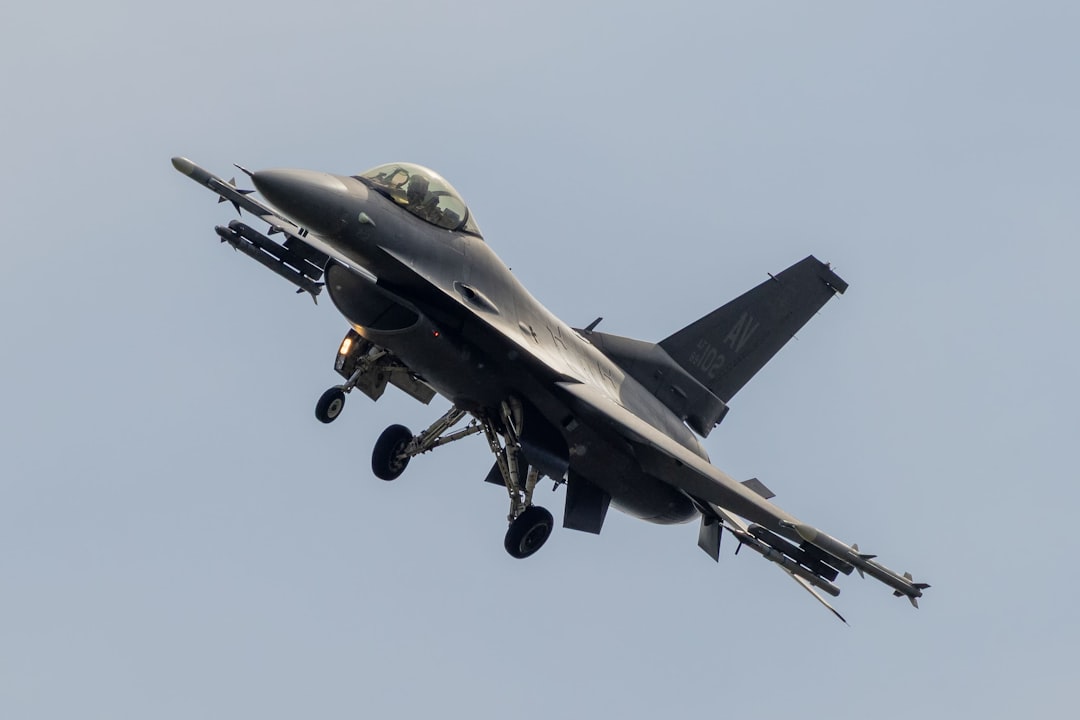
"We simply don't have any left." Those five words from Germany's foreign minister encapsulate a pivotal and alarming development in the prosecution of Western support for Ukraine: after more than three years of war, Berlin has depleted its available stocks of air defense missiles that can be transferred to Kyiv.
The admission, reported by Euromaidan Press, strips away any remaining ambiguity about where one of Europe's largest military donors now stands. Germany has not merely slowed its deliveries — it has run out. The cupboard is bare.
The strategic implications are severe and immediate. Ukraine's air defense network has been the primary shield protecting its cities, infrastructure, and frontline positions from Russia's sustained campaign of missile and drone strikes. That network is not a single system but a layered architecture of platforms — the American-supplied Patriot, the German-supplied IRIS-T SLM, and a patchwork of Soviet-era systems that have been progressively degraded through attrition. Each gap in that architecture is a gap in the umbrella over Ukrainian civilians.
The IRIS-T SLM, which Germany has supplied in multiple battery configurations since 2022, has been credited with intercepting a significant proportion of Russian aerial attacks in the areas it defends. Its missiles are not items that can be replenished overnight. The industrial production pipeline for precision air defense munitions was not designed for a war of this duration and intensity.
This is not an unfamiliar problem in the annals of military logistics. During the 1973 Yom Kippur War, the United States launched an emergency airlift — Operation Nickel Grass — to replenish Israeli munition stocks that were being consumed at rates that pre-war planners had not anticipated. The lesson absorbed by military analysts at the time was that modern high-intensity warfare exhausts stockpiles at a pace that peacetime procurement schedules cannot sustain. Four decades of post-Cold War demilitarisation across NATO have left most Alliance members structurally unprepared for the scale of resupply that the Ukraine war demands.
Germany's situation is emblematic of a broader Alliance-wide problem. The United Kingdom, the Netherlands, and other contributors have all confronted the gap between their political commitments and their material capacity. European defence industries have ramped up production since 2022, but lead times for complex guided munitions remain long — in some cases measured in years rather than months.
The question now is whether the exhaustion of current stocks accelerates the political conversation about new joint European procurement, and whether NATO member states are prepared to draw from their own national reserve inventories — a decision that carries genuine domestic defence implications — to bridge the gap while new production comes online.
Washington's posture complicates the picture further. The Trump administration has been publicly ambivalent about continued military aid to Ukraine, and any expectation that the United States will simply absorb Germany's shortfall appears increasingly misplaced. Europe will likely have to solve a European problem — and the foreign minister's candour, however uncomfortable, is the starting point for that reckoning.