
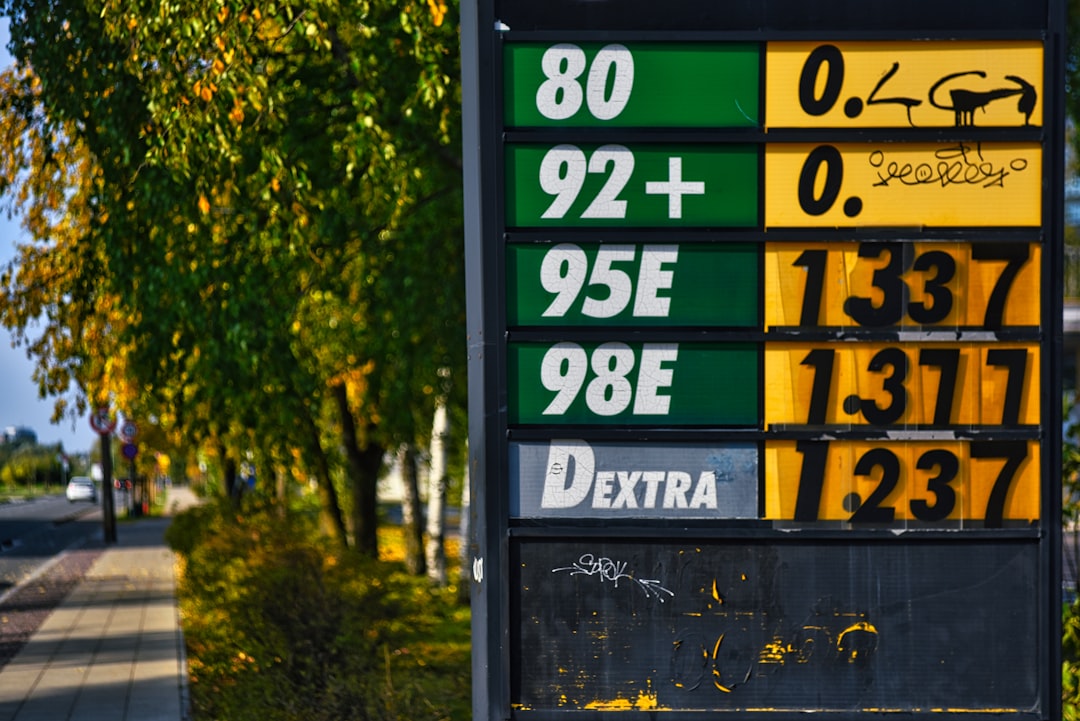
Gas just hit $4.06 per gallon nationally, and if you're wondering what that means for your wallet and your savings account, here's the short version: those interest rate cuts you were hoping for? Not happening.
The numbers tell the story. Brent crude oil is sitting above $105 per barrel, up roughly 44% since the Iran conflict started disrupting shipments through the Strait of Hormuz. That's not just a brief spike – this is sustained pressure on a supply route that normally handles about 20% of global oil supply.
For context, gas was $2.98 before the war started. Now it's $4.06. That's a $1.08 jump, or about 36% more every time you fill up.
But here's what Wall Street is actually worried about: it's not the peak price, it's the duration. Oil briefly touching $120 is one thing. Oil averaging $100-$110 for multiple quarters is something else entirely. That kind of sustained pressure works its way into everything – shipping costs, manufacturing, food prices.
CPI already hit 3.3% in March, the highest since mid-2024. Some forecasts have the Fed's preferred inflation measure (PCE) hitting 4% by year's end, which would be double the Fed's 2% target.
That's the translation: higher inflation means the Federal Reserve isn't cutting rates anytime soon. Those 5% APYs on high-yield savings accounts aren't going anywhere, which is actually good news if you're a saver. But if you were hoping your mortgage would get cheaper, you're out of luck.
The economy itself is holding up better than expected. GDP grew 2% annualized in Q1, which is solid considering the six-week government shutdown that dragged down Q4 to just 0.5% growth. Government spending bounced back hard (up 4.4%), and consumers kept spending despite higher gas prices, partly helped by tax refunds running about $330 higher than last year.
But that consumer resilience has limits. Mark Zandi at Moody's specifically called out March tax refunds as a big factor in Q1 spending. That's a one-time boost, not a sustainable trend. When gas stays above $4 for months on end, something has to give – either people cut back on discretionary spending, or savings rates drop.
For investors, the implications are pretty clear. Don't count on rate cuts to bail out overvalued tech stocks. Energy stocks and companies that can pass on higher costs (think consumer staples with pricing power) are going to outperform. And if you're sitting on cash earning 5%, there's no immediate reason to panic into equities just because you fear missing out.