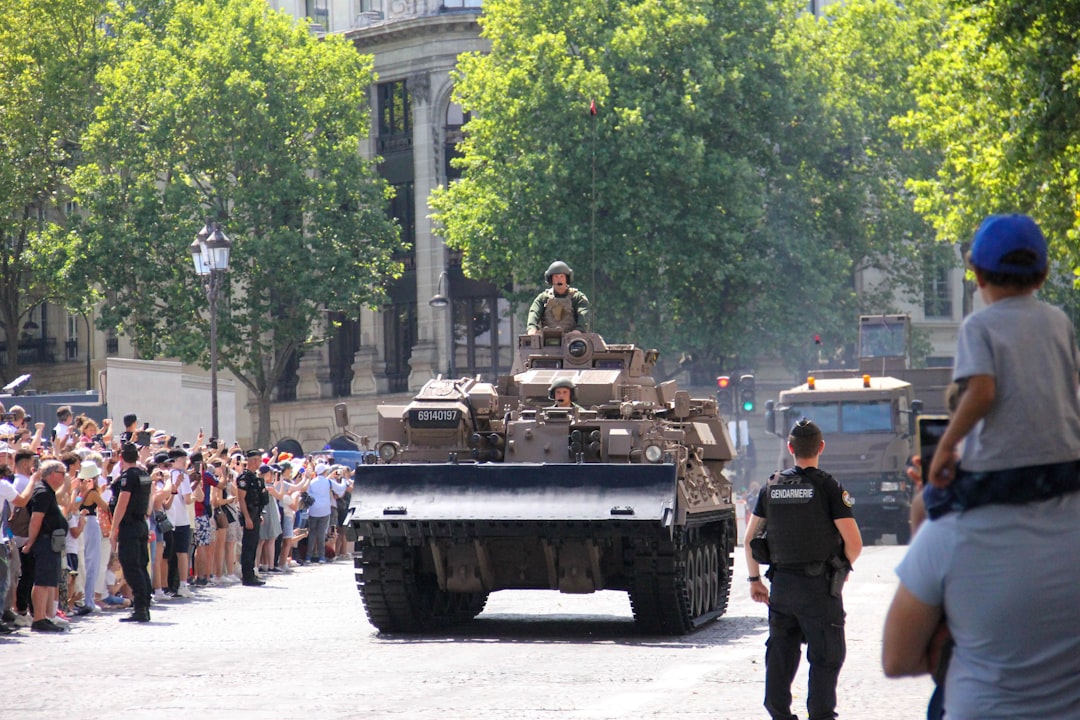
France announced plans Wednesday to significantly expand its defense budget and weapons stockpiles in response to what officials described as an escalating threat from Russia, joining a broader European rearmament effort, according to Le Monde.
The Ministry of Armed Forces outlined plans to increase military spending by approximately 15% over the next three years, with particular focus on artillery ammunition, air defense systems, and autonomous weapons platforms.
"Europe can no longer depend solely on American security guarantees," Armed Forces Minister Sébastien Lecornu told reporters in Paris. "We must be capable of defending ourselves independently if necessary."
The announcement represents a significant shift in French defense policy, which has historically emphasized nuclear deterrence and expeditionary capabilities for operations in Africa and the Middle East. The new emphasis on conventional forces and territorial defense reflects the changed security environment following Russia's actions in Ukraine and growing European skepticism of American reliability.
To understand today's headlines, we must look at yesterday's decisions. French military planning since the end of the Cold War assumed that large-scale conventional warfare in Europe was obsolete. Defense budgets prioritized power projection capabilities and counterterrorism operations rather than the artillery, armor, and logistics needed for sustained territorial defense.
That assumption has now been abandoned. The conflict in Ukraine demonstrated that conventional warfare remains possible in Europe, while deteriorating relations with the United States – including polling showing Europeans view Washington as a greater threat than China – has accelerated discussions of European strategic autonomy.
The French budget increase includes €8 billion for ammunition production facilities, allowing domestic manufacturers to produce artillery shells and missiles at rates capable of sustaining prolonged conflict. Current European production capacity falls far short of wartime consumption rates observed in Ukraine.
"We learned from Ukraine that modern warfare consumes ammunition at rates we simply cannot match with current production," Lecornu said. "This must change."
France will also invest in air defense systems, including additional batteries of the SAMP/T missile defense platform and development of laser-based defensive weapons. The latter technology, still in prototype phase, promises to defend against drones and missiles at a fraction of the cost of traditional interceptors.
The expansion aligns with similar efforts across Europe. Germany has committed to reaching NATO's 2% of GDP defense spending target, Poland now spends over 4% of GDP on defense, and even traditionally neutral nations like Sweden and Finland have increased military budgets substantially.
French officials emphasized that the budget expansion does not represent abandonment of the transatlantic alliance, but rather an effort to make Europe a more capable partner within NATO while reducing dependence on American capabilities.
However, the timing – amid multiple transatlantic disputes over Middle East policy, trade, and defense burden-sharing – suggests deeper concerns about the durability of American commitments to European security.
The financial implications are significant. France's defense budget will increase from approximately €44 billion annually to over €50 billion by 2029, requiring either spending cuts elsewhere or tax increases. The government indicated it will pursue both, reducing certain social programs while introducing a temporary defense levy on high earners.
Public opinion supports increased defense spending, according to recent polls, with 58% of French voters agreeing that Europe must strengthen its military capabilities. The shift reflects growing anxiety about regional security and recognition that the post-Cold War peace dividend has ended.
From a correspondent's perspective, having covered European defense debates for over a decade, the current moment represents the most significant rearmament push since the 1980s. What distinguishes it from previous efforts is the breadth of political support and the explicit acknowledgment that Europe may need to defend itself without American assistance.
The practical challenges remain substantial. European defense industries have atrophied during decades of reduced spending and now face capacity constraints. Training and recruiting the personnel to operate expanded militaries will take years. Coordinating defense efforts across 27 EU member states with different threat perceptions and strategic cultures remains difficult.
Yet the momentum appears real. France's announcement Wednesday is the latest in a series of European defense initiatives that collectively represent the most significant shift in continental security policy since the fall of the Soviet Union. Whether it proves sufficient to deter aggression or merely marks the beginning of a new arms competition remains to be seen.