
In the often unforgiving arena of Central European politics, a striking paradox has emerged: why does Viktor Orbán command international attention while Robert Fico meets with autocrats and achieves nothing?
The question, posed recently in Slovak online forums, cuts to the heart of a fundamental difference between performative anti-Western politics and genuine network-building. Both Hungary and Slovakia are small nations led by pro-Russian prime ministers with authoritarian tendencies. Yet their international trajectories could not be more divergent.
<h2>The Orbán Model: Building Networks</h2>
Orbán has spent years constructing what political analysts call a "national-conservative international." His annual CPAC conference in Budapest attracts hundreds of foreign guests from dozens of countries. He maintains genuine relationships with figures like Donald Trump, Benjamin Netanyahu, and Marine Le Pen. American Vice President J.D. Vance personally visited Budapest to support him before recent elections.
More importantly, Orbán offers something: a tested playbook for consolidating power while maintaining democratic appearances, access to EU mechanisms, and a geographic position at Europe's crossroads. His illiberal model, however objectionable, functions as an export product.
<h2>Fico's Trophy Hunters</h2>
Fico's diplomatic achievements, by contrast, read like a museum of has-beens and pariahs. His proudest accomplishment from two decades ago was meeting Muammar Gaddafi—who was lynched by a mob several years later. His current friends list includes Alexander Lukashenko, Vladimir Putin, and Czech far-left politician Jiří Paroubek, who left mainstream politics years ago.
Recent forays into Uzbekistan and overtures toward Afghanistan suggest a leader grasping at geographic novelty rather than strategic partnerships. As one Slovak observer noted, Fico constantly positions Slovakia as a "bridge between East and West" but has built neither the infrastructure nor the credibility to host serious diplomatic initiatives.
<h2>The Missed Opportunity</h2>
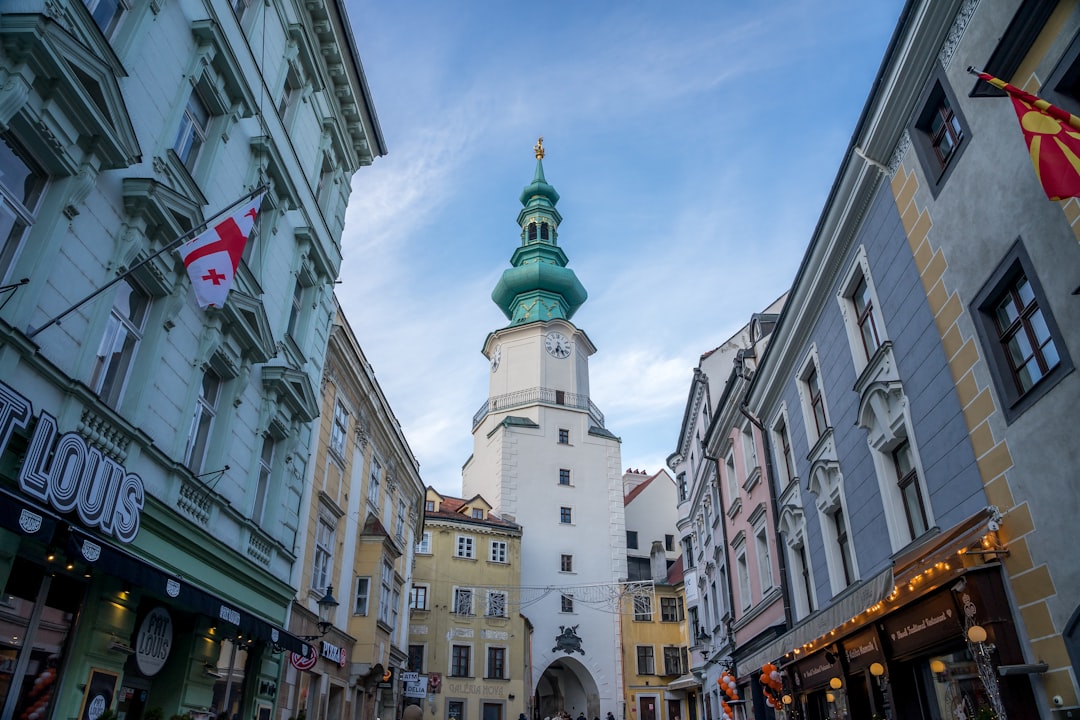
In Central Europe, as we learned from the Velvet Revolution, quiet persistence often achieves more than loud proclamations. Bratislava possessed genuine potential as a neutral diplomatic venue—geographically positioned, EU-integrated, historically complex. A leader with vision might have established Slovakia as the location for Ukraine-Russia negotiations or Middle Eastern peace talks.
Instead, Fico offers anti-Western rhetoric divorced from any coherent alternative framework. Where Orbán built Fidesz into a disciplined political machine with international franchises, Fico's SMER careens between populism and grievance, offering no model that other leaders might emulate.
<h2>The Czech Contrast</h2>
Viewed from Prague, the contrast with Czech pragmatism is instructive. The Petr Fiala government maintains relations across the political spectrum while firmly anchoring Czech Republic within Euro-Atlantic structures. Czech defense companies supply Ukraine while Prague hosts substantive diplomatic initiatives. The approach lacks theatrical flair but accumulates genuine influence.
Slovakia under Fico demonstrates the opposite: maximum posturing, minimum results. His government's pro-Russian positioning has alienated Visegrad partners, complicated EU relations, and gained nothing tangible from Moscow in return. Putin appears as willing to partner with useful Slovak politicians as he is with anyone—but offers nothing beyond photo opportunities.
<h2>The Cautionary Tale</h2>
For smaller European nations, Fico's trajectory offers a cautionary lesson about the difference between influence and attention. Orbán, whatever his democratic deficits, built institutions, cultivated relationships, and offered a replicable model. His international standing, however controversial, rests on genuine diplomatic infrastructure.
Fico's international profile consists largely of meetings with leaders other European capitals avoid. His "national social democracy" has attracted no followers. His bridge-building rhetoric has produced no significant diplomatic initiatives. Two decades after his first government, his signature foreign policy achievement remains a photograph with a dictator who died violently in 2011.
Slovakia deserves better than performative anti-Westernism that yields neither Eastern benefits nor Western respect. In the complex geometry of Central European politics, genuine influence requires more than contrarian rhetoric and photo opportunities with pariahs. It demands the patient work of relationship-building, the credibility that comes from delivering results, and a vision that extends beyond the next election cycle.
Fico has built none of these. His diplomatic dead-end is not Slovakia's inevitable fate—merely the predictable consequence of mistaking noise for substance.