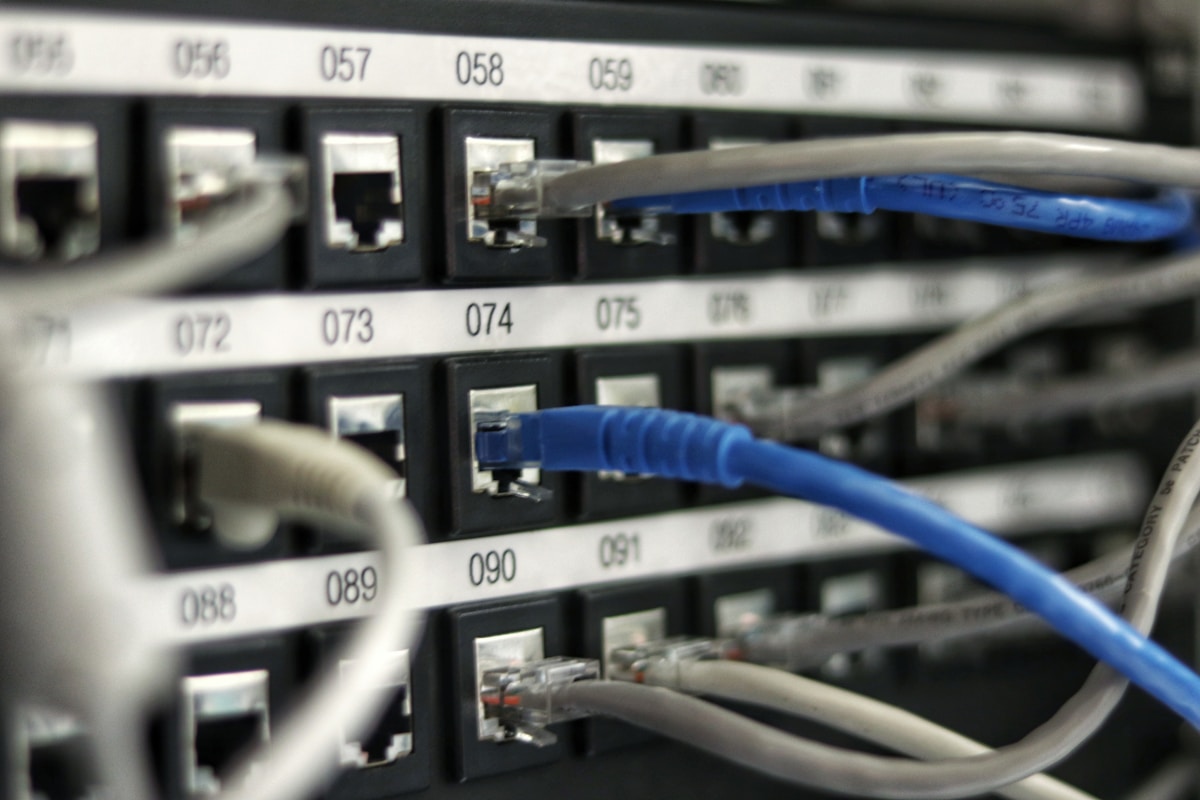
Research published in Science shows that fiber optic cables can pick up nearby conversations through vibrations. The same infrastructure carrying your internet traffic can passively monitor what you're saying in the room.This isn't every cable listening to you. But the physics are real, and it changes the threat model for secure facilities.How It WorksFiber optic cables transmit data using light pulses. When sound waves from nearby conversations hit the cable, they cause microscopic vibrations that slightly alter the light passing through. With sensitive enough equipment, those variations can be detected and decoded back into audio.Researchers demonstrated this in lab conditions, picking up conversations from several meters away from the cable. The audio quality wasn't perfect, but it was good enough to understand speech.This technique is called "distributed acoustic sensing" (DAS), and it's not entirely new. It's been used for seismic monitoring, infrastructure surveillance, and detecting pipeline leaks. What's new is applying it to eavesdropping on human conversations.The Practical LimitationsBefore you panic: this isn't easy to deploy at scale. You need access to the fiber optic infrastructure—either physical access to splice in monitoring equipment, or control over network equipment at endpoints. You need specialized hardware capable of detecting tiny variations in light signals. And you need algorithms to filter out noise and reconstruct audio.This is not something your average hacker or neighbor can do. But nation-state intelligence agencies? Definitely within their capabilities.Where This MattersThe threat model shifts for organizations that handle classified information, trade secrets, or sensitive negotiations. Places like:- Government facilities with secure conference rooms- Corporate headquarters where M&A deals are discussed- Law firms handling sensitive litigation- Research labs working on proprietary technologyTraditionally, these spaces secure against electronic bugs, RF emissions, and audio recording devices. But fiber optic cables running through walls or ceilings nearby weren't considered an eavesdropping vector. Now they are.CountermeasuresSolutions exist, but they're not simple. You can:- Route fiber cables away from sensitive spaces- Add soundproofing that dampens vibrations reaching cables- Monitor your own cables for unauthorized splicing or monitoring devices- Use hardened conduits that isolate cables from vibrationsNone of these are cheap. And they require physical security audits that most organizations don't do regularly.The Unintended Consequences of InfrastructureThis is a reminder that infrastructure has properties beyond its designed purpose. Fiber optic cables were built to transmit data, not to act as microphones. But the physics don't care about intent.The same principle applies to other infrastructure. Power lines can reveal device usage patterns. Cell towers triangulate location. Smart home devices create detailed behavior logs. Each piece of technology creates information as a side effect, and that information can be exploited.For most people, this isn't a practical concern. The effort required to tap residential fiber optic lines for audio surveillance is vastly disproportionate to what you'd gain from listening to someone's living room conversations.If a nation-state or well-resourced adversary is targeting you specifically, they have easier methods: actual bugs, compromised devices, traditional wiretaps. Fiber optic eavesdropping would be low on the list of attack vectors.But for high-value targets in government, military, or corporate espionage contexts, this is real. And it's probably already being used by intelligence agencies, even if it's not publicly disclosed.On the positive side, this same technology has legitimate uses. Distributed acoustic sensing can detect earthquakes earlier, monitor critical infrastructure for damage, and improve safety in industrial facilities. Like most dual-use technology, it's useful and dangerous simultaneously.The question is what safeguards exist to prevent abuse. And the honest answer is: not many. If intelligence agencies are using this technique, they're not advertising it, and oversight is limited at best.The technology is impressive. The question is whether we're prepared for all the ways it can be used—both intended and not.
|