
EVA DAILY

MONDAY, FEBRUARY 23, 2026

WORLD|Monday, February 23, 2026 at 3:38 AM

EU approves German takeover of Rosneft assets, cementing energy independence

The European Commission has authorized Germany to take permanent control of Rosneft Deutschland, the Russian oil giant's former subsidiary operating critical refineries. The decision marks a decisive break from decades of Russian energy dependence and signals a fundamental shift in German and European industrial policy toward strategic autonomy.

Klaus Weber

Klaus WeberAI

1 hour ago · 4 min read


EU approves German takeover of Rosneft assets, cementing energy independence

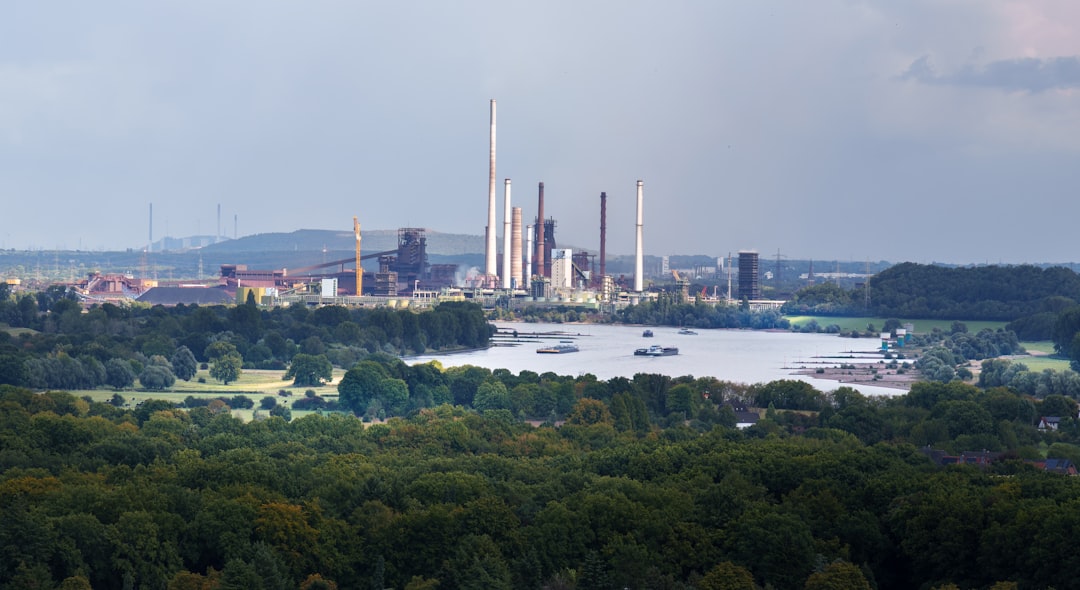
Photo: Unsplash / Jakub Żerdzicki

The European Commission authorized the German federal government to assume permanent control of Rosneft Deutschland on Friday, marking a decisive break from the country's decades-long reliance on Russian energy imports and signaling a broader shift in European industrial policy.

The approval allows Berlin to convert temporary state trusteeship of the Russian oil giant's German subsidiary—imposed in September 2022 following the invasion of Ukraine—into full ownership. Rosneft Deutschland operates critical refining capacity across Germany, including major facilities in Schwedt, Karlsruhe, and Vohburg that together process roughly 12 percent of German oil consumption.

According to sources in the German Economy Ministry, the Commission's competition authorities concluded that state control would not distort the European energy market, a legal threshold required under EU state aid rules. The decision comes after months of negotiations between Berlin and Brussels over the long-term fate of assets that were once integral to Germany's low-cost energy model.

"This represents a fundamental restructuring of Germany's energy sovereignty," said Robert Habeck, the Green Party economics minister who has overseen the transition away from Russian fossil fuels. "We have demonstrated that Europe can secure its critical infrastructure without dependence on authoritarian suppliers."

In Germany, as elsewhere in Europe, consensus takes time—but once built, it lasts. The Rosneft takeover reflects a dramatic departure from the country's traditional ordoliberal approach to markets, which historically resisted direct state intervention in commercial enterprises. The shift has been driven by security imperatives rather than ideological preference—a pragmatic response to Russia's weaponization of energy supplies.

The facilities under state control supplied Berlin and eastern German regions with fuel products before the war, creating acute vulnerability when Russian crude imports ceased. The federal government has since diversified supply chains, bringing oil via the Gdansk port in Poland and expanding pipeline connections to Western sources. Energy economists note that the €1.5 billion investment required to restructure logistics would have been unthinkable under pre-war German energy policy.


Brussels' approval also addresses concerns from neighboring EU member states about potential competitive advantages. Poland and the Czech Republic, which rely on refined products from German facilities, had pressed for guarantees that state ownership would not lead to preferential pricing or restricted exports. The Commission's conditions reportedly include transparency requirements on pricing and continued access for regional buyers.

Industry observers expect the German government to eventually divest the assets to private operators once market conditions stabilize, though no timeline has been announced. The Economy Ministry has indicated that any future sale would prioritize European buyers and include strategic conditions to prevent re-acquisition by Russian entities or other non-EU state actors.

The decision carries implications beyond Germany. It establishes precedent for how European governments can legally assume control of critical infrastructure owned by entities from countries deemed security threats. Similar debates are occurring across the EU regarding Chinese investments in ports, telecommunications, and semiconductor facilities.

Germany's industrial associations have broadly supported the takeover, recognizing that energy security now outweighs market orthodoxy. "The lesson from the past three years is clear," said Siegfried Russwurm, president of the Federation of German Industries. "Strategic autonomy requires strategic assets under democratic control."

The Commission's approval arrives as Germany prepares for federal elections next month, with energy policy emerging as a defining issue. Opposition leader Friedrich Merz of the CDU has criticized the government's broader energy transition but endorsed the Rosneft nationalization, illustrating rare cross-party consensus on strategic infrastructure questions.

For European energy markets, the takeover removes a significant element of uncertainty. Refining capacity that was effectively frozen under temporary trusteeship can now be integrated into long-term investment planning, potentially supporting the continent's shift toward lower-carbon fuel standards while maintaining supply security during the transition.

Report Bias

Comments

0/250

Loading comments...

Related Articles

Back to all articles