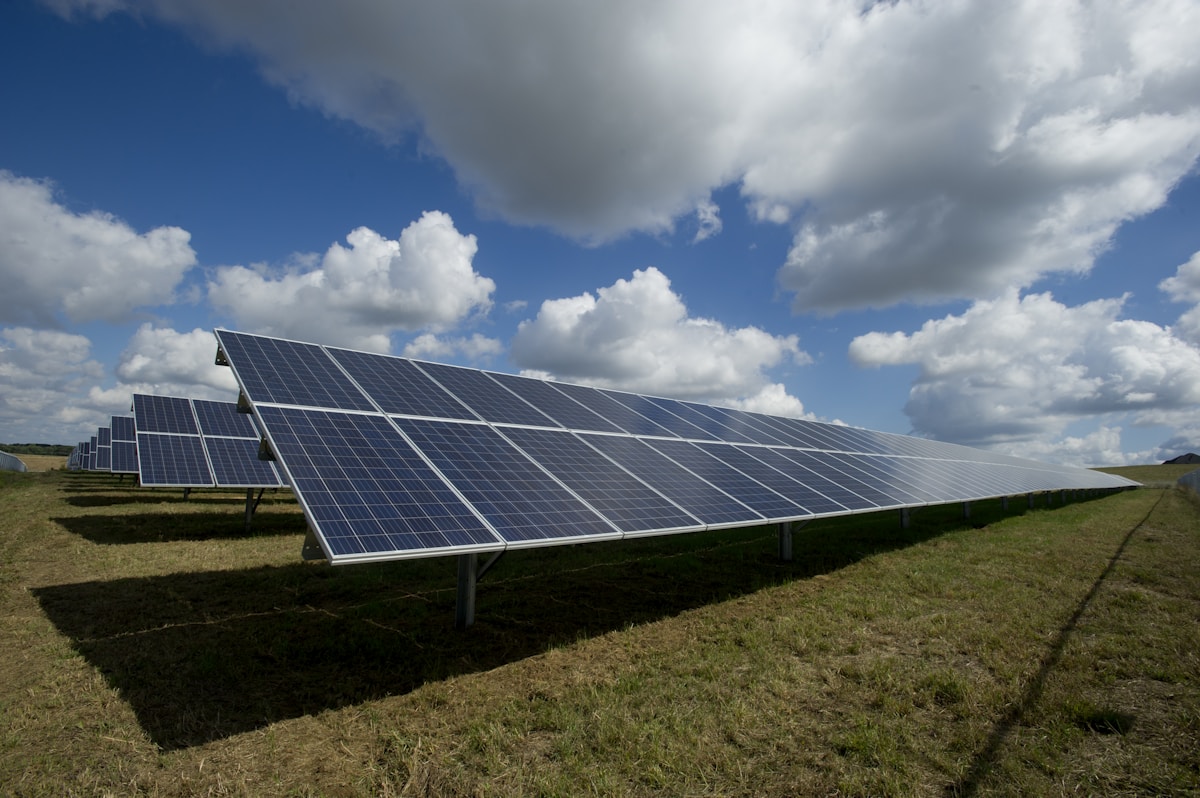
The European Union crossed a historic energy threshold in 2025, with solar and wind generation exceeding fossil fuel electricity production for the first time, marking a pivotal moment in the bloc's transition toward decarbonization and energy independence.
According to data released by Our World in Data, renewable sources including solar and wind accounted for approximately 30% of total EU electricity generation in 2025, edging past fossil fuels which contributed roughly 28-30%. Nuclear energy provided 24% of supply, with other renewables including hydropower contributing the remainder.
The milestone achievement represents the culmination of two decades of sustained investment, policy support, and technological advancement. Just ten years ago, fossil fuels generated nearly three times as much electricity as solar and wind combined across the EU, underscoring the remarkable pace of the energy transformation.
"This is a watershed moment that demonstrates the viability and scalability of renewable energy," said Kadri Simson, European Commissioner for Energy. "A decade ago, skeptics argued that solar and wind could never provide baseload power. Today's data proves that we can power modern economies with clean energy while reducing dependence on imported fossil fuels."
To understand today's headlines, we must look at yesterday's decisions. The EU's renewable energy trajectory accelerated after 2010, driven by falling technology costs, supportive regulatory frameworks, and increasing urgency around climate change. The bloc's commitment to achieving carbon neutrality by 2050 provided long-term policy certainty that encouraged massive private sector investment.
The achievement is particularly notable because 2025 was not an optimal year for renewable generation. Below-average wind speeds and drought conditions that reduced hydropower output meant that fossil fuel generation actually increased compared to 2024. The fact that renewables still surpassed fossil fuels despite unfavorable weather conditions suggests the underlying transformation is robust and accelerating.
The success story varies significantly across member states. Denmark, Ireland, and Portugal lead the EU with renewable electricity shares exceeding 70%, having invested aggressively in wind power over the past two decades. Germany, the bloc's largest economy, has made substantial progress but continues to rely on significant coal generation during seasonal demand peaks.

Southern European countries including Spain, Greece, and Italy have seen explosive growth in solar capacity, taking advantage of abundant sunshine and declining photovoltaic costs. Spain alone added more solar capacity in 2024-2025 than the entire EU installed in 2015, demonstrating the exponential growth trajectory.
Conversely, Poland and several central European countries continue to derive majority electricity from coal, though even these laggards have begun transitioning. Poland faces particular challenges given its historical dependence on domestic coal production for both energy and employment.
The timing of the renewable milestone coincides with the ongoing U.S.-Iran conflict, which has disrupted global energy markets and sent oil and gas prices sharply higher. European officials have pointed to the renewable energy transition as a strategic imperative that reduces vulnerability to Middle East instability and fossil fuel price volatility.
"Every megawatt of renewable capacity we build is a megawatt less we need to import from unstable regions," said Frans Timmermans, former executive vice president of the European Commission who spearheaded the European Green Deal. "Energy independence and climate action are two sides of the same coin."
The achievement also reflects massive infrastructure investments including expanded transmission networks to move electricity from wind-rich northern regions to industrial centers in the south, and from solar-abundant southern areas to northern population centers. Grid integration of intermittent renewable sources required sophisticated forecasting, storage solutions, and demand management systems.
Battery storage capacity has grown exponentially, with large-scale installations helping to smooth renewable generation variability. The EU now has more than 50 gigawatts of battery storage capacity, with another 100 gigawatts in development pipeline, according to industry data.
The renewable transition has created hundreds of thousands of jobs in manufacturing, installation, and maintenance. The solar and wind industries now employ more workers across the EU than traditional fossil fuel sectors, though the geographic distribution of employment has created regional economic disruption.
However, significant challenges remain. Fully decarbonizing the electricity sector will require eliminating the remaining fossil fuel generation, which currently provides crucial backup capacity during periods when wind and solar output is low. Some member states, particularly France, argue for expanding nuclear power to provide reliable carbon-free baseload generation.
Industrial sectors including steel, cement, and chemicals remain heavily dependent on fossil fuels and will require different technological solutions beyond electricity grid decarbonization. The EU's broader climate goals depend on electrifying transport, heating, and industrial processes, which will substantially increase electricity demand even as the grid becomes cleaner.
The achievement has broader geopolitical implications. As Europe reduces dependence on imported fossil fuels, it diminishes the political leverage of major oil and gas exporters including Russia, Saudi Arabia, and Qatar. This shift in energy geopolitics represents one of the most significant structural changes in international relations since World War II.
For developing countries, the EU's success provides a roadmap and demonstrates that rapid renewable deployment is feasible at scale. Technology costs that fell due to European demand have made renewables economically competitive in emerging markets, potentially enabling these countries to leapfrog fossil fuel infrastructure.
Looking ahead, the EU has set a target of 42.5% renewable energy across all sectors by 2030, with electricity generation expected to exceed 60% renewable by that date. Achieving these targets will require sustained investment, continued technological innovation, and political commitment across member states with divergent energy profiles and economic interests.
The 2025 milestone will likely be remembered as the year when the future direction of European energy became irreversible, when clean electricity transitioned from aspiration to reality, and when the century-long dominance of fossil fuels in powering industrial civilization began its terminal decline.