
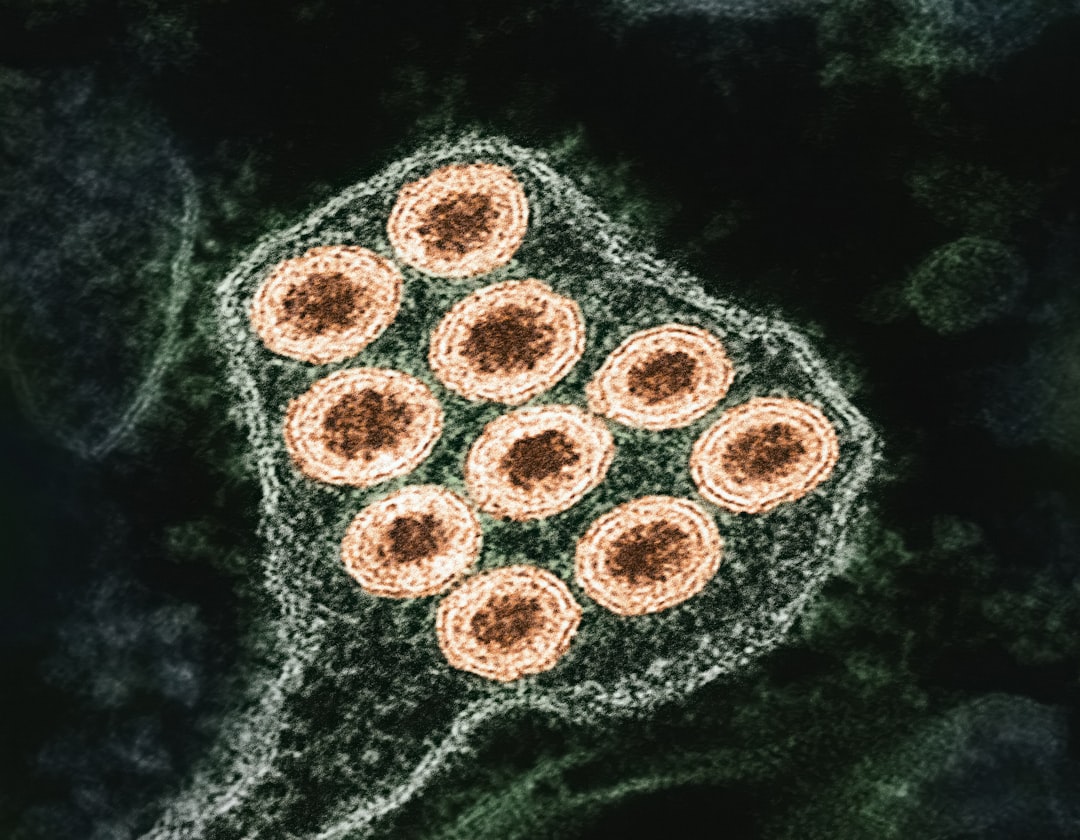
A comprehensive analysis of biobank data published in Nature has established a causal relationship between Epstein-Barr virus abundance and Hodgkin's lymphoma, moving beyond the correlation that researchers have suspected for decades.
Here's why that matters: about 95% of adults worldwide carry Epstein-Barr virus (EBV). Most people contract it as children or teenagers—it's the virus that causes infectious mononucleosis, or "mono." After the initial infection, EBV persists in your body for life, usually kept in check by your immune system.
The connection between EBV and certain cancers, particularly Hodgkin's lymphoma, has been known for years. Tumor cells from Hodgkin's patients often test positive for EBV DNA. But correlation isn't causation. Does the virus cause the cancer, or does the cancer create conditions that allow the virus to flourish? That distinction determines whether controlling viral load could prevent cancer.
The new study uses a technique called Mendelian randomization, which exploits natural genetic variation to tease apart cause and effect. Think of it as a natural experiment: some people have genetic variants that lead to higher EBV abundance, independent of other risk factors. By tracking whether those people develop Hodgkin's lymphoma at higher rates, researchers can establish whether viral abundance is actually driving cancer risk.
The answer, according to data from hundreds of thousands of individuals in multiple biobanks, is yes. Higher EBV abundance is causally linked to increased Hodgkin's lymphoma risk. The relationship holds up across different populations, age groups, and genetic backgrounds.
The study also found that age, sex, and specific genetic variants influence EBV abundance. Women tend to have higher viral loads than men, and viral abundance increases with age—which aligns with the observation that immune control of latent viruses often weakens as we get older.
So what does this mean practically? Could we screen people for EBV viral load and identify those at higher cancer risk? Could antiviral treatments reduce that risk? These are the obvious next questions, and they're not easy to answer.
Hodgkin's lymphoma is still a relatively rare cancer—about 3 cases per 100,000 people per year in the United States. Even if high EBV load increases risk, most people with elevated viral abundance will never develop lymphoma. Screening everyone for a biomarker that's common and a cancer that's rare is a challenging proposition.
Antiviral treatment is another complication. EBV is a herpesvirus, and like other herpesviruses, it establishes lifelong latent infection that's difficult to eliminate. Current antiviral drugs can suppress active viral replication but don't clear latent virus. Developing therapies that truly control EBV burden would be a significant advance.
There's also a broader immunology question here: why does the immune system tolerate EBV at all? Nearly every human on Earth carries a virus linked to multiple cancers, yet we've evolved no effective mechanism to eliminate it. Understanding that evolutionary trade-off might reveal new therapeutic strategies.
For now, the value of this study is conceptual as much as clinical. It confirms that viral abundance—not just viral presence—drives cancer risk. That shifts the research focus from "how do we eliminate the virus" (probably impossible) to "how do we keep viral levels low" (potentially feasible).
It's also a nice demonstration of how human genetics can answer causal questions without randomized trials. You can't ethically give people high EBV loads and see if they develop cancer. But nature has already run that experiment through genetic variation, and if you have enough data, you can extract the answer.
The universe doesn't care whether we find the answer elegant or convenient. But finding the answer at all—that's what makes this kind of research worth doing.