

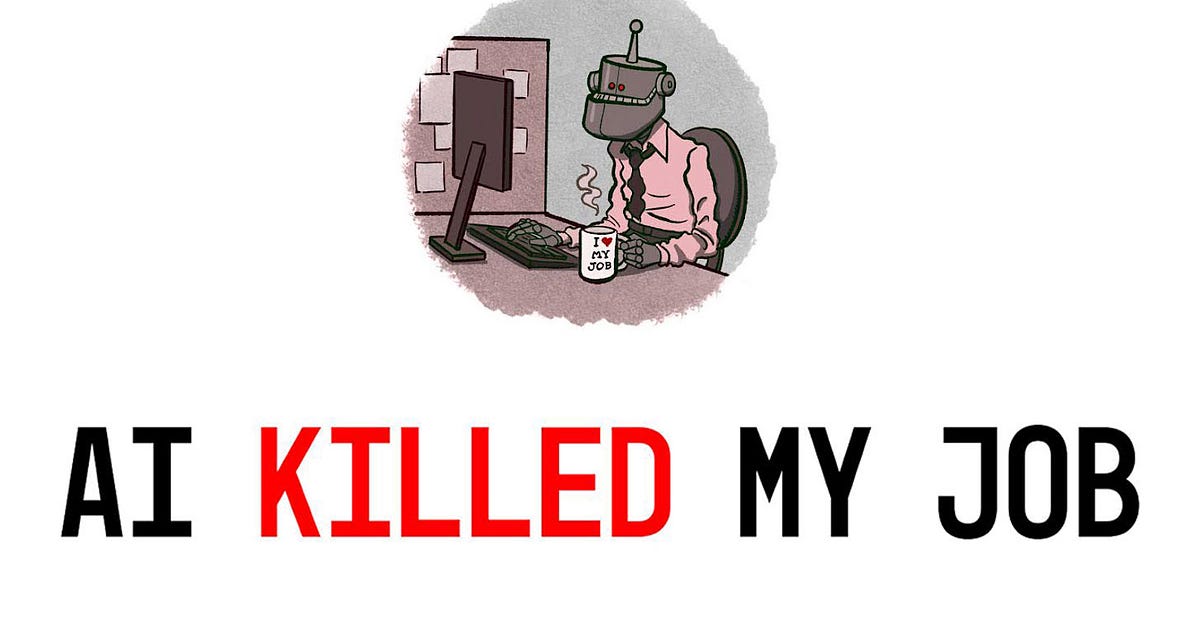
A college professor recently captured the existential crisis facing education in one devastating question: "If AI is writing the work and AI is reading the work, do we even need to be there at all?" It's not a hypothetical anymore. It's happening right now on campuses across the country.
The pattern is grimly consistent. Students use ChatGPT or similar tools to complete assignments without learning the underlying skills. When confronted, they deny it despite obvious tells. Meanwhile, their institutions are simultaneously pushing AI adoption and expecting faculty to enforce academic integrity - often while using AI grading tools themselves.
But the crisis goes deeper than academic dishonesty. Educators are watching their jobs disappear to the very tools they're being told to embrace. Tutors report reduced hours as universities pilot AI tutoring systems. Librarians face replacement by chatbots. One UCLA professor was laid off from organizing critical tech seminars right after the university promoted its proprietary chatbot.
The technology actually works in many cases. AI tutoring systems can help students who need extra practice. Automated grading can free up instructor time. The question is whether efficiency should be the primary goal of education - and whether we're okay with the trade-offs.
One particularly telling example: student athletes whose teams performed worse after AI automatically scheduled intense training during championship weeks. The AI optimized for training load distribution but didn't understand context like competitive timing. That's a metaphor for the whole crisis - systems that optimize metrics without understanding meaning.
Instructors describe watching students who obviously didn't write their own work, who can't explain their supposedly original ideas, who treat assignments as boxes to check rather than learning opportunities. The AI makes that easier than ever. And when institutions themselves deploy AI grading, the message to students is clear: nobody actually cares about the learning, just the throughput.
The technology is impressive. The question is whether anyone needs education to become this transactional. When AI writes the assignments and AI grades them, we've created a closed loop that excludes actual learning entirely. Some educators are quitting rather than participate. Others are trying to design AI-proof assignments. But the deeper problem isn't technical - it's that we've apparently decided education is about credentials rather than knowledge.
