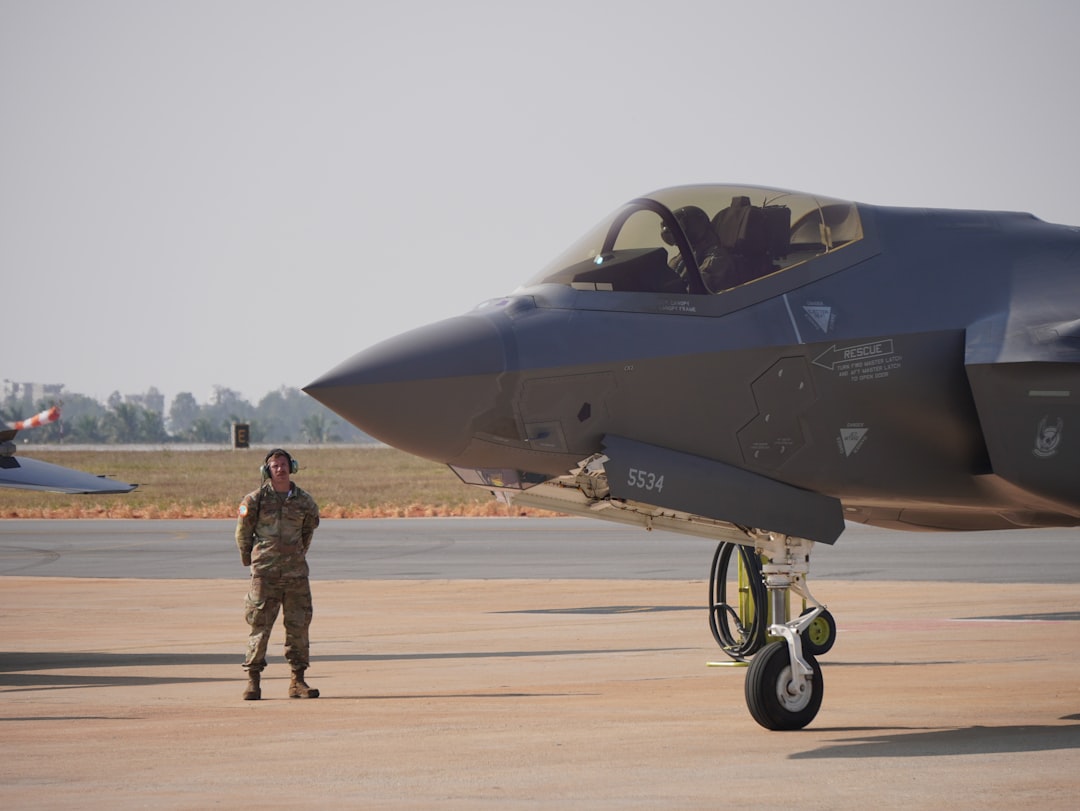
In a remarkable statement that underscores growing European frustration with Washington, outgoing Dutch Defence Secretary Gijs Tuinman has declared that the Netherlands would reverse-engineer F-35 fighter jet software if the United States blocks future updates amid deteriorating transatlantic relations.
Speaking on the Dutch podcast Boekestijn en De Wijk, Tuinman suggested that European allies might "crack the code" of the F-35's proprietary software systems to conduct their own updates, making the aircraft "fully European" in its operational capabilities. "If the US blocks F-35 software updates, we will crack the code and do our own updates," Tuinman said, before adding cryptically: "I'm not allowed to say more."
The comment represents a watershed moment in European defence thinking. To understand today's headlines, we must look at yesterday's decisions. The F-35 Joint Strike Fighter program has long been criticized for creating strategic dependencies, with Washington retaining total control over the aircraft's sophisticated sensor fusion, targeting, and communications software through the Autonomic Logistics Information System (ALIS).
The technical and legal challenges of such an endeavour would be extraordinary. The F-35's software contains millions of lines of code protected by stringent US export controls and classified security protocols. Any attempt to reverse-engineer it would likely violate the Arms Export Control Act and international technology transfer agreements that govern the program.
Yet Tuinman's willingness to even articulate such a plan reflects the depth of European concern about reliability of US security commitments. The statement comes as the Trump administration has revived territorial claims to Greenland and openly questioned NATO's Article 5 collective defence provisions.
According to multiple European defence sources who spoke on condition of anonymity, discussions about reducing technological dependence on Washington have accelerated in recent weeks. France has long advocated for "strategic autonomy" in defence matters, and Germany announced a €100 billion defence modernization fund in 2022.
The F-35 issue crystallizes a broader dilemma. Nine NATO allies operate or have ordered the aircraft, representing contracts worth hundreds of billions of dollars. Any disruption to software updates would immediately ground these fleets, as the jets require regular patches to maintain their stealth characteristics and threat libraries.
"This isn't just about one aircraft," explained François Heisbourg, a senior adviser at the International Institute for Strategic Studies in London, in comments to Reuters last year. "It's about whether European nations can maintain operational sovereignty over their own defence forces."
The Netherlands currently operates 24 F-35A aircraft and has committed to purchasing a total of 52 jets. Italy, Norway, Denmark, Belgium, and Poland are also significant operators of the type.
The Pentagon declined to comment on Tuinman's statement. The Dutch Defence Ministry referred questions to the F-35 Joint Program Office in Arlington, Virginia, which did not respond to requests for comment by deadline.
Tuinman is expected to leave office in the coming weeks as part of a broader cabinet reshuffle. His successor will inherit a defence portfolio increasingly focused on European military integration and reduced reliance on Washington—a transformation that would have seemed unthinkable just five years ago.