
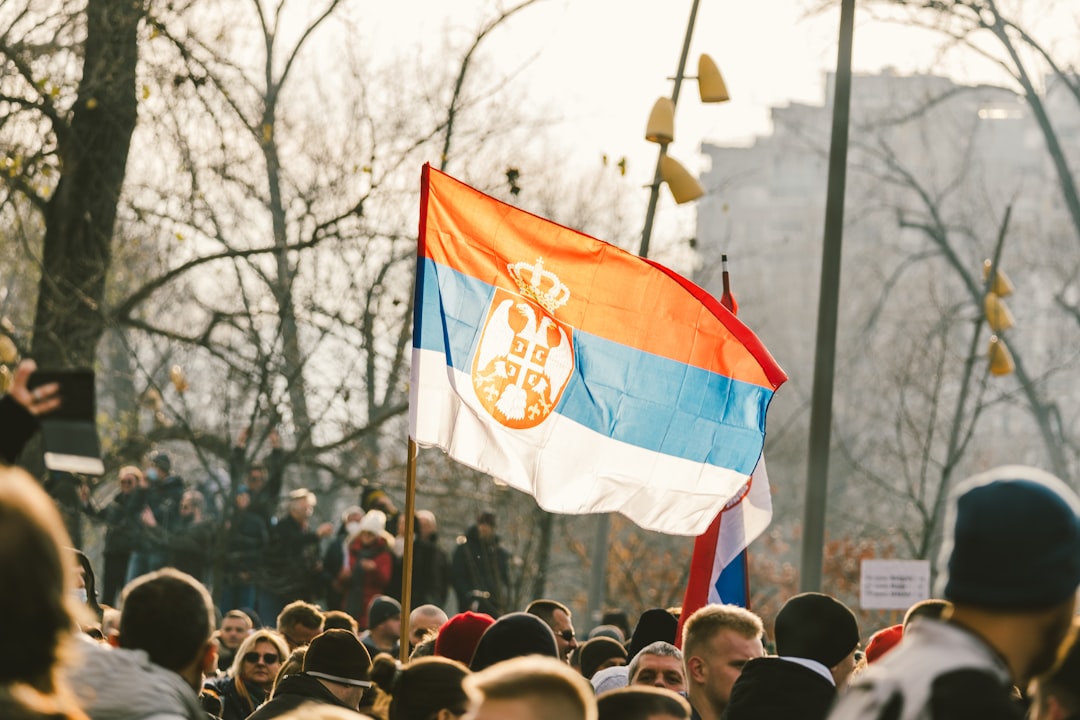
A driver repeatedly rammed his vehicle into student protesters outside <strong>Belgrade's Law Faculty</strong> on Wednesday afternoon, striking a nearly 90-year-old man during a silent memorial vigil and sparking outrage across Serbia's polarized political landscape.
The incident, captured on multiple videos circulating on Serbian social media, shows the driver <strong>deliberately reversing his vehicle</strong> into protesters standing behind his car after initially hitting the elderly victim. Police later arrested the suspect, identified in social media posts, and ordered him held for up to 48 hours.
The victim, identified as <strong>Veroljub</strong>, turns 90 years old in just nine days, according to posts on the r/serbia subreddit that garnered hundreds of upvotes and dozens of comments expressing shock and solidarity.
<h2>Premeditated Attack During Silent Vigil</h2>
The attack occurred during a <strong>16-minute silent vigil</strong> organized by students as part of Serbia's months-long protest movement against the government of President Aleksandar Vučić. Protesters have been blocking roads and holding demonstrations since late 2025 following the deadly Novi Sad railway station collapse that killed 15 people.
"From this angle you can best see that it was intentional and that he deliberately put it in reverse with the intention of running over people who were standing behind the car. This was absolutely an <strong>attempted murder</strong>," read one highly-upvoted post analyzing the video footage.
Witnesses reported the driver also <strong>wielded a metal rod</strong> and struck students during the confrontation. A second video shows protesters eventually stopping and confronting the driver, with one post describing him as visibly shaken after the incident.
<h2>Escalating Tensions in Serbia's Political Crisis</h2>
The attack represents a disturbing escalation in Serbia's political turmoil—not just state security forces clashing with protesters, but civilians attacking demonstrators. Serbian social media posts labeled the driver a "naprednjačko govno" (SNS scum), referring to the ruling Serbian Progressive Party, though authorities have not confirmed any political affiliation.
The incident galvanized protest movements across Serbia. Within hours, students in <strong>Niš</strong> announced emergency actions in response to "the running over of an elderly person and repeated charging at students and citizens during 16 minutes of silence in front of the Law Faculty in Belgrade."
Student groups also promoted a major protest scheduled for <strong>May 23 at Slavija Square</strong> in Belgrade under the banner "STUDENTS ARE WINNING!"
<h2>Pattern of Violence Against Protesters</h2>
The vehicular attack came the same day that investigative outlet <strong>BIRN</strong> published forensic medical analysis documenting systematic police brutality during protests in Valjevo—including officers kicking protesters in the head and genitals, beating people with batons while they lay on the ground, and forcing them through "gauntlets" of police.
In the Balkans, as across post-conflict regions, the path forward requires acknowledging the past without being imprisoned by it. Yet Wednesday's attack reveals how deeply Serbia's society has fractured over the protest movement, with political divisions now fueling civilian-on-protester violence.
The Law Faculty has emerged as a symbolic center of student resistance, making the attack on elderly Veroljub during a <strong>silent memorial</strong>—one of the movement's most peaceful forms of protest—particularly shocking to observers across the political spectrum.
Serbian authorities announced the driver's arrest hours after the incident, but protesters and opposition figures demanded <strong>murder charges</strong> rather than lesser offenses, arguing the videos show clear intent to harm.
<h2>Regional and EU Implications</h2>
The escalating violence poses questions for Serbia's EU accession process, which requires respect for democratic norms and human rights. While the European Union has remained largely silent on Serbia's protest crackdown, systematic violence against peaceful demonstrators—now including elderly civilians—tests the limits of Brussels' patience with the Vučić government.
For Serbia's opposition and student movements, the attack on an 89-year-old man has become a rallying point, symbolizing both the government's intolerance of dissent and the courage of ordinary citizens joining student-led demonstrations despite personal risk.
As investigations continue and Veroljub recovers from his injuries, the incident has already reshaped Serbia's protest dynamics—transforming what was a student-led movement into a broader societal confrontation over the country's democratic future.