
Within hours of former President Yoon Suk Yeol's life imprisonment sentence, South Korea's ruling Democratic Party revealed internal divisions that could shape the nation's political trajectory for years—a split between hardliners demanding the death penalty and moderates urging reconciliation and democratic healing.
The fault lines emerged immediately after the February 19 verdict, with party leader Jeong Cheong rae and senior lawmakers condemning the ruling as inadequate while floor spokesperson Kim Hyun jung characterized it as "a stern punishment delivered by the rule of law" that could "mark the beginning of healing for our wounded democracy."
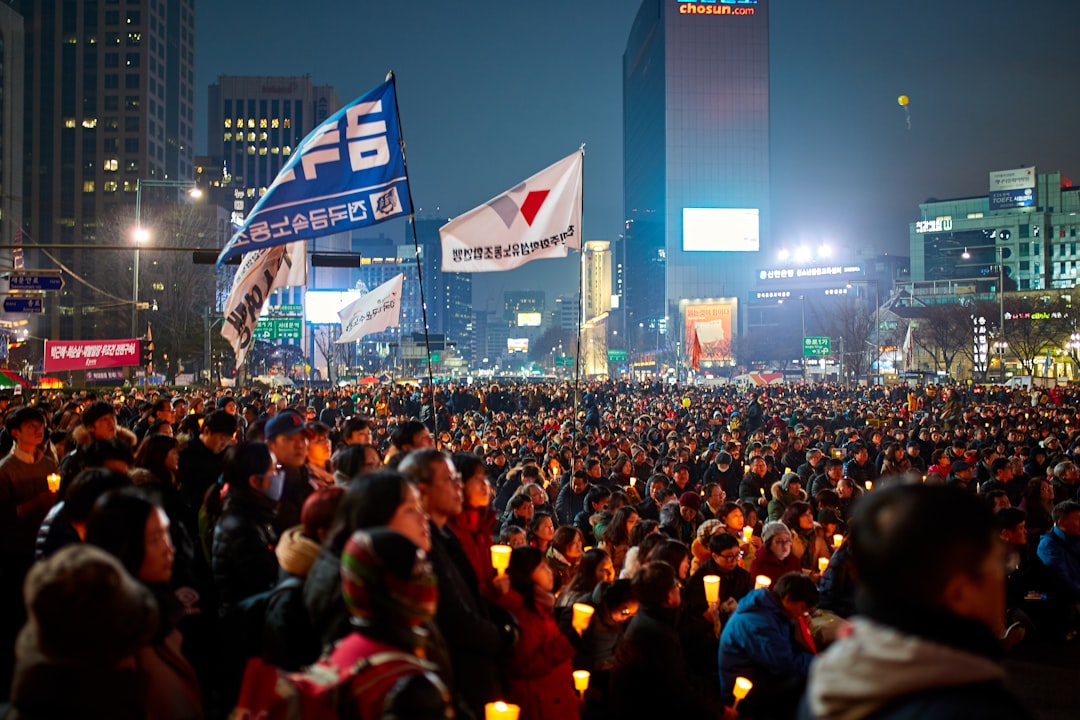
According to Yonhap News Agency, the maximalist faction—led by figures like Representative Park Ji won, who insisted "we must appeal and bring about a death sentence"—views anything less than capital punishment as a betrayal of the "Revolution of Light," the term progressives use to describe the mass mobilization that opposed Yoon's December 3 martial law declaration.
This camp argues that Yoon's attempted suspension of democratic processes represents a crime exceeding even Chun Doo hwan's 1979 military coup in severity, given that Yoon held democratically granted power and chose to destroy the system that elevated him. Representative Baek Hye ryun, a former prosecutor, declared the life sentence "a stain in the history of the rule of law in the Republic of Korea," signaling that legal professionals within the party view the court's leniency as compromising judicial credibility.
Secretary General Jo Seung rae emphasized that "this ruling falls short of the public's will to punish the insurrection," framing the verdict as disconnected from popular sentiment and suggesting that appeals should pursue maximum legal consequences. This faction's rhetoric positions the death penalty not as vengeful but as proportionate—the only punishment commensurate with attempting to overthrow constitutional democracy.
Yet the reconciliation wing, while smaller and less vocal, represents a significant ideological current within the Democratic Party. Floor spokesperson Kim Hyun jung's statement that the sentence could enable democratic healing reflects concern that prolonged political warfare over Yoon's punishment could deepen national polarization rather than resolve it.
This moderate faction worries that making Yoon's execution a political cause célèbre transforms the insurrection trial into an endless vendetta, preventing South Korea from addressing urgent governance challenges like economic inequality, demographic decline, and regional security threats. They note that the 1997 pardon of Chun Doo hwan, while controversial, did allow South Korea to move past the coup-era divisions and focus on building democratic institutions.
The split mirrors broader tensions within progressive movements globally about whether justice requires maximum punishment or whether reconciliation sometimes demands restraint. In South Africa, the Truth and Reconciliation Commission chose acknowledgment over prosecution for many apartheid-era crimes; in post-Franco Spain, the Pact of Forgetting allowed former regime participants to integrate into democracy. Both models have defenders and critics, with maximalists arguing they enabled impunity and moderates contending they prevented civil conflict.
For the Democratic Party, these divisions carry immediate political consequences. If the party unifies behind demanding Yoon's execution, it risks appearing vindictive to moderate voters who supported impeachment but feel discomfort with state-sanctioned killing. South Korea has maintained a de facto moratorium on executions since 1997, though the death penalty remains legal. Breaking this moratorium for Yoon would be symbolically powerful but could trigger backlash from human rights advocates and religious groups.
Conversely, if the party accepts the life sentence and pursues reconciliation, it faces accusations of betraying the citizens who mobilized against Yoon's martial law. The "Revolution of Light" rhetoric that Democrats have embraced creates expectations for revolutionary justice, not measured institutional processes. Disappointing this base could depress turnout in the 2027 presidential election or fuel primary challenges from more radical candidates.
The strategic calculation is complicated by ongoing investigations. Party leader Jeong's reference to the "Noh Sang won notebook"—alleged planning documents detailing the martial law conspiracy's full scope—suggests Democrats believe additional evidence could emerge to justify harsher punishment. If investigations reveal that Yoon's plans included violence against legislators or opposition figures, public opinion might shift toward supporting capital punishment.
Moreover, the appeals process creates opportunities for both factions to claim vindication. Hardliners can argue that pursuing death penalty appeals demonstrates commitment to accountability, even if unsuccessful. Moderates can accept the appeals as necessary political theater while privately hoping courts maintain the life sentence, allowing them to claim they fought for justice while accepting judicial wisdom.
The international dimension adds another layer of complexity. South Korea's democratic allies, particularly the United States and European Union, have increasingly moved away from capital punishment. Executing a former president could complicate Seoul's diplomatic positioning as a mature democracy and human rights advocate, particularly in contrast to North Korea's authoritarian brutality. Yet the reconciliation faction's concerns about international perception risk appearing to prioritize foreign opinion over domestic justice.
In Korea, as across dynamic Asian economies, cultural exports and technological leadership reshape global perceptions—even as security tensions persist. Yet the Democratic Party's internal struggle over Yoon's fate reveals how societies grapple with holding leaders accountable while preserving democratic norms. The maximalist-moderate split will shape not just Yoon's ultimate punishment but South Korea's broader political culture—determining whether the nation embraces transformative justice or institutional restraint as the path forward from its democratic crisis.