
The United States' shift away from manufacturing—long lamented by politicians and union leaders—may be the very thing protecting the American economy from the worst effects of spiking oil prices, according to a contrarian analysis gaining traction among economists.
As crude surges past $118 per barrel amid the Iran-driven crisis, the U.S. economy's heavy tilt toward services means it's far less vulnerable to energy shocks than it was during the oil crises of the 1970s and early 2000s.
"America's de-industrialization is actually a feature, not a bug, when it comes to energy resilience," said Adam Posen, president of the Peterson Institute for International Economics. "We've traded manufacturing jobs for an economy that can weather oil shocks far better than our competitors."
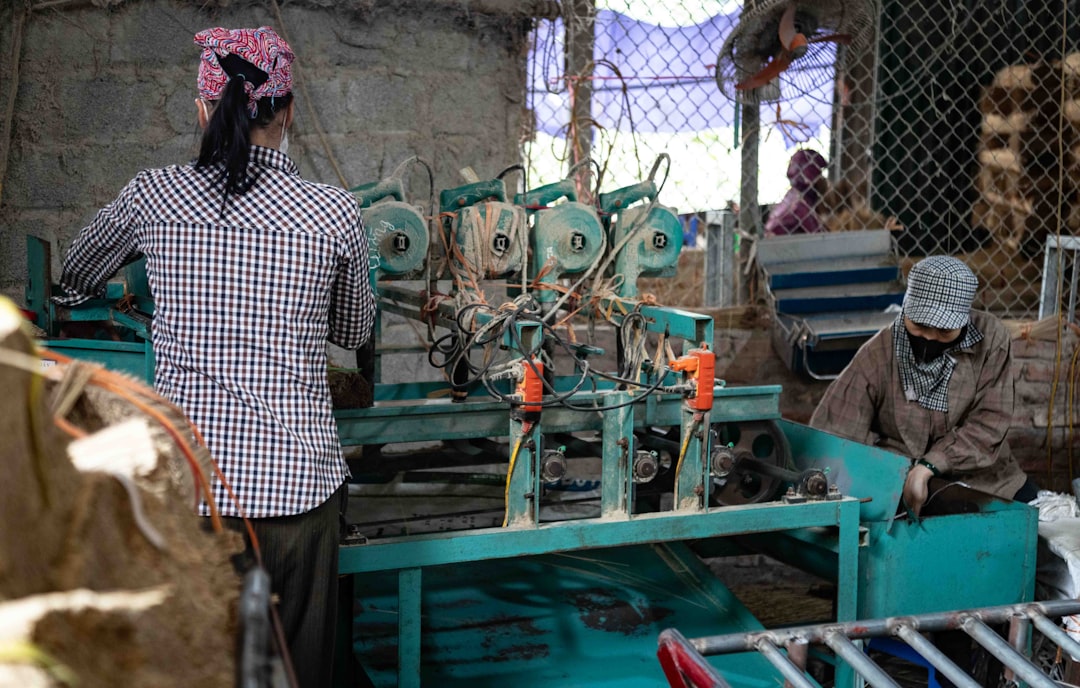
The numbers tell the story. Manufacturing now accounts for just 11% of U.S. GDP, down from 28% in 1953 and 16% as recently as 2000. Services—everything from software to healthcare to finance—make up more than 77% of economic output. And services are dramatically less energy-intensive than making physical goods.
A $10 increase in oil prices that might have knocked 0.5% off GDP growth in 1980 now has roughly half that impact, according to Federal Reserve estimates. The reason: you don't need much diesel to write code, perform surgery, or trade financial instruments. But you need a lot of it to smelt steel, manufacture chemicals, or run assembly lines.
Compare that to Germany, where manufacturing still represents 20% of GDP, or China at 27%. Those economies face far steeper headwinds from sustained high energy costs. German industrial production is already contracting as manufacturers grapple with energy bills that have tripled. Chinese factories are curtailing output.
"The political class keeps calling for a manufacturing renaissance, but economically, we're better off without it," Posen argues. "Every percentage point shift toward services makes us more resilient to commodity shocks."
The data supports the thesis. During previous oil spikes—2008, 2011, 2022—the U.S. economy proved more resilient than European or Asian peers with heavier manufacturing bases. Recessions were shorter and shallower. Employment held up better. The service economy's flexibility acted as a shock absorber.
That's not to say oil prices don't matter. American consumers still drive everywhere, and higher gas prices are a regressive tax that hits lower-income households hardest. Airlines, logistics companies, and petrochemical manufacturers are all taking hits. But the overall economic impact is far more muted than it would be in a manufacturing-heavy economy.
The analysis has profound implications for industrial policy. Politicians from both parties have championed "reshoring" manufacturing, touting factory construction and criticizing trade deals that moved production overseas. The CHIPS Act and Inflation Reduction Act both include massive subsidies to bring manufacturing back to American soil.
But if Posen is right, that's exactly backward. "We're spending hundreds of billions of dollars to make our economy more vulnerable to the next oil shock," he said. "It's terrible policy dressed up as economic patriotism."
Not everyone agrees. Manufacturing advocates point out that factory jobs typically pay better than service jobs, provide clearer career ladders, and support entire communities in ways that app-based gig work doesn't. The social and political benefits of manufacturing, they argue, outweigh the energy vulnerability costs.
"This is the kind of analysis that makes sense in an economics seminar but ignores political reality," said Robert Scott, director of trade and manufacturing policy at the Economic Policy Institute. "Good luck telling Ohio or Michigan that losing factories was actually great for them."
The debate cuts to a fundamental tension in economic policy: efficiency versus resilience versus equity. The service economy may be more energy-efficient and oil-shock-resistant. But is it delivering broadly shared prosperity? The data there is far more mixed.
For now, as oil prices surge and manufacturing-heavy economies struggle, the U.S. is indeed weathering the storm better than most. Whether that's cause for celebration or concern depends on whether you're analyzing spreadsheets or trying to win elections in the Rust Belt.