
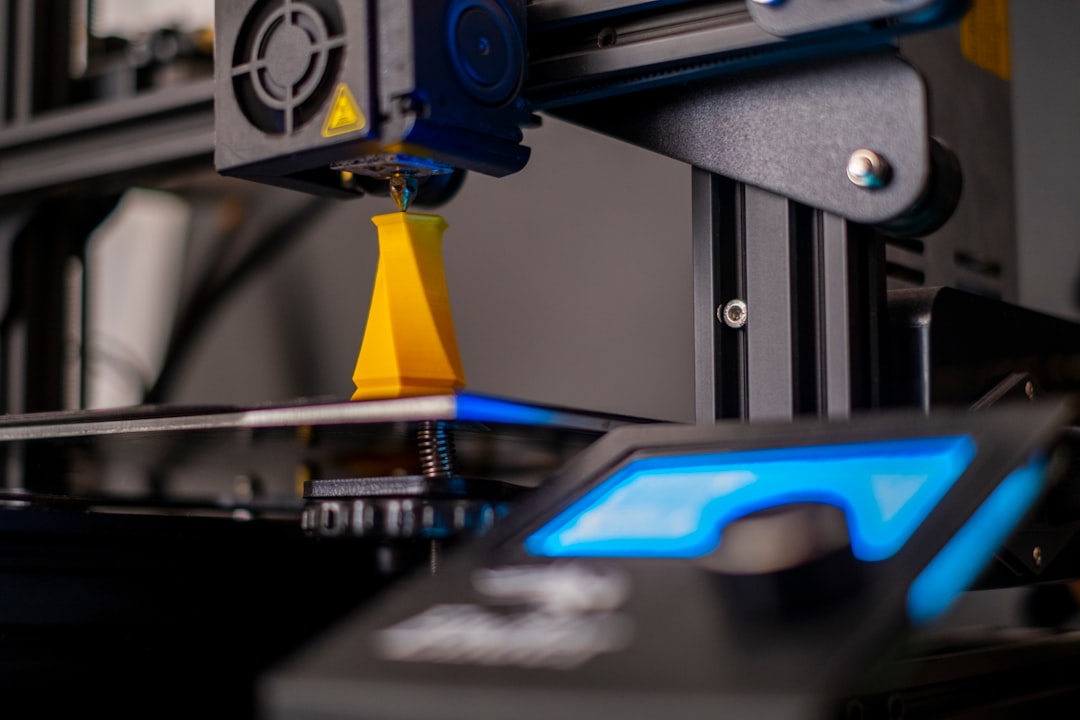
In Central Europe, as we learned from the Velvet Revolution, quiet persistence often achieves more than loud proclamations. For Josef Prusa, the Czech entrepreneur who transformed hobbyist 3D printing into an accessible global movement, that persistence is now drawing unexpected support from tech influencers worldwide.Bambu Lab, a Chinese 3D printer manufacturer that built its success on open-source code originally developed by Prusa Research, sparked international controversy this week by threatening legal action against a Polish developer who modified their firmware. The developer, Pawel Jarczak, had published code allowing users to bypass Bambu Lab's newly imposed cloud authentication requirements—requirements that blocked the very open-source access the company's products were built upon.<h2>David vs. Goliath in the Maker Movement</h2>The confrontation represents more than a corporate dispute. It crystallizes tensions between Czech manufacturing values—rooted in open collaboration and community-driven innovation—and what critics describe as appropriation of intellectual property by a well-funded competitor."They're using our open-source code," Josef Prusa wrote on social media, "and now they're threatening developers for doing exactly what we've always encouraged." Prusa's company, based in Prague, pioneered affordable 3D printing through its commitment to the AGPL open-source license, which requires derivative works to remain open.Bambu Lab's firmware derives from Prusa Slic3r, the slicing software Prusa Research released freely to the maker community. Yet when Jarczak published his modified version—restoring local control that Bambu Lab's update had removed—the company issued a pre-litigation notice citing reverse engineering and circumvention of protections.<h2>Tech Giants Enter the Fray</h2>The response from the technology community proved swift and unequivocal. Louis Rossmann, a prominent right-to-repair advocate with over two million YouTube subscribers, posted the contested code on his own channels. "If Bambu Lab wants to sue someone," Rossmann stated in a video viewed hundreds of thousands of times, "they can sue me."GamersNexus, known for rigorous hardware analysis, took an even stronger stance. Their website now features a page titled "F*** You Bambu Lab," hosting the disputed code and encouraging users to preserve their ability to control devices they own. "This isn't about one developer," the site explains. "This is about whether companies can use open-source foundations and then lock users out."Tech journalist Jeff Geerling announced he was removing all Bambu Lab equipment from his popular YouTube channel, which focuses on single-board computers and maker projects. The coordinated response from influencers who collectively reach millions of viewers represents significant reputational damage for Bambu Lab.<h2>Central European Innovation Under Pressure</h2>For observers in Prague and across Central Europe, the confrontation carries familiar echoes. Czech manufacturing excellence—from Škoda to Prusa—has long balanced innovation with accessible pricing and commitment to communities rather than pure profit maximization."We've always believed that sharing makes everyone stronger," Prusa told Živě.cz, the Czech technology publication, in comments following the controversy. "That's not naïve—it's how real innovation happens."Czech tech circles noted the irony that Živě.cz and its Slovak counterpart Živé.sk have remained conspicuously silent on the controversy despite multiple reader submissions. Some speculate about potential business relationships with Bambu Lab, though neither publication has addressed the story.<h2>The Velvet Revolution Principle</h2>The story resonates beyond 3D printing. Czech Republic's integration into European innovation ecosystems has rested on reputation for quality engineering and collaborative values—the same principles that drove the peaceful transition from communism.Bambu Lab's approach represents a different philosophy: leveraging open-source foundations to achieve rapid market penetration, then restricting access through proprietary cloud services. The company's printers gained market share by offering features Prusa developed—then added cloud requirements that Prusa intentionally avoided."We could have required cloud authentication years ago," Prusa noted. "We didn't, because user freedom matters more than control."<h2>Implications for Open Source</h2>Legal experts note that Bambu Lab's position appears weak under AGPL licensing terms, which explicitly permit modification and redistribution of derivative works. The company's use of pre-litigation threats against an individual developer—rather than engaging with licensing questions—suggests awareness of this vulnerability.For the broader maker movement, the confrontation highlights tensions as hobbyist technologies scale to mass production. Prusa Research employs over 700 people in Prague, manufacturing thousands of printers monthly while maintaining open-source commitments. Bambu Lab, with reported backing from Chinese venture capital, produces even larger volumes but with increasing software restrictions."The question," Rossmann observed in his video, "is whether open source means anything when companies can take the code, close the ecosystem, and threaten anyone who reopens it."From Prague, Prusa's response embodies the Czech approach: principled, persistent, and confident that community support ultimately prevails over corporate intimidation. In the 34 years since the Velvet Revolution, that approach has served Czech innovation remarkably well.Bambu Lab did not respond to requests for comment. Jarczak confirmed he removed his code repository under legal pressure but expressed gratitude for the "overwhelming support from the community and major tech voices."
|