
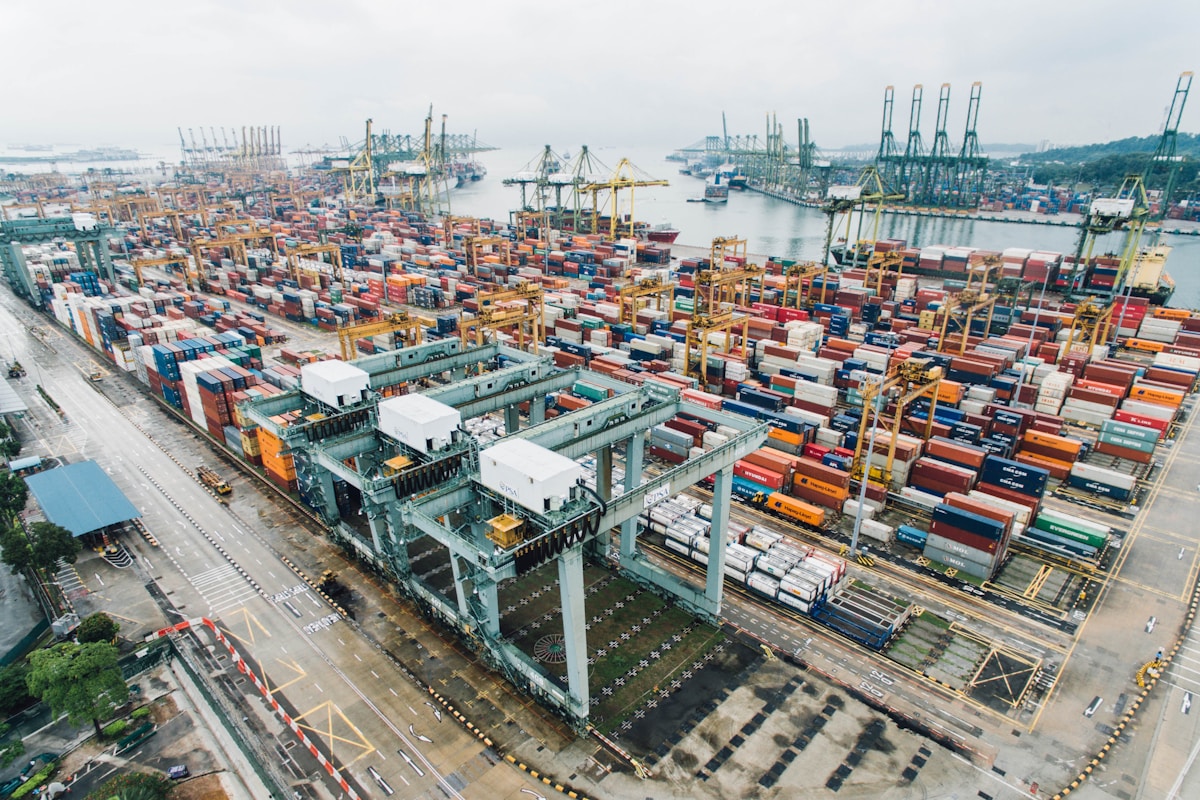
The cost to ship a container from China to the United States has nearly tripled since January, and small importers are getting crushed.
A small business owner posting on Reddit reported receiving a quote for $6,000 per container—up from roughly $2,000 in January. That's not an anomaly. It's the new normal for transpacific shipping, and it's about to hit retail prices in Q3.
Spot rates on the Shanghai-Los Angeles route have surged past $5,800 per forty-foot equivalent unit (FEU), according to industry freight indices. Contract rates, which lag spot markets, are resetting higher as annual agreements expire. The Freightos Baltic Index shows sustained elevation across major trade lanes, with no near-term relief in sight.
Three factors are driving the spike. First, the Iran conflict has disrupted shipping through the Suez Canal, forcing vessels to reroute around Africa via the Cape of Good Hope. That adds 10-14 days of transit time and burns significantly more fuel. Carriers have passed those costs directly to shippers.
Second, container vessel capacity remains tight despite new ship deliveries. Strong import demand, especially for back-to-school and holiday inventory, has absorbed available space. Carriers are operating at high utilization rates, giving them pricing power they haven't enjoyed since the pandemic.
Third, labor agreements at major U.S. ports include wage increases and staffing requirements that raise terminal costs. Those expenses flow through to freight rates as carriers and logistics providers adjust their pricing.
Large retailers with contract volumes can absorb or negotiate around rate increases. Walmart, Target, and Home Depot have dedicated shipping capacity and multi-year agreements that provide some insulation from spot market volatility. They also have the margin structure to absorb higher logistics costs without immediate price increases.
Small importers have no such cushion. A business importing containers on an irregular basis pays spot rates with zero negotiating leverage. When shipping costs triple, the choice is binary: eat the cost and destroy margins, or raise prices and risk losing customers.