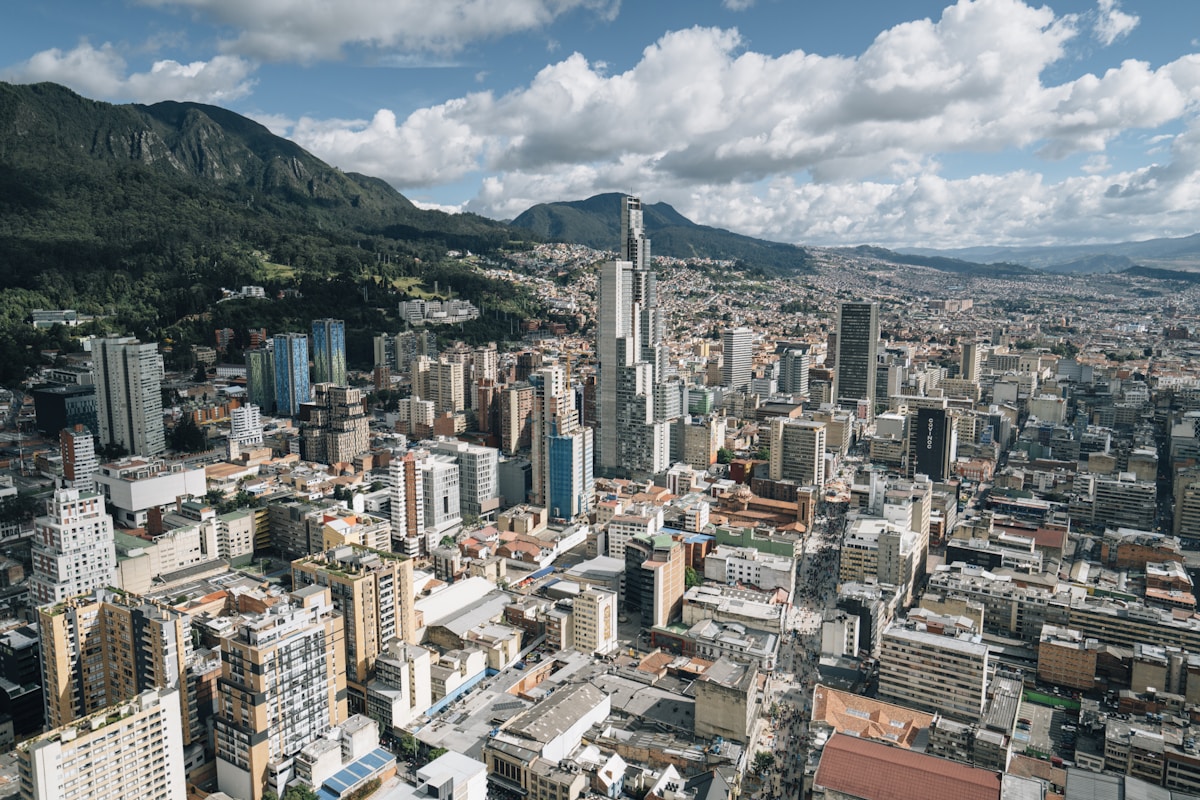
Digital nomads are increasingly choosing Colombia over traditional Southeast Asian hubs, drawn by year-round weather, dramatic landscapes, low costs, and welcoming culture. Some travelers see Colombia as "what Thailand was 10-15 years ago" before mass tourism.
A recent discussion on r/digitalnomad sparked debate about whether we're witnessing a major shift in digital nomad geography.
The Case for Colombia
Colombia offers compelling advantages:
Year-round weather: Unlike Southeast Asia's monsoon seasons, cities like Medellín and Cali maintain spring-like temperatures year-round. Medellín is literally called "the city of eternal spring."
Time zones: Colombia is EST/CST, making it ideal for remote workers with US clients or employers. Southeast Asia's 12+ hour time difference creates scheduling nightmares.
Cost of living: While not as cheap as Thailand or Vietnam in their 2010s heyday, Colombia still offers excellent value. Comfortable living in Medellín or Bogotá costs $1,200-1,800/month including rent, food, and coworking.
Welcoming culture: Multiple nomads noted that Colombians are genuinely friendly toward foreigners, especially outside major expat clusters.
Infrastructure: Major cities have reliable internet, modern coworking spaces, and good healthcare — all essentials for location-independent workers.
The Case Against
Critics raised valid concerns:
Safety issues remain: While dramatically safer than 20 years ago, Colombia still has higher crime rates than Southeast Asia. Medellín in particular requires awareness about which neighborhoods are safe.
Language barrier: Unlike Thailand or Bali, where English is widely spoken in tourist areas, Colombia requires at least basic Spanish for daily life.
Already discovered? Some commenters argued the "early adopter" window has closed. Medellín and Cartagena have significant expat communities, and locals are increasingly wary of foreign gentrification driving up rents.
What Thailand Was vs. What It Is
The comparison to "Thailand 10-15 years ago" is telling. In 2010-2015, Thailand offered: - Extremely low cost of living - Welcoming attitude toward foreigners - Growing but not overwhelming expat communities - Good infrastructure in major cities - Sense of discovery and adventure
By 2026, much of that has changed. Bangkok, Chiang Mai, and the islands are expensive by regional standards. Visa rules have tightened. Some locals resent the influx of digital nomads and tourists. The "hidden gem" feeling is long gone.
Colombia in 2026 arguably sits where Thailand was in 2012: known enough to have infrastructure, unknown enough to feel like a discovery.
The Third Option: Neither
Some experienced nomads argued the entire premise is flawed. Why choose between Colombia and Southeast Asia when the digital nomad lifestyle is about flexibility?
One commenter suggested: "Spend winter months in Colombia to avoid cold weather back home, then spend summer in Bali or Vietnam. You don't have to pick one permanently."
This highlights a shift in nomad thinking. The "digital nomad" label once implied constant movement. Increasingly, it means strategic slow travel — spending 3-6 months in a base before moving.
The Bottom Line
Is Colombia the new Thailand? Sort of. It offers many of the same advantages Thailand did 10-15 years ago: affordability, good infrastructure, welcoming culture, and a sense of discovery.
But it's not a perfect substitute. The language barrier, safety concerns, and time zone differences make it a different experience. For nomads working with US clients or who prefer Latin American culture, Colombia is ideal. For those prioritizing ultra-low costs and ease of travel across multiple countries, Southeast Asia still has advantages.
The best travel isn't about the destination — it's about what you learn along the way. And sometimes the lesson is that there's no single "best" nomad destination. Just different tradeoffs depending on what you value.