
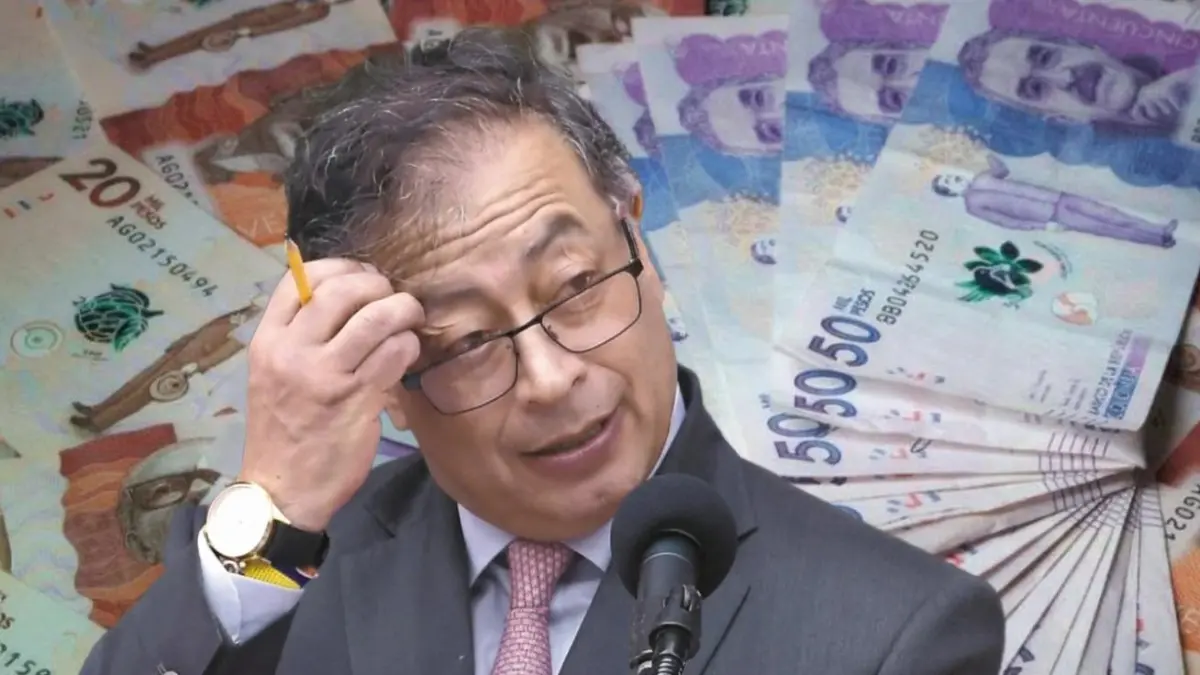
Colombia received its second credit downgrade in less than a year, as Standard & Poor's cut the country's sovereign debt rating from BB to BB-, citing persistent fiscal deficits and weakened fiscal predictability under President Gustavo Petro's administration.
The downgrade places Colombia in the same risk category as Turkey, Honduras, and Mongolia, though S&P shifted the outlook from negative to stable, suggesting further downgrades may be less likely in the near term.
S&P stated in its report that "procyclical fiscal policy marginally supports employment and consumption, but inflation expectations have risen," pointing to the fundamental tension in Petro's economic approach—stimulating growth while failing to close the gap between government spending and revenue.
The rating agency identified several structural weaknesses: a persistent fiscal deficit, rising external debt that limits fiscal flexibility, deteriorating current account balance, and—critically—the suspension of Colombia's fiscal rule in 2025, which created market uncertainty about the government's commitment to fiscal discipline.
In Colombia, as across post-conflict societies, peace is not an event but a process—requiring patience, investment, and political will. The 2016 peace agreement ended five decades of FARC guerrilla conflict, but implementation—building roads, providing security, offering economic opportunities in former conflict zones—proves more difficult than signing treaties. That implementation carries significant fiscal costs.
Petro, Colombia's first leftist president, campaigned on expanding social programs and accelerating peace process implementation in rural areas. His administration has increased spending on education, healthcare, and rural development while attempting tax reforms to boost revenue. Those reforms have faced fierce congressional opposition and only partial implementation, leaving the fiscal gap wider than anticipated.
The downgrade's practical impact will be felt immediately through for both government and consumers. Mortgage rates and consumer credit will become more expensive as Colombian banks adjust to the country's increased risk profile. The government will face steeper interest payments on new debt issuance, reducing fiscal space for public investment precisely when infrastructure spending is needed to support peace process implementation.