
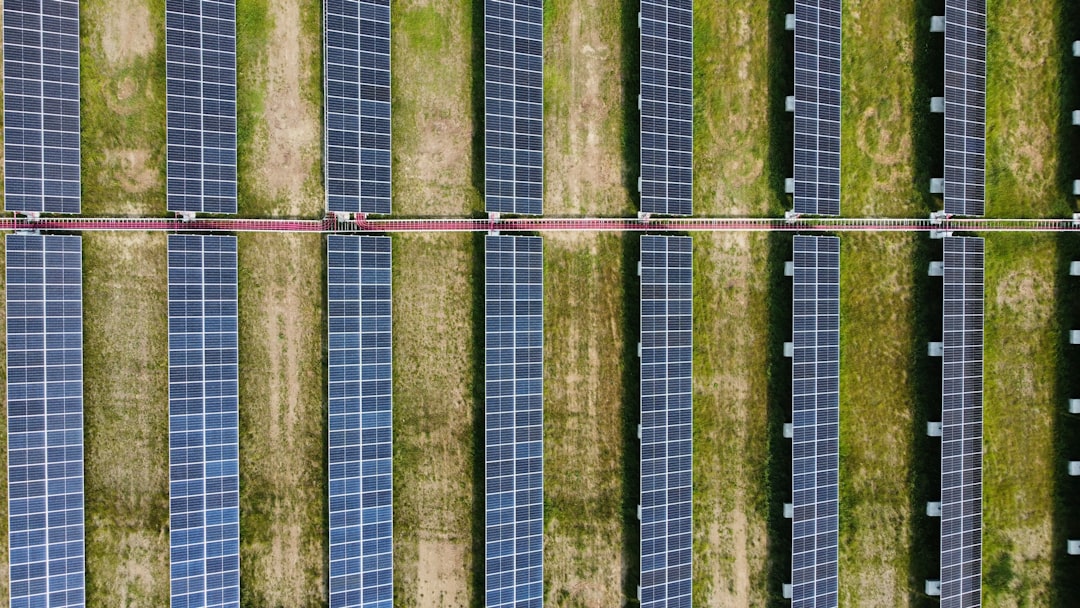
China's systematic deployment of industrial subsidies transformed its solar energy sector from negligible presence to global dominance within two decades, a trajectory documented in new research that holds direct relevance for understanding Beijing's current approach to semiconductors, electric vehicles, and other strategic technologies now at the center of US-China economic tensions.
A study published by VoxDev analyzing China's solar subsidy programs found that state support not only drove down costs and expanded production capacity but catalyzed innovation at rates that reshaped global markets. Within twenty years, China progressed from holding zero solar efficiency records to claiming nearly half of all efficiency breakthroughs globally—a pattern of planned technological advancement that Western policymakers now recognize as applicable across multiple sectors.
The research validates what Chinese officials have long emphasized: that targeted state investment, when sustained over sufficient timeframes and coordinated with educational infrastructure and supply chain development, can generate both immediate industrial capacity and longer-term innovation capabilities. This contrasts with market-oriented approaches that rely primarily on demand-side incentives and assume innovation emerges organically from competitive pressures.
China's solar subsidies operated on multiple levels simultaneously. Direct production subsidies reduced manufacturing costs, enabling scale expansion that further lowered unit prices through economies of scale. Research and development support funded both incremental improvements and fundamental materials science breakthroughs. Provincial and municipal governments provided land, utilities, and tax advantages while central authorities coordinated supply chain integration to minimize dependencies on foreign inputs.
The results proved transformative not only for China but for global energy markets. Solar panel prices fell by over 90 percent between 2010 and 2020, making solar competitive with fossil fuels in many markets without subsidy—an outcome that accelerated clean energy adoption worldwide while simultaneously making China the indispensable supplier for countries pursuing decarbonization targets.