
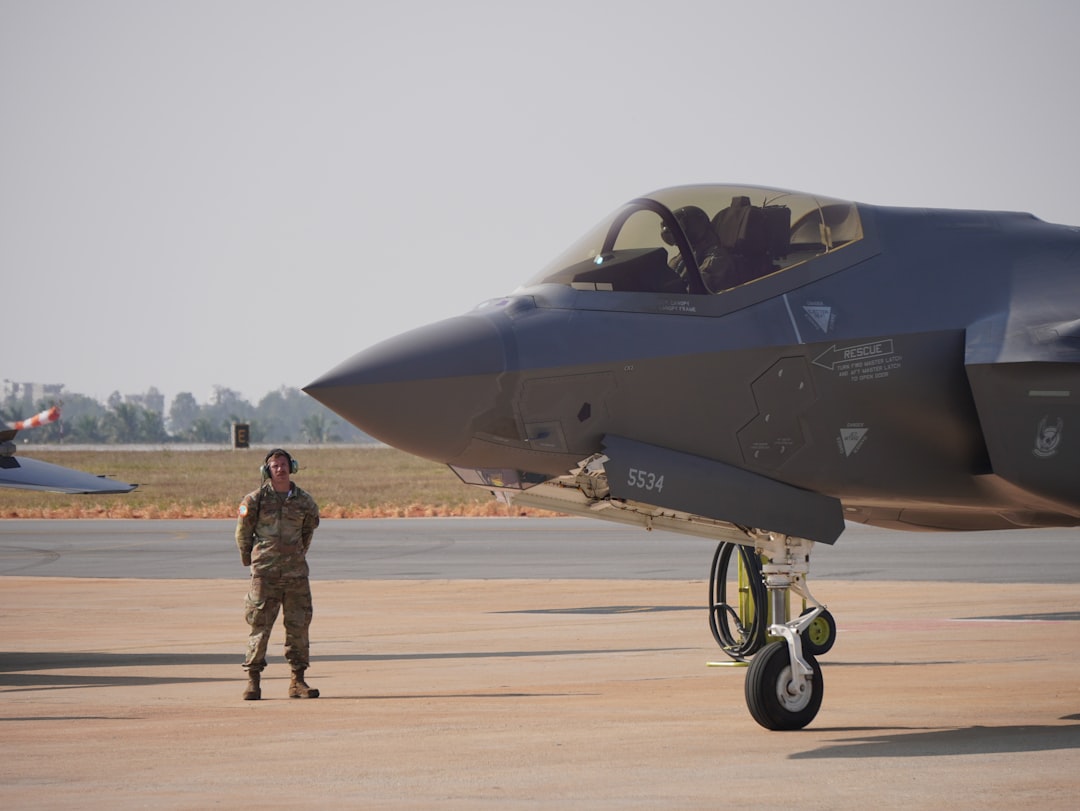
Two U.S. senators issued a stark warning Thursday that China is on pace to deploy the world's first sixth-generation stealth fighters years before America, marking a potential end to decades of uncontested U.S. air superiority. In a Wall Street Journal opinion piece, Senators Ted Budd (R-NC) and Jeanne Shaheen (D-NH), both members of the Senate Armed Services Committee, argued that Washington needs a "national mobilization" of its defense industrial base to counter China's unprecedented buildup.
The Chinese J-36 and J-50 sixth-generation fighters already flew in 2024, while America's F-47 isn't expected to take its first flight until 2028 and won't enter operational service until the mid-2030s. For the Pentagon and its allies, this represents a technological and industrial challenge unlike any faced since the Cold War: China is matching sophisticated stealth and sensor capabilities with manufacturing scale that could produce sixth-generation aircraft at rates eclipsing U.S. output by nearly 200% by 2027.
"Since the turn of the century, the U.S. military has dominated the skies," the senators wrote. "With unmatched speed, stealth and sensors, our fighter aircraft have achieved air superiority in every modern conflict and proved that air power is the fastest, most flexible and most lethal means to project combat power. But the future of American air power is uncertain."
The senators detailed how decades of policy decisions hollowed out America's aviation industrial base. The F-22 stealth fighter program was terminated after producing only 187 aircraft—well short of the initial 750-aircraft plan. Republican and Democratic administrations alike oversaw the Air Force's total fighter fleet reduction from 4,100 aircraft in 1990 to 2,000 in 2024. Only 1,300 are now combat-coded, representing a record low. Meanwhile, current aircraft are aging beyond repair: legacy KC-135 tanker aircraft are more than 60 years old, the fighter fleet averages over 27 years old, and operational rates hover around only 50%.