
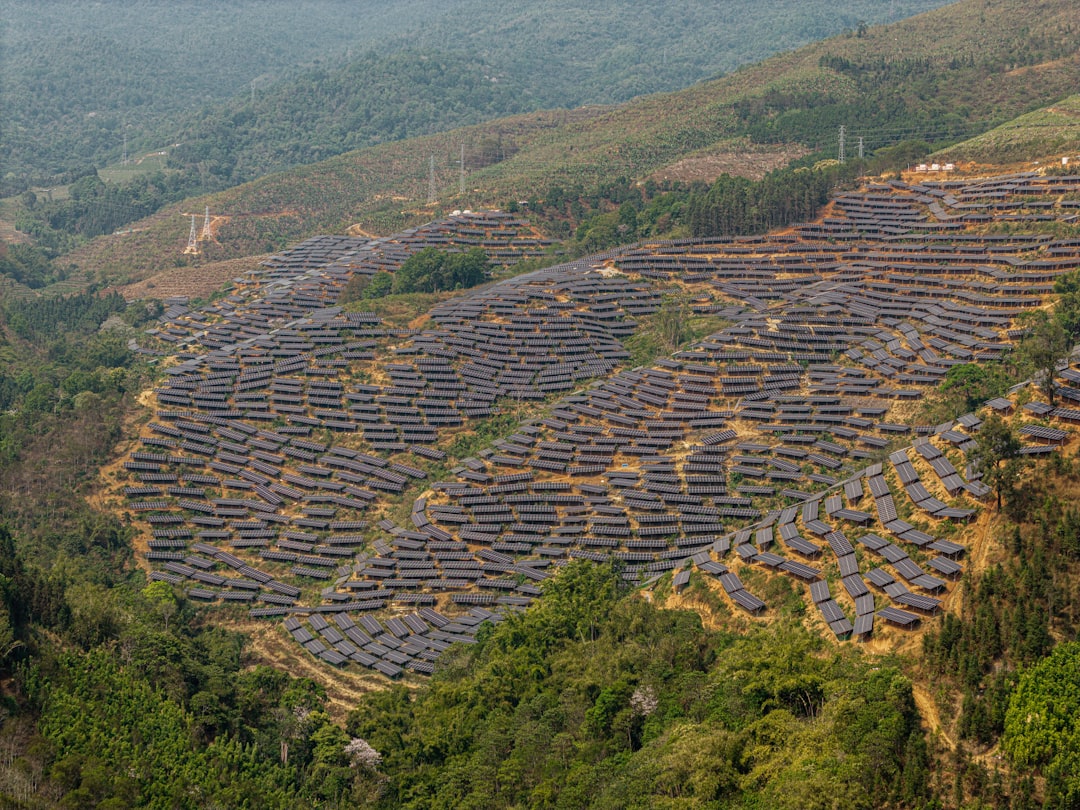
China is reducing new clean energy manufacturing investment—not from weakness, but from having achieved such overwhelming industrial dominance that further expansion would produce capacity the world cannot yet absorb. With over 90% of global solar manufacturing capacity, 83% of battery production, and nearly three-quarters of wind technology manufacturing now concentrated in Chinese facilities, Beijing's planners face a challenge unfamiliar to most industrial powers: managing the consequences of near-total market control.
The Clean Investment Monitor projects the gap between China's manufacturing capacity and global demand will widen through 2030, making continued factory construction economically inefficient even as clean energy deployment accelerates worldwide. China's clean energy sector has entered a consolidation phase after years of state-directed expansion that left international competitors struggling for market share.
In 2025, China added over 300 gigawatts of solar capacity and more than 100 gigawatts of wind—both global records—alongside 35 terawatt-hours from new nuclear plants. Non-fossil power generation grew by over 460 terawatt-hours in the first eleven months, surpassing China's 460 TWh increase in total electricity demand. The surplus clean energy directly displaced coal generation, which fell 1.6% despite 5% demand growth—the first simultaneous decline with India in 52 years.
"China's grip on the EV sector almost looks measly in comparison, at just two-thirds" of global manufacturing capacity, according to industry analysis tracking the country's clean technology dominance. The concentration reflects decisions made during China's 12th and 13th Five-Year Plans, when Beijing prioritized renewable energy and electric vehicles as strategic industries deserving state support, subsidized credit, and coordinated supply chain development.
In China, as across Asia, long-term strategic thinking guides policy—what appears reactive is often planned. The current manufacturing slowdown represents Beijing managing oversupply rather than retreating from clean energy commitments. Chinese firms continue dominating not just panel and turbine assembly but upstream polysilicon production, lithium refining, and battery cell chemistry—the high-value segments that determine cost structures and technological trajectories.
For competing economies, China's position creates strategic vulnerabilities. The United States, despite the Inflation Reduction Act's manufacturing incentives, relies heavily on Chinese supply chains for solar installations that now provide the majority of new American power capacity. European renewable energy deployment similarly depends on Chinese imports, even as Brussels implements tariffs and reviews targeting Chinese clean tech firms. , , and have announced domestic manufacturing programs, but face cost disadvantages from lacking China's vertically integrated supply chains and manufacturing scale.