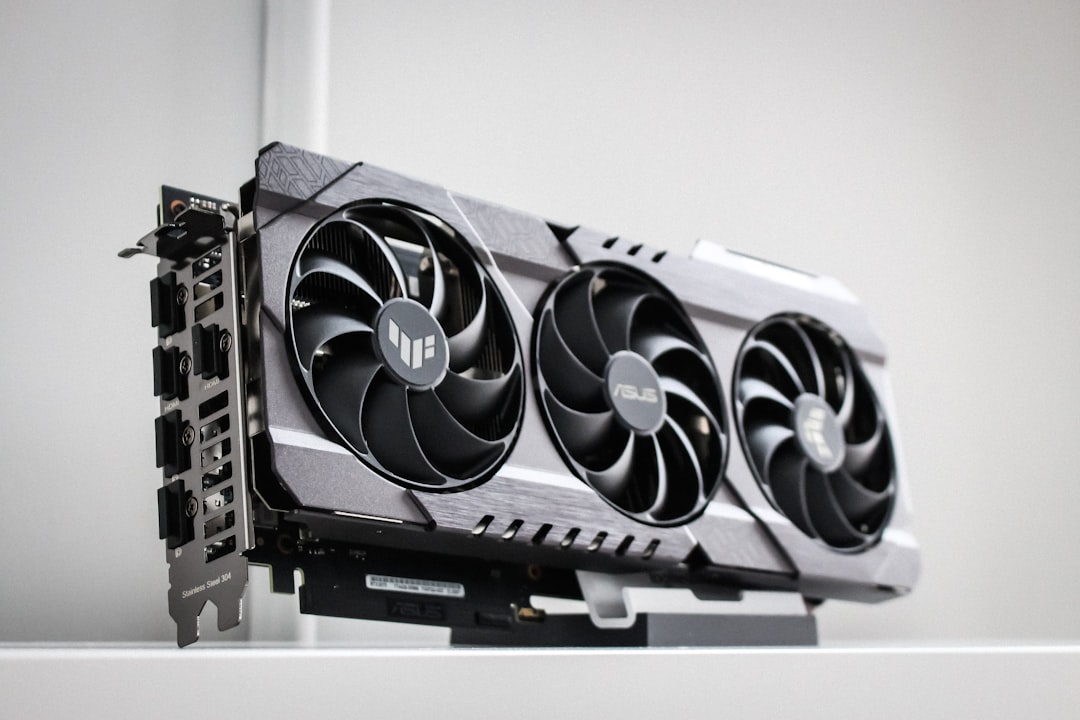
Testing shows China's most advanced GPU, the Lisuan LX 7G100, struggling to match Nvidia's RTX 3060 from 2021. The gap illustrates just how far behind Chinese semiconductor efforts remain despite massive investment.
Everyone talks about China closing the chip gap. The benchmarks tell a different story.
The Lisuan LX 7G100 represents China's flagship consumer GPU effort, the product of years of development and billions in government subsidies aimed at achieving semiconductor independence. New testing shows it achieving roughly 65% of the RTX 3060's performance across multiple gaming titles at 1080p resolution.
That's the headline number. The details are more interesting. Performance varies wildly by game, suggesting incomplete driver optimization and inconsistent support for different graphics APIs. Final Fantasy VII Remake and Spider-Man ran relatively well. Monster Hunter Rise and Shadow of the Tomb Raider showed the five-year-old Nvidia card with over 40% performance advantage.
This is what happens when you're trying to catch up to a company that's been iterating on GPU architecture for decades. Nvidia doesn't just build faster chips. They've built an entire ecosystem of drivers, developer tools, and game engine optimizations that make their hardware perform better in real-world applications. China has to replicate all of that, not just the silicon.
The LX 7G100 launched at around $485, making it more expensive than the RTX 3060 it can't match and wildly overpriced compared to newer Nvidia cards in the same price range. That pricing tells you this isn't a commercial product competing on merit. This is a strategic product being sold to Chinese system integrators who need domestic components for government contracts or want to reduce dependence on US suppliers.
What does this mean for AI development in a world where cutting-edge GPUs are increasingly restricted? China can't buy the latest Nvidia data center GPUs thanks to US export controls. The LX 7G100 is a consumer graphics card, not an AI accelerator, but it's indicative of where Chinese GPU capabilities stand overall.
The real competition isn't consumer graphics cards anyway. It's AI training and inference accelerators, where the performance gap is even wider. China's attempts to build competitive AI chips face the same challenges as consumer GPUs: matching the raw performance is hard, building the software ecosystem is harder, and doing both while under export restrictions that limit access to critical manufacturing equipment is harder still.
Some analysts argue the gap is closing. Point to the LX 7G100 as proof that China can build GPUs that work at all, which wasn't true a few years ago. Note that 65% of RTX 3060 performance is better than zero percent. Predict continued improvement as Chinese fabs gain experience and software stacks mature.
Other analysts point out that Nvidia isn't standing still. By the time Chinese GPUs match the RTX 3060, Nvidia will be several generations ahead. The gap might be closing in absolute terms while widening in relative terms, which matters more for AI development where cutting-edge performance determines what's possible.
The testing also reveals quality control issues. Some LX 7G100 units performed significantly worse than others, suggesting manufacturing consistency problems. That's a solvable issue with process refinement, but it's another indicator of how far China's GPU manufacturing is from matching established competitors.
For Chinese consumers and system builders who can access Nvidia products, there's no reason to buy the LX 7G100. It's slower and more expensive. For those who can't access foreign GPUs due to restrictions or procurement policies, it's better than nothing but not by much.
The strategic question is whether continued investment and iteration will eventually close the gap or whether the combination of export controls, manufacturing limitations, and Nvidia's continued advancement makes catching up impossible. The LX 7G100 benchmarks don't answer that question, but they show how far China still has to go.
The technology exists. The performance doesn't match the rhetoric. And five years is a long time in semiconductors.