
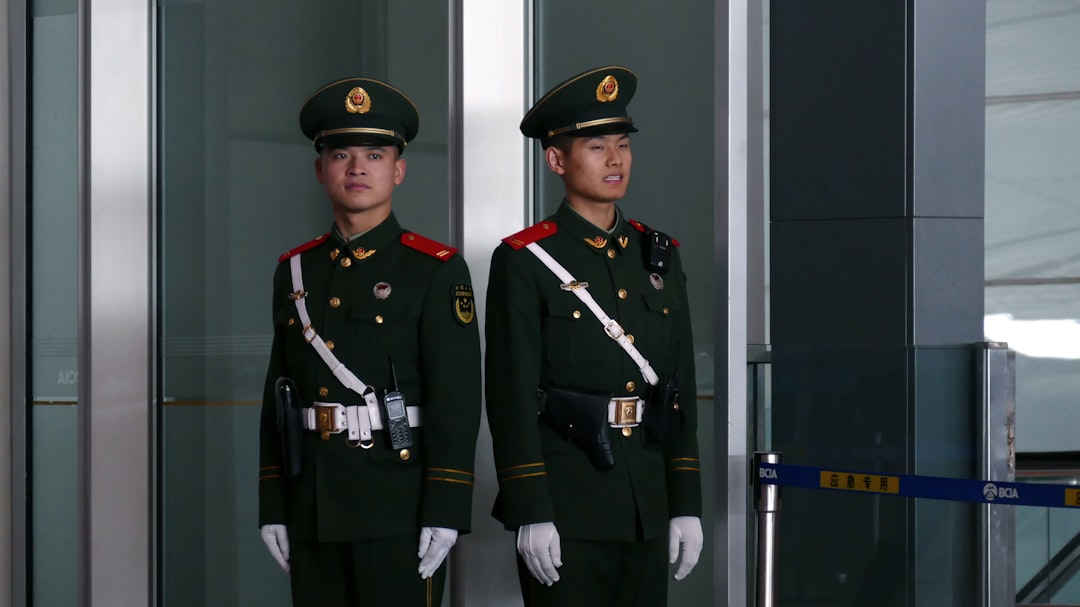
China's shrinking population is forcing defense analysts across the region to recalibrate their assessments of Beijing's military timeline for Taiwan, with demographic constraints emerging as a critical factor in strategic planning from Tokyo to Washington.
The People's Republic faces a demographic squeeze unprecedented in modern military history. China's working-age population has contracted by more than 40 million since 2015, according to official statistics, while births fell to 9.02 million in 2024—the lowest since the founding of the PRC in 1949. This "baby bust," as Politico characterized it in a recent analysis, carries profound implications for military recruitment, defense industrial capacity, and Beijing's strategic calculus regarding Taiwan.
"Watch what they do, not what they say. In East Asian diplomacy, the subtext is the text."
The demographic data reveals a stark reality: China's prime military recruitment pool—males aged 18-24—will decline by approximately 30 percent over the next decade. This contraction occurs precisely as the People's Liberation Army pursues ambitious modernization programs requiring both technological sophistication and mass manpower.
Japanese defense planners in Tokyo have quietly incorporated these demographic projections into their latest assessments, according to sources familiar with the Ministry of Defense's strategic planning. The calculations suggest Beijing faces a narrowing window if it intends to leverage numerical superiority in any Taiwan contingency—but that same window is constrained by the PLA's ongoing modernization timeline.
The tension between demographic decline and military readiness creates what analysts describe as a "closing window" scenario, though interpretations vary. Some regional security experts suggest the demographic pressure could accelerate Beijing's timeline, creating urgency before the recruitment pool shrinks further. Others argue the constraints may extend deterrence by making large-scale amphibious operations increasingly difficult to sustain.
In Taipei, defense officials have taken note. Taiwan's own military faces recruitment challenges, but the island's defensive posture requires far fewer personnel than the amphibious assault capability Beijing would need to mount. The demographic math increasingly favors the defender.
Washington has incorporated demographic analysis into its Indo-Pacific strategic framework, according to Pentagon sources who spoke on background. The assessment recognizes that while technology can partially offset manpower constraints, amphibious operations against a defended coastline remain personnel-intensive. An invasion force would require sustained casualties that a shrinking population may be less willing to accept.
The kanji for crisis (危機, kiki) combines danger and opportunity—a duality evident in current strategic thinking. Beijing's demographic crisis creates strategic pressure, but whether that pressure manifests as restraint or urgency remains the critical unknown shaping regional security calculations.
China's State Council has implemented various natalist policies, including three-child allowances and enhanced maternity benefits, but demographers note such measures typically require decades to impact military-age cohorts. The PLA must plan with the population it will have, not the one policymakers hope to create.
Regional military planners are now factoring demographic trajectories alongside traditional measures of military capability—a shift reflecting the long-term nature of the Taiwan question and the unprecedented demographic transformation reshaping East Asian security.