
In January 2026, China absorbed a record 4.99 million tons of Russian crude oil transported via shadow fleet tankers — an increase of nearly 400,000 tons from December — even as India sharply curtailed its own purchases by 2.27 million tons across the same period. The divergence is not coincidental. It reflects two distinct strategic calculations playing out in real time, and understanding the difference matters far more than the tonnage figures alone.
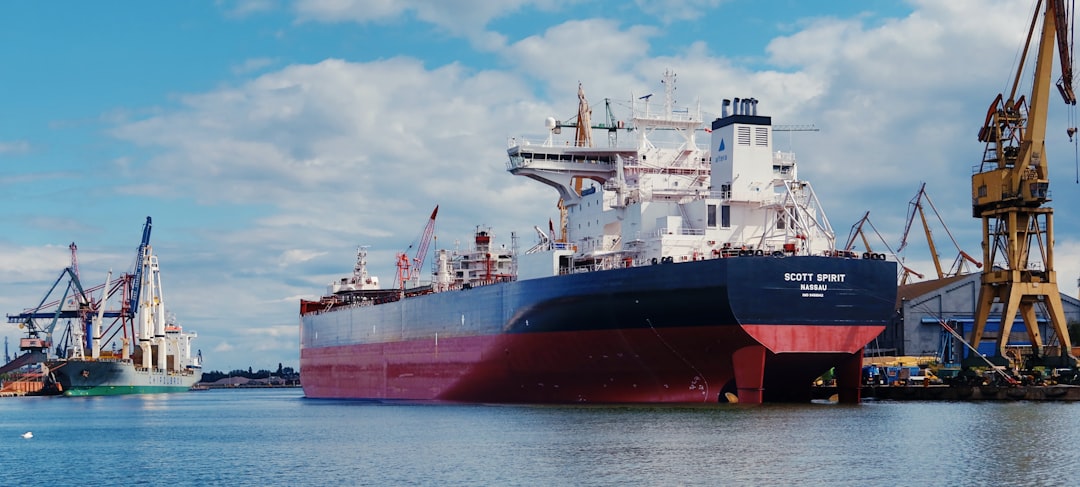
A shadow fleet tanker is a vessel that operates outside Western insurance, classification, and regulatory systems — ships typically lacking Lloyd's of London coverage and flagged through jurisdictions that enforce minimal Western oversight. According to analysis from Ukraine's Foreign Intelligence Service, cited by United 24 Media, 138 active shadow fleet tankers were operational in January 2026, with 117 classified as core fleet vessels and 96 already carrying Western sanctions designations. The fleet transported 14.32 million tons of Russian crude that month — roughly 104 million barrels — through a network involving ship-to-ship transfers near Nakhodka, Hong Kong, and Malaysian waters before final delivery to Chinese ports.
For Beijing, this is not opportunistic sanctions evasion. It is deliberate energy security architecture.
The Beijing Calculus: Strategic Dependency by Design
In China, as across Asia, long-term strategic thinking guides policy — what appears reactive is often planned. China's deepening reliance on Russian crude sits within a broader framework established well before the 2022 invasion of Ukraine. China's 14th Five-Year Plan (2021–2025) explicitly prioritized energy supply chain diversification and self-sufficiency, and the 2022 sanctions shock to global energy markets accelerated what was already a structural realignment.
What China gains beyond cheap crude is considerable. Russian oil currently trades at a meaningful discount to Brent — estimates have ranged from $12 to $20 per barrel below international market price — delivering savings that, at January's volumes, represent billions of dollars annually redirected toward domestic investment. But the relationship is not merely transactional. Beijing has used its position as Russia's indispensable energy customer to deepen bilateral interdependency, tying Moscow economically to Beijing's strategic orbit in ways that serve Chinese interests across multiple dimensions: energy security, geopolitical leverage, and the long-term erosion of Western sanctions as a coercive instrument.
Chinese officials have not publicly commented on the shadow fleet volumes — consistent with Beijing's standard posture of maintaining plausible deniability while systematically building parallel financial and logistics infrastructure. Independent analysts have noted that Chinese state refiners, including Sinopec and CNOOC, have reportedly expanded capacity to process higher-sulfur Urals-grade crude specifically. That infrastructure investment signals long-term commitment rather than temporary arbitrage.
India's Secondary Sanctions Calculus
The 29-voyage, 3.22-million-ton pullback by India — down 2.27 million tons from December — tells a fundamentally different story: one of exposure rather than strategic insulation. New Delhi's relationship with Russian crude was always more pragmatic than structural. India lacks the parallel financial architecture that allows China to transact with sanctioned entities while limiting Western exposure. Indian refiners — including Indian Oil Corporation and Bharat Petroleum — operate in US dollar-denominated international markets and maintain relationships with Western financial institutions and insurers that Beijing's state entities have been deliberately unwinding.
As Western secondary sanctions targeting Russian oil purchases tightened through late 2025 and into 2026, the cost-benefit calculus for Indian refiners shifted. The discount on Russian crude, however attractive, is offset by the risk of being frozen out of dollar clearing systems or losing access to Western technology and capital markets. India is simultaneously deepening its economic integration with the United States through defense partnerships and technology agreements — exposure it cannot afford to jeopardize for energy cost savings alone.
The divergence represents what analysts have begun describing as a fracture in the Global South consensus on Russia. The proposition that developing nations would uniformly resist Western pressure to isolate Moscow has proven more conditional than initially assumed. What separates China from India in this context is not political will but structural capacity: the financial architecture, sanctions tolerance, and dollar independence to absorb the cost of continued Russian energy purchases.
Sino-Russian Energy: The Structural Stakes
The 51 voyages delivering Russian crude to China in January do not represent a simple buyer-seller relationship. They represent the operational reality of a Sino-Russian partnership that has deepened across energy, finance, and technology since 2022. Provincial governments in Shandong — home to China's independent teapot refinery sector — have been major beneficiaries of discounted Russian crude, while coastal industrial hubs in Guangdong and Liaoning have expanded processing capacity.
For the CCP's central planners, the supply chain also addresses a longstanding strategic vulnerability: reducing dependence on Middle Eastern crude transported through the Malacca Strait chokepoint. Russia shares a land border with China. The Power of Siberia pipeline is operational. Shadow fleet logistics, while carrying reputational cost internationally, are entirely manageable within China's parallel financial and maritime infrastructure framework.
The Ukraine intelligence data also identified 18 ship-to-ship transfer operations conducted primarily near Nakhodka, Hong Kong, and Malaysian waters in January — a technique that obscures cargo origin by blending volumes between vessels before port arrival. The practice is not new, but its documented scale underscores the degree of logistics sophistication that the shadow network has achieved.
What Beijing has constructed, in effect, is an energy relationship designed from the outset to be sanction-resistant — and January's record import figures suggest the architecture is working as intended.