
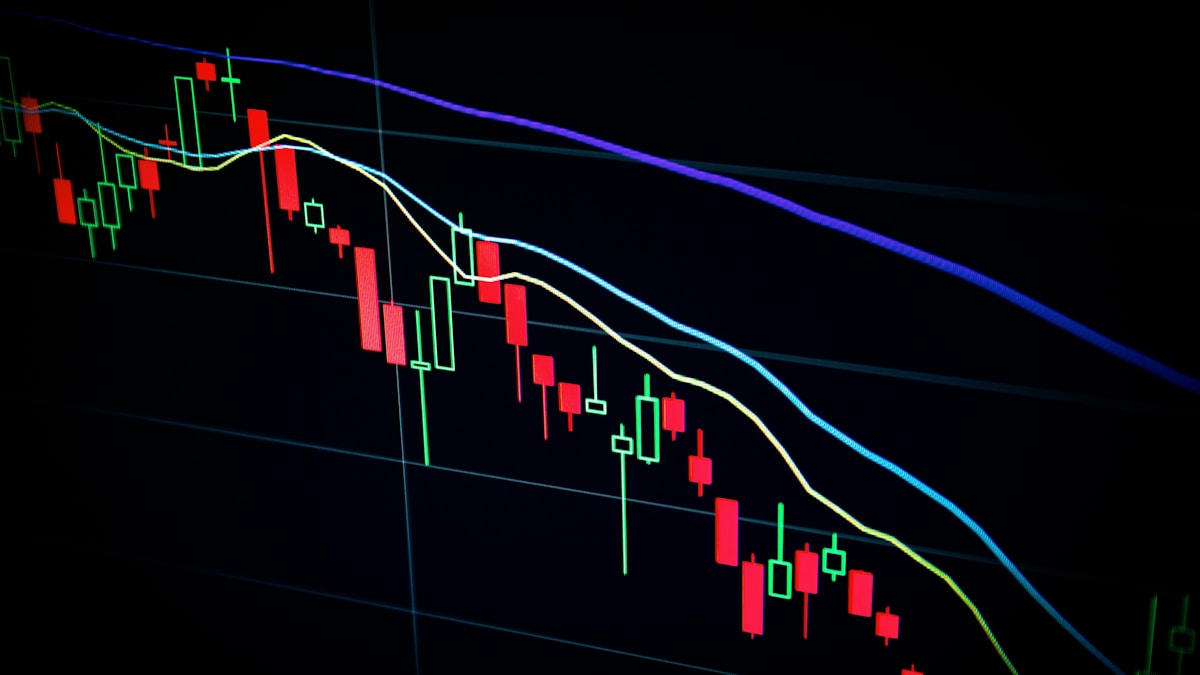
Five years ago, Cathie Wood was the most talked-about fund manager in America. Her ARK Innovation ETF (ARKK) had returned an astonishing 152% in 2020, her picks dominated financial media, and a generation of pandemic-era retail investors treated her stock calls like gospel. Today, Bloomberg reports that ARKK is trading near a five-year pandemic milestone low — a level that represents one of the most dramatic reversals of fortune in recent asset management history.
This is not a story about a bad year. It's a story about what happens when a fund's narrative runs ahead of its fundamentals — and retail investors get caught between the two.
The rise: why it made sense at the time
Fair is fair: Wood's investment thesis in 2020 and 2021 wasn't crazy. ARKK concentrated on companies she believed were building the infrastructure for transformative technology — Tesla, Zoom, Roku, Square (now Block), Teladoc, and a cluster of genomics and fintech names. In the specific conditions of 2020 — zero interest rates, a global pandemic forcing digital adoption, and a stock market flooded with stimulus money — those bets looked prescient.
ARKK's peak was approximately $159 per share in February 2021. Today, the fund trades in a range that has erased the vast majority of those pandemic-era gains, sitting at levels not seen since the pre-pandemic period. Investors who bought at or near the peak and held have experienced losses that compound the sting of watching technology indices — which ARKK was supposed to beat — outperform it substantially.
What actually went wrong
The simplest explanation is interest rates. ARKK's strategy involves buying companies with the bulk of their expected value in the distant future — high-growth, often unprofitable companies whose stock prices depend heavily on discount rate assumptions. When the Federal Reserve raised rates aggressively starting in 2022, it mathematically crushed the valuations of exactly those kinds of companies. A company whose earnings are mostly projected 10-15 years out is worth a lot less when you discount those earnings at 5% instead of near-zero.

But rates alone don't tell the full story. ARKK was also structurally vulnerable in ways that weren't obvious during the bull market. The fund held concentrated positions in relatively illiquid stocks — meaning that when redemptions came and Wood had to sell, she was selling into markets where she was often the largest or one of the largest holders. Selling pressure from ARKK itself became a factor in the price declines of ARKK holdings, creating a feedback loop that accelerated losses.
Teladoc is the poster child for this dynamic. The telehealth company was a massive ARKK position — Wood was a consistent buyer as the stock declined from over $300 to eventually near single digits. Dollar-cost averaging into a fundamentally impaired business with public conviction is a strategy that looks courageous right up until it looks catastrophic. Teladoc never recovered.
The accountability question Wall Street never asks
Here's my pet peeve with financial media coverage of celebrity fund managers: we love them when they're right, and we move on when they're wrong. Nobody in mainstream financial media has done a serious accounting of how many retail investors bought ARKK at elevated prices because of the relentless media coverage in 2020 and 2021 — coverage that presented Wood's views as revealed truth rather than one fallible investment thesis among many.
If you told a friend in early 2021 that ARKK was risky and would underperform a basic S&P 500 index fund over the following five years, that friend might have laughed at you. The media ecosystem around Wood made skepticism feel like stupidity. The people who paid the price for that atmosphere weren't the journalists or the media companies. They were the regular investors who bought at $150 and are still waiting to get back to even.
Wood has been consistent in her conviction — she has maintained that her investment themes (AI, genomics, fintech disruption) will eventually play out, and she continues to manage the fund according to the same methodology. That intellectual consistency deserves acknowledgment. But conviction is not a substitute for returns, and ARKK's five-year performance record is what investors are actually left with.
What retail investors should take from this
The ARKK story is a near-perfect case study in the danger of buying a narrative instead of an investment. Wood's thesis was compelling. Her communication was excellent. The media coverage was overwhelming. None of that made the risk any lower.
Concentrated active funds that promise to beat the market through high-conviction thematic bets can work. They can also fail spectacularly. Before you put money into any fund with a celebrity manager attached, ask yourself: what does this person's five-year record actually look like, net of fees, compared to a basic index fund? If you can't answer that question in 30 seconds, the fund's marketing has already done its job on you.