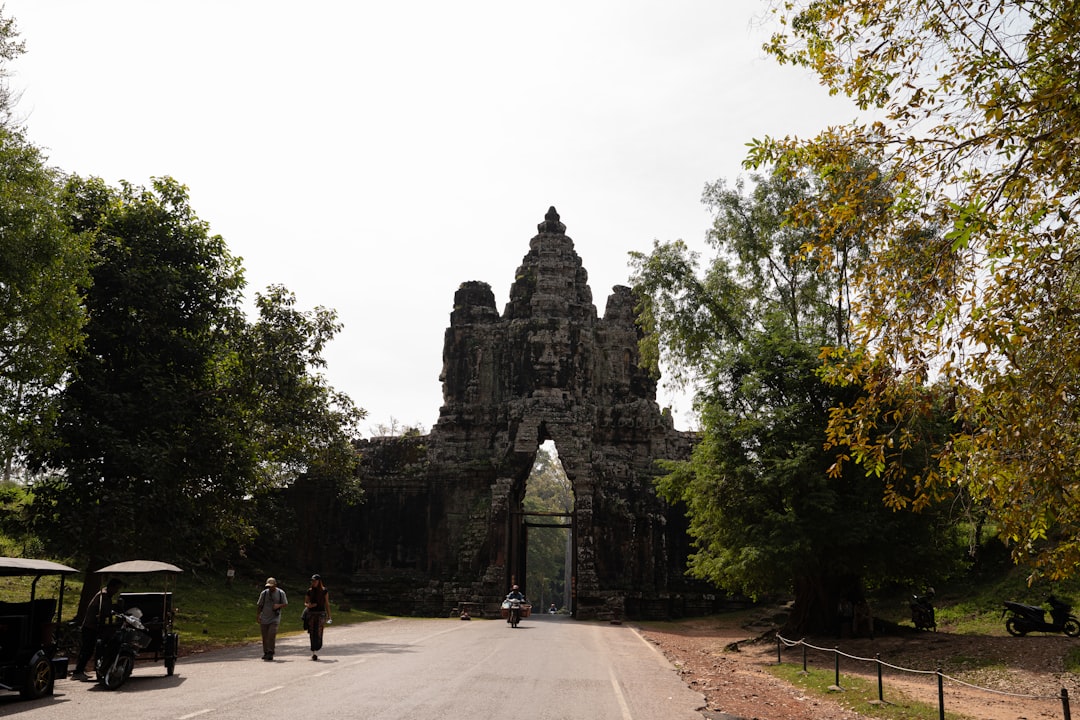
Cambodia's prime minister has accused Thailand of continuing to occupy Cambodian territory weeks after a ceasefire brokered personally by Donald Trump was meant to halt a border confrontation between the two nations — an accusation reported exclusively by Reuters that carries consequences far beyond Southeast Asia.
The Cambodian prime minister's statement was unequivocal: Thailand remains on Cambodian soil. The Trump-brokered ceasefire appears to have frozen the conflict in name without resolving the underlying territorial reality on the ground.
The border between Cambodia and Thailand has been contested for decades, most acutely around the area near the Preah Vihear temple complex — a UNESCO World Heritage Site whose legal sovereignty was adjudicated by the International Court of Justice in 1962 in Cambodia's favour, yet whose surrounding territory has remained a persistent source of military confrontation. Serious clashes erupted in 2008 to 2011, resulting in deaths on both sides and requiring extended diplomatic intervention to contain. The current confrontation follows a familiar pattern — localised military engagement escalating into a diplomatic standoff — but the addition of direct American presidential mediation introduces a new and significant dimension.
A ceasefire that unravels carries a cost measured in credibility, not only in territory. The Trump administration has invested considerable political capital in positioning the United States as the indispensable broker of international disputes — most prominently in its current push to negotiate a settlement between Russia and Ukraine. A deal between Bangkok and Phnom Penh that fails to hold within weeks of its announcement raises pointed questions about the durability of any American-mediated arrangement.
The timing is particularly resonant. Washington is simultaneously pressing Kyiv to accept a negotiated outcome it finds deeply unfavourable, arguing in part that American guarantees provide sufficient security assurance. The Cambodian case — in which a ceasefire bearing Trump's personal imprimatur appears not to have been honoured — is precisely the kind of precedent that sceptics of American mediation will cite.
Senior officials within ASEAN, the regional bloc of which both Cambodia and Thailand are members, have historically preferred to handle intra-regional disputes through quiet diplomacy rather than external mediation. The decision to bring Washington in represented a departure from that norm. The apparent failure of that mediation may reinforce the institutional caution with which regional states have traditionally regarded American involvement in their disputes.
Thailand has not publicly responded to the Cambodian prime minister's latest accusation. Bangkok's position on the contested border area has long rested on its own historical and cartographic claims, which diverge significantly from the ICJ's 1962 determination.
For the communities living along the border between these two nations — communities that have endured military activity, population displacement, and economic disruption through multiple cycles of confrontation — the question of whether a ceasefire holds is not abstract. It is a matter of whether they can return to their homes.