
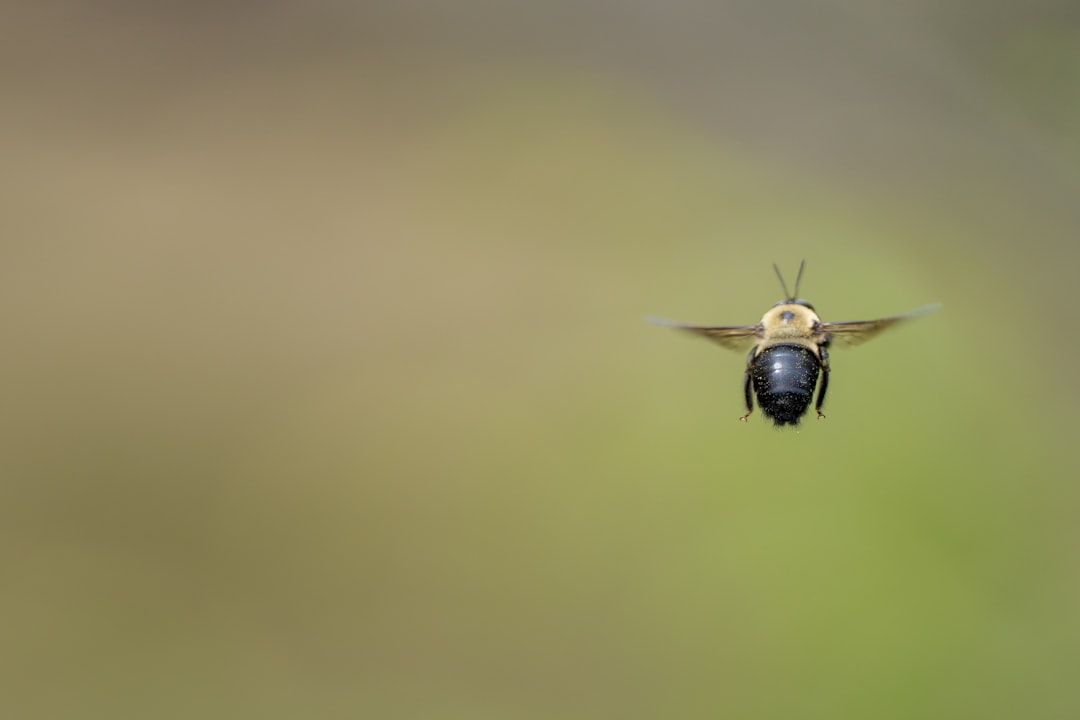
Bumblebee queens have a remarkable survival trick that sounds like something from a science fiction film: they can survive days underwater by entering a state resembling suspended animation. New research published in the Proceedings of the Royal Society B has finally revealed the mechanisms behind this extraordinary adaptation.
The study focused on diapausing bumblebee queens—those preparing for winter dormancy. During diapause, the queens' metabolism already slows dramatically, but researchers discovered they can take it a step further when submerged. The queens employ a triple survival strategy: underwater respiration (absorbing oxygen directly through their cuticle), anaerobic metabolism (producing energy without oxygen), and metabolic depression (slowing their metabolic rate to near-negligible levels).
Think of it as the bee equivalent of holding your breath while also figuring out how to breathe through your skin and putting your body into ultra-low-power mode. It's an elegant biological solution to a problem that's becoming increasingly common: flooding.
Seven days submerged
The research team submerged diapausing queens for extended periods and monitored their survival and physiological responses. Queens could survive submersion for up to seven days—an astonishing feat for an insect that typically lives in dry underground burrows or hollow plant stems.
Why does this matter beyond being fascinating biology? Climate change is increasing the frequency and severity of flooding events across the Northern Hemisphere, where bumblebees are critical pollinators. Queens overwinter alone in shallow soil burrows, making them vulnerable to spring floods and heavy autumn rains. The ability to survive temporary submersion may be what allows bumblebee populations to persist in increasingly flood-prone landscapes.
Evolution's insurance policy
This isn't unique to bumblebees—other insects have evolved similar strategies—but the research provides crucial insight into how pollinators might weather a more volatile climate. It's also a reminder that evolution often pre-equips species with adaptations that later prove useful under changing conditions. These queens weren't evolving this ability because of climate change; they had it all along, probably for dealing with occasional floods from spring snowmelt or heavy storms.