
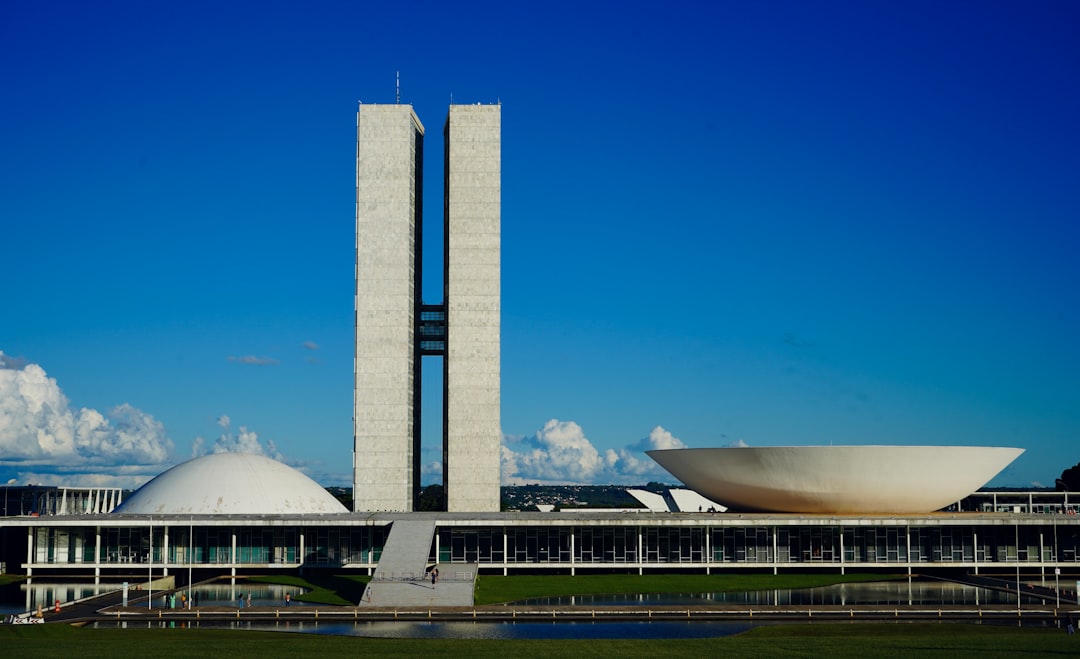
Brazil's Supreme Federal Tribunal is fighting on two fronts simultaneously — and that duality is the real story. On one side: a politically explosive data leak in which confidential tax and financial records of all ten STF justices and approximately 100 of their family members were improperly accessed and disseminated. On the other: a counter-investigation ordered by Justice Alexandre de Moraes that has itself drawn sharp fire from within Congress and, strikingly, from inside the court itself — raising uncomfortable questions about the boundaries of judicial authority.
The dual crisis broke open on February 17, when Federal Police executed four simultaneous search and seizure warrants across São Paulo, Rio de Janeiro, and Bahia, targeting public servants suspected of accessing and leaking confidential tax records. Yet even as those warrants were being served, Moraes's separate order — directing prosecutors to investigate how the leaked data was reported in the media — was triggering a backlash. Critics in Congress and at least one source familiar with internal STF deliberations warned that using judicial power to investigate the publication of leaked data risks crossing from law enforcement into press intimidation, a charge the court has vigorously rejected.
The four suspects named by federal prosecutors are all career public servants: Luiz Antônio Martins Nunes, a Serpro technician based in Rio de Janeiro's Federal Revenue delegation; Luciano Pery Santos Nascimento, a social security technician in Salvador; Ruth Machado dos Santos, a social security technician in Santos; and Ricardo Mansano de Moraes, a tax auditor in São José do Rio Preto with nearly three decades at the Receita Federal. All four face travel restrictions, suspension from their positions, and the breaking of their own fiscal and banking secrecy as investigators seek to establish whether their data access was isolated or part of a coordinated network with political direction.
The STF stated the leaks had been deployed to create "artificial suspicions, difficult to dispel" — language that points directly at a political purpose beyond mere curiosity. The Federal Revenue Service, whose systems were breached, was unequivocal: it "does not tolerate deviations, especially regarding fiscal secrecy, a basic pillar of the tax system." Yet union representatives for auditors pushed back sharply. Unafisco Nacional warned against making federal employees "scapegoats amid institutional crises," citing a nearly identical 2019 case in which two auditors were accused under similar circumstances and later fully exonerated. Sindifisco Nacional drew a technical distinction that will be central to the prosecution: legitimately motivated access to taxpayer data is standard practice, while unauthorised disclosure is the crime — and the two must not be conflated.
The investigation is inseparable from the Banco Master affair, which has made the STF's recent months particularly turbulent. Leaked messages on the phone of Daniel Vorcaro, the bank's owner, contained references to Justice Dias Toffoli — a separate STF member who subsequently stepped back from the Master inquiry. The confluence of a banking scandal, judicial proximity questions, and now a data breach targeting all ten justices has created an atmosphere in which Brasília's political class, particularly on the right, sees institutional legitimacy as a renewable political weapon.
The question of who benefits from destabilising the court is not subtle. The congressional opposition — led by figures who have openly demanded Moraes's impeachment and cast the STF as a tool of the Lula government — has the most immediate interest in a court whose credibility is under sustained attack. Former President Jair Bolsonaro's political network, which includes parliamentarians currently facing STF-linked investigations related to the January 8, 2023 insurrection attempt, also has concrete legal reasons to want the court's moral authority diminished before rulings reach their conclusions. Government allies and legal scholars counter that this framing inverts the reality: a coordinated campaign to leak justices' private financial data is the institutional attack — not the court's exercise of its constitutional mandate.
The stakes are sharpened by the 2026 electoral calendar, now only months from its formal opening. The STF will almost certainly be called on to adjudicate candidate eligibility questions — including the contested political future of Bolsonaro himself, who faces an eight-year electoral ban issued in June 2023 and has so far been unable to overturn it. A court visibly embroiled in a data scandal, and whose presiding justice is simultaneously under fire for the scope of his counter-investigation powers, is a court whose independence can be questioned by whichever side loses its next ruling. That vulnerability is not incidental — it is, for some actors in Brasília, the entire point.
"What we are seeing is an attempt to destabilise the judiciary through extrajudicial means," said a civil society legal analyst based in São Paulo, who requested anonymity. "If that is permitted to normalise, no Brazilian institution is safe — including the ones the opposition claims to want to protect."
What the Federal Police must establish is not merely who accessed the data, but who directed it, who financed any coordination, and what political use the information was intended to serve. Until those questions are answered with evidence — and until the boundaries of Moraes's counter-investigation are clearly defined — Brazil's highest court will remain both the protagonist of its own defence and, by some readings, the source of a second controversy about the limits of judicial power. That is precisely the bind its adversaries have been working to construct.