
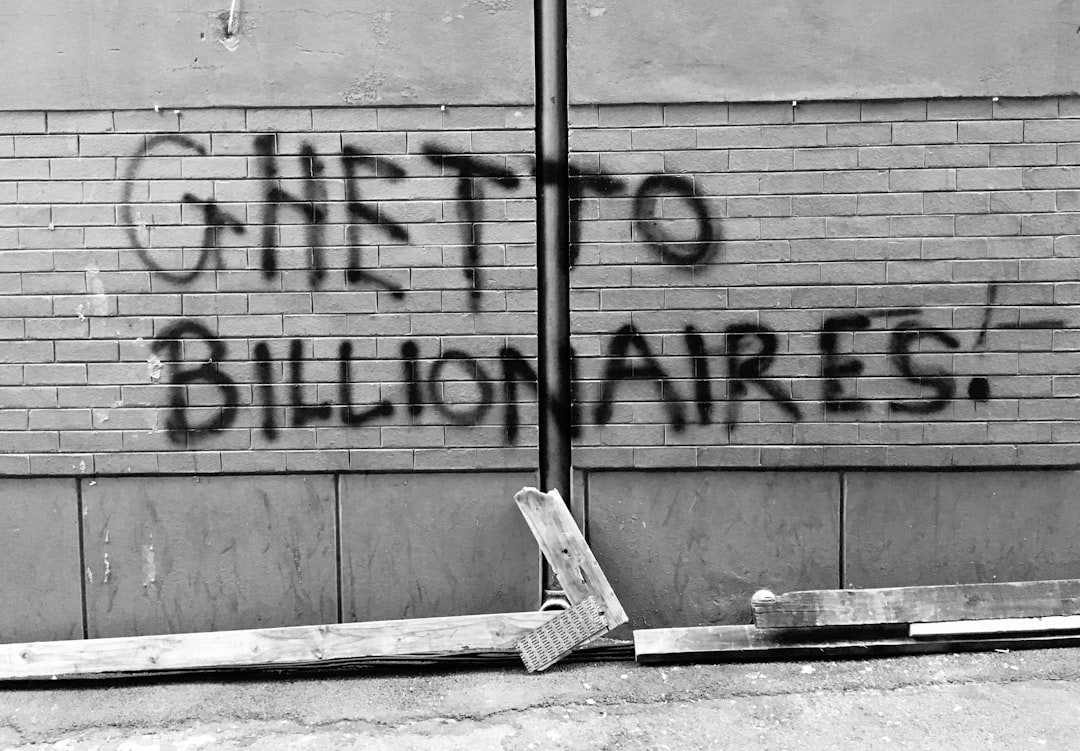
When the Wall Street Journal — not a publication known for redistributionist sympathies — publishes a piece arguing that billionaire tax avoidance has become a drag on the broader economy, that is not a political statement. That is a signal that the Overton window has shifted.
The WSJ's analysis frames the issue in structural economic terms rather than the familiar fairness-versus-freedom debate that typically exhausts the topic. The argument deserves a fair hearing on its economic merits — which is precisely what it rarely gets.
The velocity problem
The core economic case against sustained, large-scale wealth concentration is not about envy. It is about the velocity of money — the rate at which a dollar circulates through the economy before being saved or parked.
A dollar earned by a middle-income household is, with very high probability, spent in the near term: on rent, groceries, childcare, a car repair. That spending generates income for another household, which spends it again. Each cycle creates economic activity. Economists call this the multiplier effect.
A dollar transferred to a billionaire's balance sheet faces a different fate. It may be invested in financial instruments, used to acquire assets, or simply held. Investment can be productive — but when it flows primarily into asset price inflation rather than new productive capacity, the multiplier effect shrinks. The capital circulates within the financial system rather than the real economy.
The public investment gap
The second structural argument is about what tax revenue does — and what its absence means. Federal, state, and local governments have deferred enormous investments in infrastructure, education, and public health over the past two decades. The American Society of Civil Engineers has graded US infrastructure at D+ or C- repeatedly. Skills mismatches cost the economy estimated hundreds of billions annually in lost productivity.
These are not abstract concerns. They are direct constraints on business competitiveness, worker output, and long-term growth capacity. When tax avoidance by high-wealth individuals reduces the public revenue available to address these gaps, it is not fiscally neutral — it shifts the burden of underinvestment onto the private sector and onto workers.
The scale of the gap
The WSJ's framing reflects a broader consensus building in mainstream economic circles. The IRS has estimated that the top 1% of earners account for a disproportionate share of the annual tax gap — the difference between taxes legally owed and taxes actually paid. Offshore structures, carried interest treatment, step-up in basis rules, and the preferential treatment of capital gains relative to labor income create legal avoidance pathways unavailable to salaried workers.
None of this is new. What is new is the scale. As wealth concentration has accelerated — the top 0.1% of US households now control roughly as much wealth as the bottom 90% combined — the economic feedback effects have grown proportionately.
The political economy of reform
Why does this matter now? Because the economic argument for reform is structurally stronger than the political conditions for achieving it — and that gap is itself a market variable. Companies that rely on consumer spending for revenue face demand headwinds in an economy where purchasing power is increasingly concentrated at the top. Boards navigating retail or consumer staples forward guidance in 2026 are, whether they acknowledge it or not, navigating the downstream consequences of this structural shift.
The WSJ did not publish this piece to advocate for tax hikes. It published it because the economic data now demands the conversation. Investors who dismiss it as politics are missing the story.