
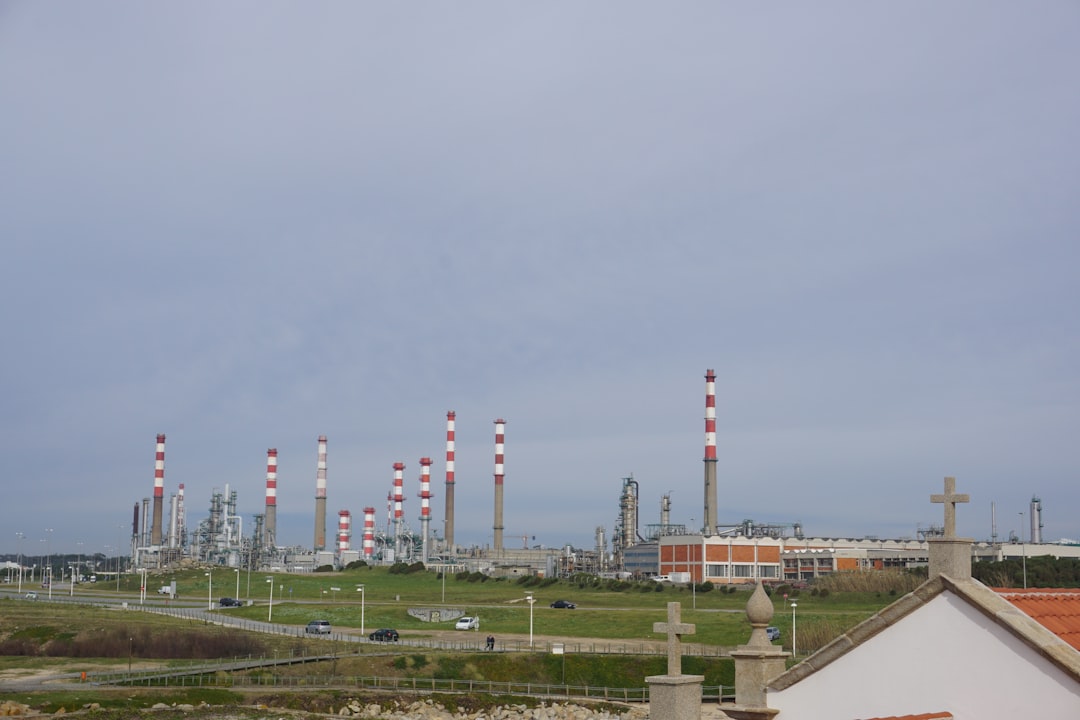
The industrial complex at Schwarzheide, in the flat pine forests of Brandenburg, has known upheaval before. After reunification, it was one of the former East German sites where jobs disappeared overnight and entire communities had to rebuild. Now, BASF's decision to relocate positions from Berlin and Schwarzheide to a new shared-services hub in India is reopening those wounds — and raising wider questions about whether Germany can still sustain the industrial model that defined its postwar prosperity.
According to reporting by RBB24, the Ludwigshafen-based chemical giant is transferring functions from its Berlin offices and from the Schwarzheide site — where BASF operates battery-materials production for the electric vehicle supply chain — to an India services centre. The move is part of BASF's sweeping cost-reduction programme, which the company has framed as necessary to restore competitiveness against lower-cost rivals in Asia and to absorb the structural burden of persistently high European energy costs.
<h2>Numbers Behind the Restructuring</h2>
BASF has not published a granular breakdown of roles affected at individual German sites in the current phase. However, the company's broader restructuring programme — announced incrementally since late 2023 — has targeted the elimination of more than 3,600 positions globally, with a substantial share in Germany. The Schwarzheide site employs roughly 2,000 people and had been positioned as a growth asset, producing cathode materials for battery manufacturers. That the India relocation now reaches even this strategically significant plant underlines how comprehensively management has concluded that overhead functions must be moved to lower-cost jurisdictions.
The Berlin offices affected include administrative, IT and finance roles — the kind of white-collar support functions that have historically been considered safe from the offshoring pressures that first hollowed out manufacturing. Government sources in Berlin said on Monday that the economics ministry had been briefed on the restructuring timeline, though officials declined to specify what, if any, countermeasures were under discussion.
<h2>A European Competitiveness Crisis in Microcosm</h2>
BASF's retreat from its home market is perhaps the starkest example of a wider dynamic that the Draghi competitiveness report, published in September 2024, identified as an existential challenge for European industry. Former European Central Bank president Mario Draghi concluded that European firms face a structural energy-cost disadvantage of between two and three times that of American competitors, and four to five times that of Chinese rivals on certain inputs. For chemicals, which are energy-intensive by definition, that arithmetic has become increasingly unworkable.
BASF chief executive Markus Kamieth, who took over from Martin Brudermüller in April 2024, has been explicit that the company's future capital allocation will tilt toward China — where BASF is building a €10 billion integrated Verbund complex in Zhanjiang — and toward lower-cost production sites. The India hub fits this logic: it allows BASF to retain intellectual functions within the company while dramatically reducing the per-head cost of delivering them.
<h2>The Political Timing</h2>
The announcement lands in a particularly fraught moment for German industrial policy. Following the February 2025 federal election, the incoming coalition — most likely a CDU/CSU-led government under Friedrich Merz — is still in the process of finalising its programme. Coalition negotiations have centred on whether Germany can or should deploy targeted industrial subsidies comparable to the American Inflation Reduction Act, or whether fiscal discipline under the constitutional debt brake must take precedence.
BASF's move will add pressure to that debate. The chemical sector employs roughly 300,000 people in Germany and generates export revenues of more than €50 billion annually, according to the industry association VCI. Any erosion of the sector's domestic footprint has cascading effects on suppliers, logistics and the Mittelstand firms that cluster around major chemical sites.
For Schwarzheide specifically, the symbolism is acute. Brandenburg's structural transformation from the planned economy to the social market economy took decades and substantial solidarity transfers from western Länder. Local politicians from both the SPD and the CDU have called on BASF to enter direct dialogue with works councils before finalising any relocation timetable, and the IG BCE chemical workers' union has said it will contest any compulsory redundancies under German co-determination law.
In Germany, as elsewhere in Europe, consensus takes time — but once built, it lasts. The harder question now is whether the consensus on which Germany's industrial model rests — high wages, strong worker representation, premium products — can survive an era in which even the most sophisticated chemical processing is being disaggregated and distributed across the globe.