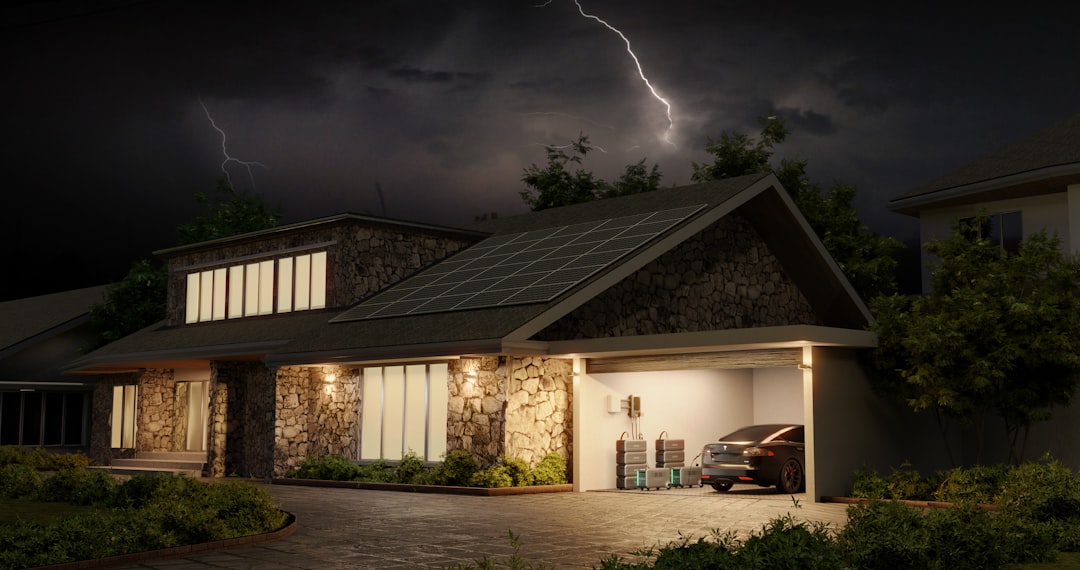
Australia added over 6.2 GWh of household battery capacity in the first eight months of the Cheaper Home Batteries program - nearly triple the previously installed capacity.
New data mapping shows regional patterns that reveal who's really benefiting from the rebate: rural South Australia is leading per capita, while inner Sydney lags far behind. And average battery size has roughly doubled since the rebate launched, suggesting people are maxing out rebate value rather than sizing for actual needs.
This is Australia quietly building distributed energy infrastructure while everyone's focused on the fuel crisis. And it matters - these batteries could reshape how the grid functions.
The Cheaper Home Batteries program, launched in mid-2025, offers approximately 30% rebates on battery systems paired with solar panels. The policy aimed to reduce evening grid demand, store excess daytime solar, and give households backup power during outages.
Eight months in, the results are striking. Australia has added 6.2 GWh of household battery capacity compared to the 3.6 GWh total that existed before the program. That's a near-tripling of capacity in less than a year.
But the geographic distribution tells a more complicated story. Semi-rural areas north of Adelaide top the per-capita installation rankings. These are postcodes with detached houses, high solar penetration, and relatively affluent homeowners who can afford the upfront cost even with rebates.
Inner Sydney, meanwhile, is near the bottom. Apartments dominate the housing stock, renters can't install batteries, and even homeowners face body corporate restrictions. The result is that the rebate largely benefits suburban and rural homeowners, not urban renters or apartment dwellers.
That's not unique to battery rebates - solar subsidies have had the same distributional effects for years. But it means the energy transition is leaving behind precisely the people who could benefit most: lower-income urban households facing rising electricity costs.
The average battery size tells another story. Before the rebate, typical home batteries were 10-12 kWh. Since the rebate launched, the average has jumped to about 23 kWh - roughly double.
That size increase raises questions. A typical Australian household uses 15-20 kWh of electricity per day. A 23 kWh battery is more than enough to cover evening demand after solar panels stop generating. So why are people installing such large systems?
The answer appears to be economic optimization - but not the kind policymakers intended. The rebate is capped at a dollar amount, not a percentage, which means larger batteries get better value per kWh. If the rebate covers $3,000 regardless of battery size (within limits), buyers maximize their benefit by installing the largest system they can afford.
That's rational behavior, but it suggests people are sizing batteries to maximize rebate value rather than to meet their actual energy needs. The result could be oversized systems that never fully cycle, which reduces battery lifespan and cost-effectiveness.
The grid implications are significant. Household batteries operating in self-consumption mode - charging from daytime solar, discharging during evening peaks - can reduce evening demand on the grid. That's valuable, particularly as Australia retires coal plants and adds more variable renewable generation.
But capturing that value requires coordination. Batteries need to discharge when the grid needs it most, not just when households happen to use electricity. That's where Virtual Power Plants (VPPs) come in - systems that aggregate household batteries and coordinate their charging and discharging based on wholesale market conditions.
The problem is that VPP enrollment remains low. Only 9.8% of battery owners are enrolled in VPPs, despite 58.6% expressing interest, according to the data. That gap suggests barriers - complexity, lack of awareness, or concerns about giving up control to third parties.
If VPP enrollment doesn't increase, the grid benefits of household batteries will be limited. Individual households will save money on their electricity bills, which is good. But the grid won't get the coordinated storage capacity it needs to integrate more renewables and maintain stability.
Australia's energy forecaster, AEMO, has already increased grid-scale storage expectations in updated projections, partly because household battery coordination hasn't materialized as quickly as hoped. That means more large-scale battery installations, which are more expensive and take longer to build than aggregating existing household systems.
There are also equity concerns. The rebate benefits people who own homes, have money for upfront costs, and live in areas where installation is feasible. Renters, apartment dwellers, and lower-income households get no benefit. And they're the ones who typically face higher electricity costs as a percentage of income.
Some jurisdictions have tried to address this with community batteries - large batteries that serve multiple households or apartment buildings. But those programs are small-scale and face their own challenges around cost allocation and access.
The broader question is whether household batteries are the right approach to grid storage. Advocates argue they're efficient because they're distributed, closer to where electricity is consumed, and reduce transmission losses. Critics argue that large-scale grid batteries are more cost-effective, easier to control, and don't depend on individual household decisions.
The answer is probably "both." Australia needs both household batteries for distributed storage and self-consumption, and large-scale grid batteries for bulk storage and frequency regulation. The trick is getting the mix right and ensuring the systems are coordinated.
For now, the rebate is working as intended in one sense: it's dramatically increasing household battery installations. Whether those batteries deliver the grid benefits policymakers hoped for depends on what happens next - particularly around VPP enrollment and coordination mechanisms.
Mate, Australia is building the world's most distributed battery network, and most people haven't noticed because they're too busy worrying about fuel shortages. But this could matter more in the long run - if we can actually coordinate it.