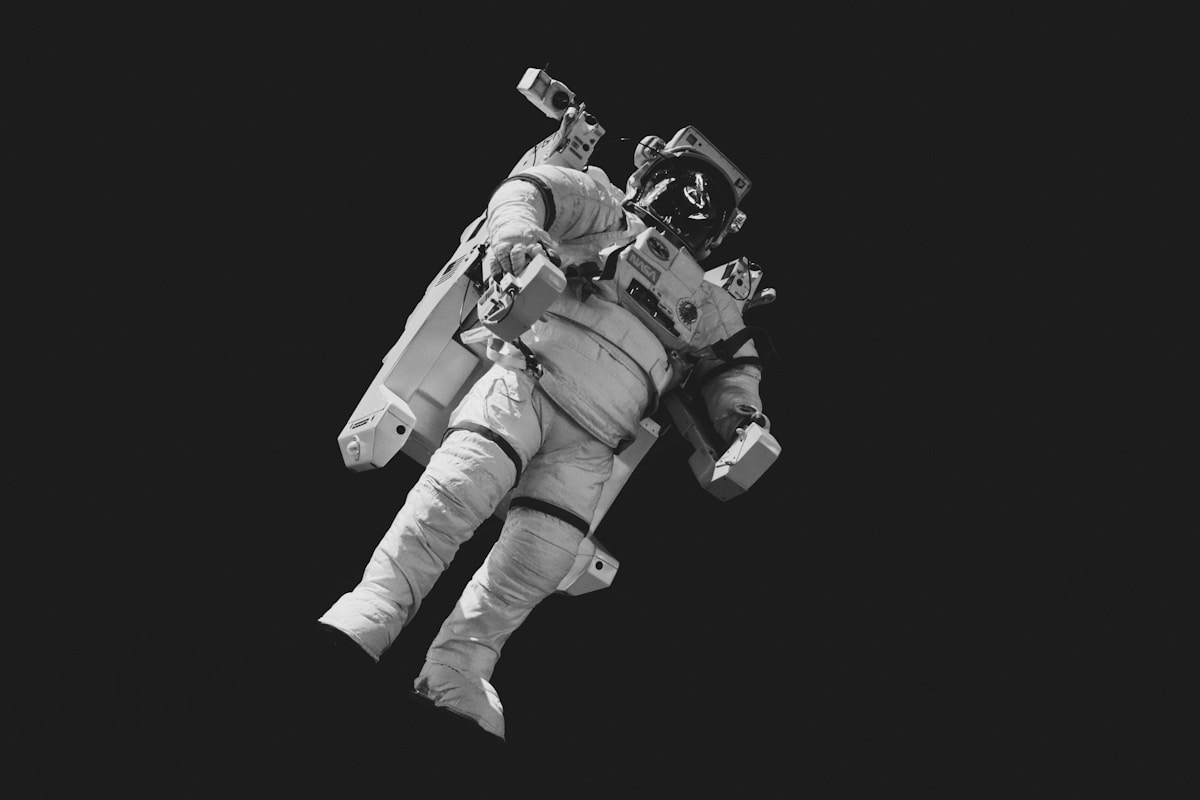
In early February 2026, four astronauts will climb into NASA's Orion capsule atop the Space Launch System rocket and travel farther from Earth than any human since 1972. The Artemis II mission isn't landing on the Moon—that comes later—but in some ways, the journey itself is more significant.
The crew—Commander Reid Wiseman, Pilot Victor Glover, Mission Specialist Christina Koch, and Canadian astronaut Jeremy Hansen—will surpass the Apollo 13 distance record of 248,655 miles set in 1970. They'll loop around the Moon and return after 10 days, testing systems that will eventually carry humans back to the lunar surface.
"There is nothing left on my to-do list. I'm ready to go," Wiseman said recently regarding launch readiness.
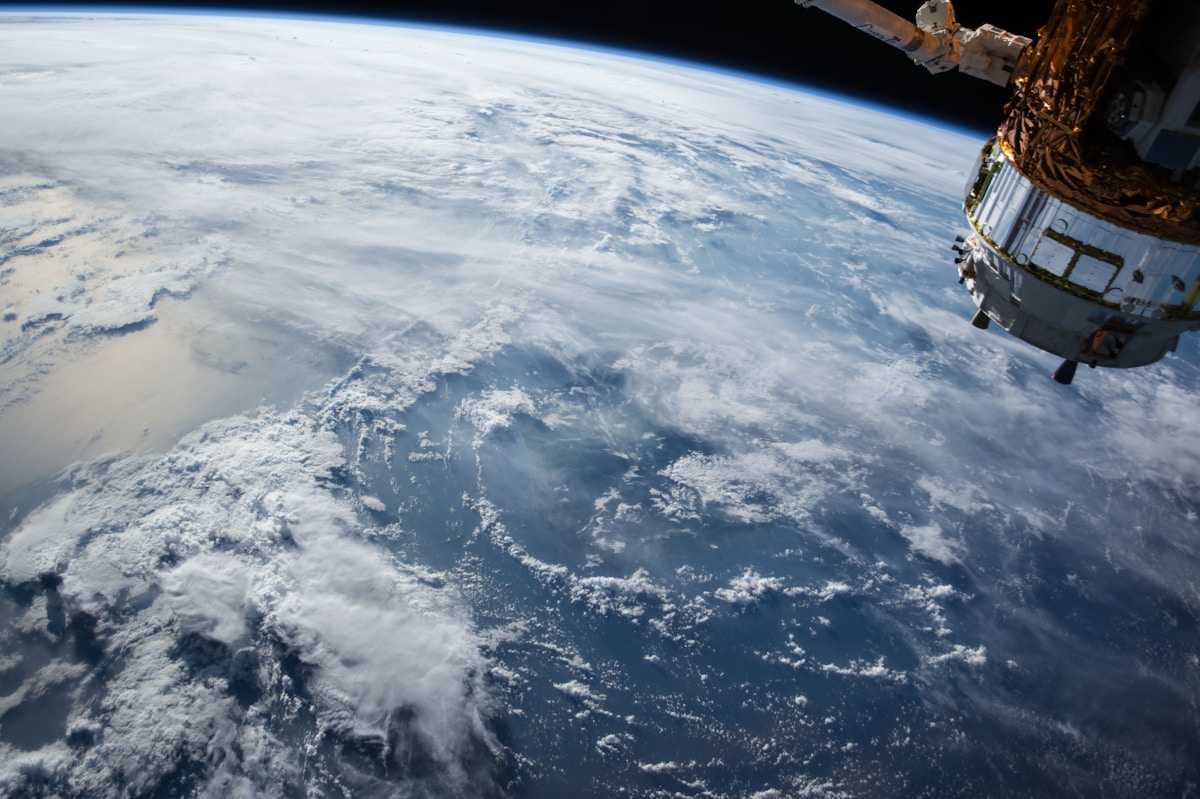
Here's why this matters from a science perspective: deep space is fundamentally different from low Earth orbit. The International Space Station orbits within Earth's protective magnetosphere. Artemis II ventures beyond it, exposing the crew to galactic cosmic rays and solar particle events at levels no human has experienced since Apollo.
Radiation is the big unknown. We have limited data on how prolonged exposure to deep space radiation affects human biology. The crew will wear dosimeters to measure their exposure, and sensors throughout Orion will map radiation levels. This is human biology research—the crew are both operators and experimental subjects.
Then there's the engineering challenge. Orion must function flawlessly in a thermal environment that swings from blazing sunlight to near-absolute-zero shadow. Life support systems must operate without resupply. Communications have a multi-second delay. If something breaks, there's no rescue mission.
The mission also tests operational procedures for lunar orbit—trajectory corrections, navigation, abort scenarios. These aren't just rehearsals. They're validating whether humans can operate complex spacecraft beyond the safety net of low Earth orbit.
This is the first crewed test of NASA's Space Launch System and Orion capsule. The uncrewed Artemis I flew in 2022 and performed well, but there's a significant difference between testing hardware and trusting it with human lives.
Glover will be the first Black astronaut to venture toward the Moon. Hansen will be the first Canadian. Koch holds the record for the longest single spaceflight by a woman (328 days in 2019). This crew represents a different NASA than Apollo—more diverse, more international, and operating within a very different geopolitical context.
Artemis II is a stepping stone to Artemis III, currently targeting 2027 for a crewed lunar landing near the south pole. But stepping stones matter. Apollo 8—which first carried humans to lunar orbit in 1968—didn't land, but it proved the journey was possible.
We're about to find out if we can still do hard things in space. And if the human body, evolved for Earth's surface, can handle the deep.