
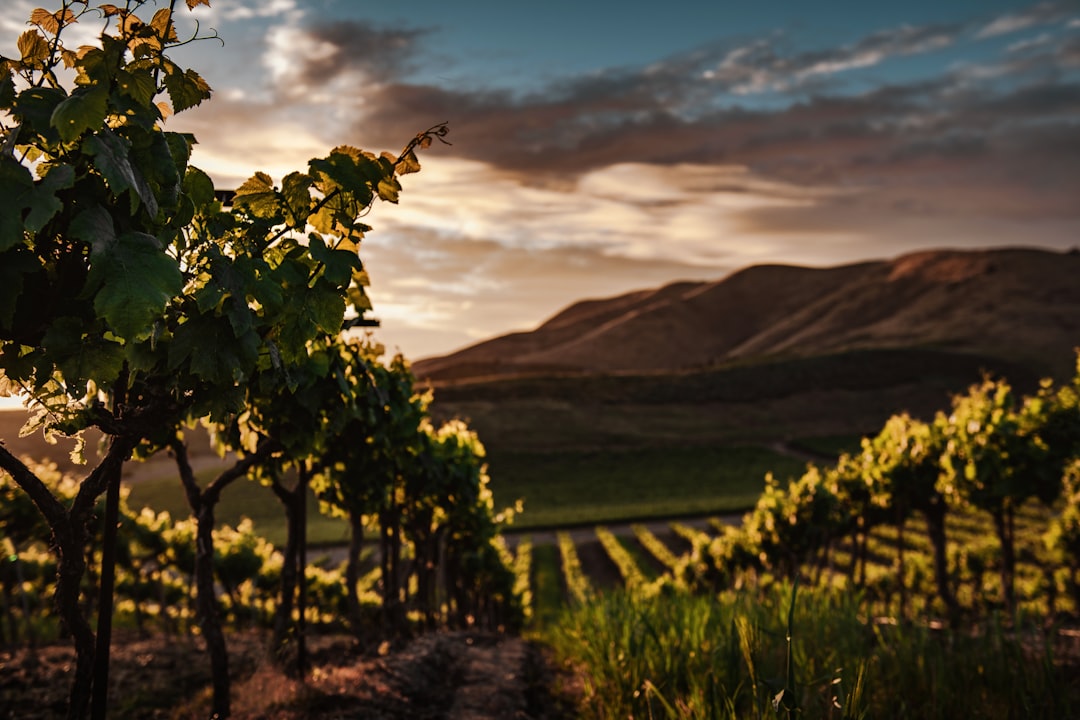
In the mountainous Vayots Dzor province of Armenia, grape farmers are reconstructing a 6,000-year-old winemaking heritage while implementing practices that protect the fragile ecosystems of the South Caucasus.
The revival represents more than agricultural economics. Winemaking nearly disappeared during Soviet rule when brandy became the preferred spirit and valuable grape varieties were systematically removed from Armenia. What farmers like Artem Parseghyan are rebuilding connects traditional knowledge with modern environmental science in ways that offer lessons for cultural resilience across the Caucasus.
Vertical viticulture, the practice of planting vineyards on mountain plateaus between 1,100 and 1,600 meters elevation, works with Armenia's rocky terrain rather than requiring difficult terracing. Trinity Canyon Vineyards, established in 2013 at 1,300 meters, became the country's first internationally organic-certified winery in 2016.
"Organic is not marketing for us," Parseghyan, the head winemaker, told Mongabay. "This green logo doesn't give us anything in terms of value, because before getting the certificate and up till now, we do everything in organic standards."
The vineyard protects soil health and biodiversity through cover crops instead of synthetic fertilizers, maintaining buffer zones between their land and neighboring farms to prevent pesticide contamination. The approach reflects a broader understanding that agricultural practices in mountainous borderlands carry environmental consequences beyond individual farms.
Scientific efforts complement the practical work. The National Academy of Sciences of Armenia's Plant Genomics Laboratory has sequenced over 3,400 grape samples since 2012, documenting native varieties. Researcher Kristine Margaryan notes that Armenian grape repositories "completely disappeared" after the Soviet Union's collapse, making the current documentation urgent.
Temperature in Vayots Dzor has increased approximately 1.3-1.4°C over the past century. Researchers established Armenia's first high-altitude vineyard at 2,080 meters to test which varieties thrive under changing conditions. Local Armenian grapes outperform Western European varieties in these trials, suggesting indigenous knowledge holds practical value for climate adaptation.
The industry faces ongoing challenges. Grape phylloxera, an invasive North American insect, threatens vines. Traditional karas—clay amphorae essential to Armenian winemaking heritage—are in short supply. Industry leaders are establishing dedicated karas-making schools to support both production and tourism, connecting cultural preservation with economic development.
In the Caucasus, as across mountainous borderlands, ancient identities and modern geopolitics create intricate patterns of conflict and cooperation. The Armenian wine revival demonstrates how traditional knowledge, when combined with environmental science, can address contemporary challenges while maintaining cultural distinctiveness that survived empire and displacement.