

Armenia is acquiring K2 main battle tanks from Poland and H145 transport helicopters from Airbus, marking the clearest signal yet that Yerevan is severing its decades-long military dependence on Russia and pivoting decisively toward Western defense partnerships.
The acquisitions, reported by CivilNet, represent more than incremental military procurement. They constitute a strategic realignment driven by Moscow's failure to defend Armenia during the 2020 Nagorno-Karabakh war and subsequent Azerbaijani military pressure that culminated in the September 2023 offensive that ended ethnic Armenian control of the disputed territory.
Prime Minister Nikol Pashinyan hinted at additional French cooperation during parliamentary remarks, telling lawmakers they would "see what Macron did for Armenia on May 28," the nation's Independence Day. The statement suggests a coordinated announcement of broader defense collaboration between Paris and Yerevan, potentially including additional weapons systems or training programs.
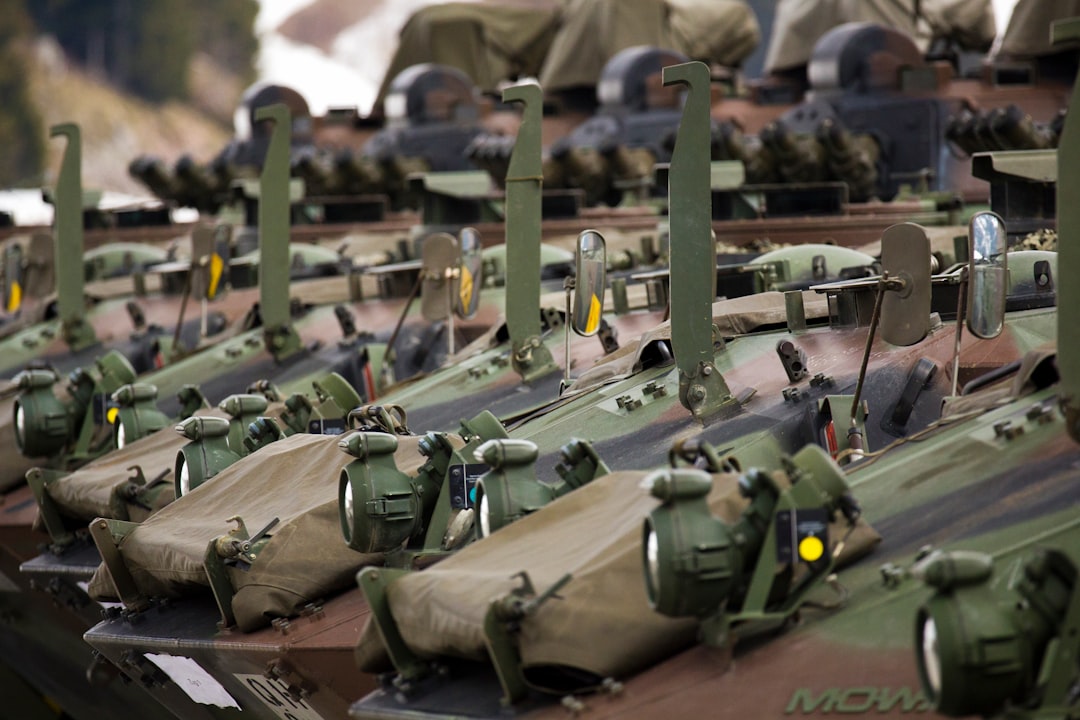
The Polish K2 Black Panther tanks represent a significant technological upgrade over Armenia's Soviet-era armor. Equipped with advanced fire-control systems, composite armor, and modern communications capabilities, the K2 brings Armenia's mechanized forces closer to NATO standards while reducing interoperability with Russian equipment that has dominated the Armenian arsenal since independence.
France has emerged as Armenia's most vocal European supporter following the 2020 war. Paris has provided military assistance including Caesar self-propelled howitzers and air defense systems, while French officials have repeatedly criticized Azerbaijan's territorial claims and treatment of ethnic Armenians. The Airbus H145 helicopters—manufactured by a European consortium—fit within this emerging French-Armenian defense partnership.

In the Caucasus, as across mountainous borderlands, ancient identities and modern geopolitics create intricate patterns of conflict and cooperation. Armenia's Western pivot carries substantial risks alongside potential benefits.
The country remains geographically isolated, bordered by Turkey—which maintains a closed border and supports Azerbaijan—and by Azerbaijan itself, which controls territory along Armenia's southern frontier following the 2020 war. Iran to the south maintains correct relations but cannot substitute for the security umbrella Russia once provided through the Collective Security Treaty Organization.
Russia maintains approximately 3,000 troops at a base in Gyumri and border guards along Armenia's frontier with Turkey. Moscow's reaction to Yerevan's Western turn will be critical. While Russia is preoccupied with Ukraine, it has historically demonstrated willingness to destabilize neighbors that pursue what the Kremlin considers hostile foreign policy orientations.
The military procurement also raises questions about Armenia's strategic calculus. Western weapons systems may enhance defensive capabilities, but NATO member states have not offered security guarantees. The military balance between Armenia and Azerbaijan shifted decisively following the 2020 war, when Turkish support and Azerbaijani drone superiority proved devastating to Armenian forces equipped with Russian weapons that Moscow chose not to resupply during the conflict.
Azerbaijan, enriched by energy exports and backed by Turkey, continues to modernize its military with Israeli drones, Turkish equipment, and increasing indigenous production. Whether Polish tanks and French helicopters can alter the fundamental strategic imbalance remains uncertain.
For Russia, Armenia's Western pivot represents another blow to its regional influence. The Kremlin's failure to defend its nominal ally during the Nagorno-Karabakh conflict has undermined Russian credibility across the former Soviet space. Kazakhstan and other Central Asian nations have observed how Moscow prioritized relations with Azerbaijan over defending Armenia, informing their own calculations about Russian security commitments.
Pashinyan's government has framed the Western pivot as necessary self-defense following Russian abandonment. But the shift also aligns with the prime minister's broader effort to reorient Armenia away from its Soviet-era posture toward integration with European institutions, including potential EU engagement and strengthened ties with France and Poland.
The May 28 announcement will clarify the extent of French military cooperation and may reveal whether other European nations are joining the effort to support Armenia's defense modernization. What is already clear is that Armenia has concluded it cannot depend on Russia for security and is willing to accept the geopolitical risks of seeking alternative partners in a region where such choices carry consequences.



