Armenia has no good options. As tensions between Washington and Tehran escalate in early 2026 — with the Trump administration reimposing maximum-pressure sanctions, US naval assets repositioning in the Persian Gulf, and Iranian officials issuing public warnings against further economic coercion — Yerevan finds itself in a position of acute strategic exposure that its government has been carefully trying not to name aloud.
The structural facts of Armenia's predicament are stark. Armenia shares a 44-kilometer border with Iran to its south — its only open land corridor to a non-hostile neighbor, alongside the short Georgian border to the north. Its borders with both Turkey and Azerbaijan remain closed, a legacy of the Nagorno-Karabakh conflict that the ongoing peace process has not yet reversed. Russia, for a generation the bedrock of Armenian security architecture, has been exposed as an unreliable guarantor: the CSTO's failure to respond meaningfully to Azerbaijani military operations in 2021 and 2022, and its complete absence from the September 2023 operation that ended the existence of the Karabakh enclave, stripped Moscow of credibility in Yerevan as a security provider.
The result is a country that has lost its primary security patron, has not yet secured a Western replacement, and depends on a corridor through Iran for economic access to global markets — at precisely the moment when the United States is making access to that corridor politically costly.
The Iran Corridor: Not a Choice, a Necessity
For Armenia, the Iran–Armenia trade relationship is not a matter of political preference. It is a geographic imperative. The North-South Transport Corridor, running from Iran through Armenia toward Georgia and the Black Sea, represents one of the few viable routes through which Armenia can access regional trade without transiting Azerbaijani or Turkish territory. Armenian exports — including food products, pharmaceuticals, and re-exported goods — flow substantially through the Meghri border crossing with Iran. The Iranian gas pipeline to Armenia, operational since 2009, supplies energy that Yerevan requires for its electricity grid.
Armenian government statements on Iran relations have been notably restrained. The Foreign Ministry has consistently framed the relationship in terms of good-neighborly ties and economic necessity, avoiding any rhetoric that could be read as endorsement of Iranian regional policy. Prime Minister Pashinyan's government has simultaneously pursued EU integration talks, accepted European Union border monitoring missions on the Armenian-Azerbaijani frontier, and deepened security cooperation with France and India — a diversification strategy designed to reduce dependence on any single patron. But that balancing act becomes harder to sustain as Washington's secondary sanctions architecture tightens around Iranian trade.
The Western Pivot and Its Limits
Since 2022, Armenia has undertaken what analysts at the European Council on Foreign Relations have characterized as a cautious but sustained reorientation toward the West. Yerevan froze its participation in CSTO exercises, signed a Comprehensive and Enhanced Partnership Agreement with the EU, and opened negotiations on visa liberalization. The shift has been real but incomplete: Armenia remains formally a member of the Eurasian Economic Union, retains Russian military installations on its territory, and has not been offered the security guarantees — NATO membership, a bilateral defense treaty — that would make the pivot strategically viable.
The gap between Armenia's Western aspiration and its Western security coverage is precisely the vulnerability that US-Iran escalation exposes. If Washington were to designate the North-South Corridor as subject to secondary sanctions — or if military conflict in the Persian Gulf were to disrupt Iranian export capacity — Armenia would face simultaneous economic and energy pressure with no established Western mechanism to compensate for the loss.
Ordinary Armenians have begun to voice the anxiety that policymakers are reluctant to articulate publicly. On Armenian-language forums and social media, the question has circulated: if a conflict involving Iran closes the southern border, where does Armenia go? The question is not rhetorical. It reflects a genuine strategic gap that the government in Yerevan has no complete answer for.
The View from Yerevan
Armenian foreign policy under Pashinyan has been defined by the attempt to expand strategic options without provoking the kind of direct confrontation with any major power that a small, landlocked country can rarely survive. That approach has served Armenia reasonably well through the post-Karabakh transition period. But US-Iran escalation is the scenario that stress-tests its limits most acutely — because it is one where Yerevan's choices are constrained not by its own decisions but by the actions of powers whose interests do not include Armenian survival as a central consideration.
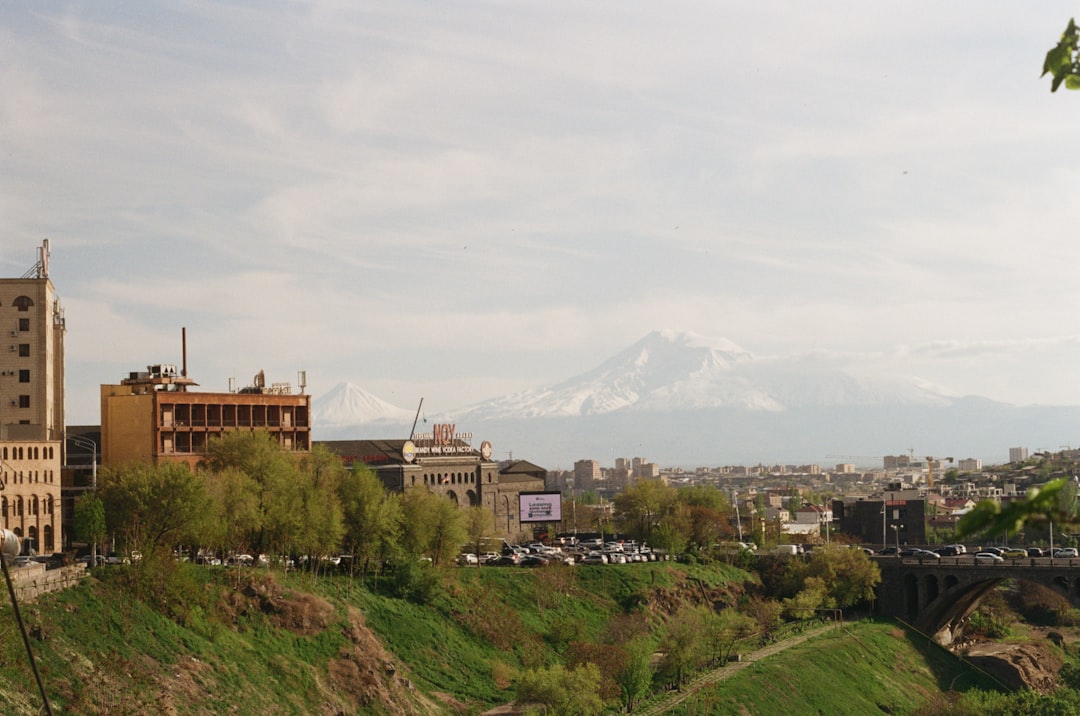
In the Caucasus, as across mountainous borderlands, ancient identities and modern geopolitics create intricate patterns of conflict and cooperation. Armenia's predicament in early 2026 is not a failure of diplomacy. It is a structural consequence of geography, history, and the unfinished business of post-Soviet security architecture. The country finds itself requiring simultaneous good relations with Washington, functional ties with Tehran, a working peace with Baku, open borders with Ankara, and a replacement for the Russian security guarantee — all at the same time, with limited leverage over any of them. That is not an impossible task, but it is one that leaves very little room for error.