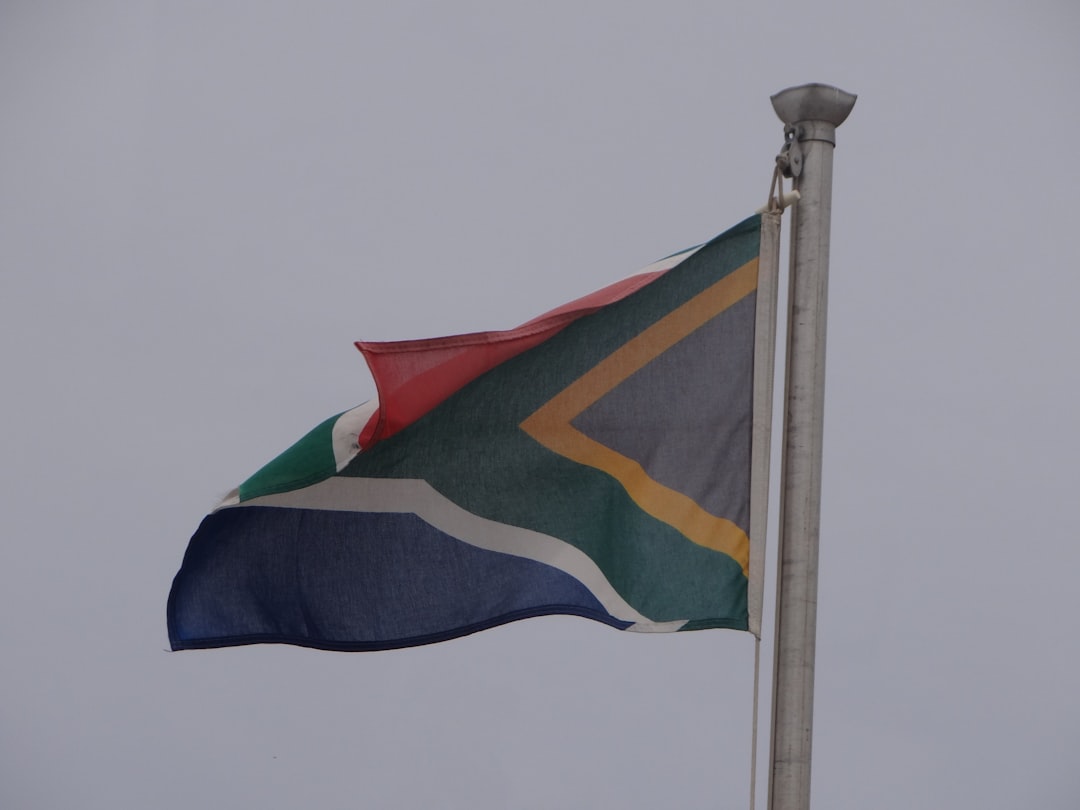

Armenia and France will sign a long-negotiated strategic partnership agreement next week, Foreign Minister Ararat Mirzoyan announced, formalizing Yerevan's dramatic pivot away from Moscow and toward Western security partnerships.
The agreement, confirmed by Armenian Radio, represents the culmination of months of diplomatic engagement following Armenia's disillusionment with the Collective Security Treaty Organization (CSTO), the Russian-led military alliance that failed to defend Armenian territory during the 2020 Nagorno-Karabakh war and subsequent Azerbaijani incursions.
The timing is significant. On the same day, Armenia's Chief of General Staff began an official visit to India, signaling Yerevan's broader strategy of diversifying security partnerships beyond its traditional reliance on Russia. Meanwhile, Moscow responded with economic pressure, banning imports of Armenian mineral water—a petty but pointed signal of Russia's displeasure.
In the Caucasus, as across mountainous borderlands, ancient identities and modern geopolitics create intricate patterns of conflict and cooperation. Armenia's westward turn reflects not ideology but survival calculations. After Russia stood by while Azerbaijan seized Nagorno-Karabakh in 2023, forcing over 100,000 ethnic Armenians to flee, Yerevan concluded that Moscow's security guarantees were worthless.
France, which has significant Armenian diaspora influence and views itself as a counterweight to Turkish-Azerbaijani regional dominance, has stepped into the breach. Over the past year, Paris has provided Armenia with defensive weapons systems, intelligence cooperation, and diplomatic support. The strategic partnership agreement is expected to codify military-technical cooperation, economic investment, and political coordination.
The implications extend beyond bilateral relations. Armenia's pivot weakens the CSTO, already undermined by Kazakhstan's and other Central Asian members' reluctance to support Russia's Ukraine war. It also complicates Russia's position in the South Caucasus, where Moscow has long played Armenia and Azerbaijan against each other to maintain influence over both.
For Azerbaijan, Armenia's Western alignment presents both opportunities and concerns. On one hand, it reduces Russia's leverage over peace negotiations. On the other, it introduces France—and potentially the broader European Union—as new actors in a region where Baku prefers to deal bilaterally, with Turkish backing, rather than facing coordinated Western pressure on human rights and territorial issues.
The mineral water ban, while economically minor, demonstrates Russia's limited toolkit for responding to Armenia's realignment. Unlike with energy-dependent European states, Moscow has little economic leverage over Yerevan. Its primary card—security guarantees—has already been discredited by its failure to act when Armenia needed it most.
Next week's signing ceremony in Paris will formalize what has been evident for months: Armenia is seeking new protectors because the old one proved unreliable. Whether France and India can provide more credible security assurances than Russia did remains to be tested, but for Yerevan, staying in Moscow's orbit after the Nagorno-Karabakh disaster was not a viable option.