Everyone's focused on whether we have enough power for AI. No one's asking what happens when data centers all switch off simultaneously during a heat wave.
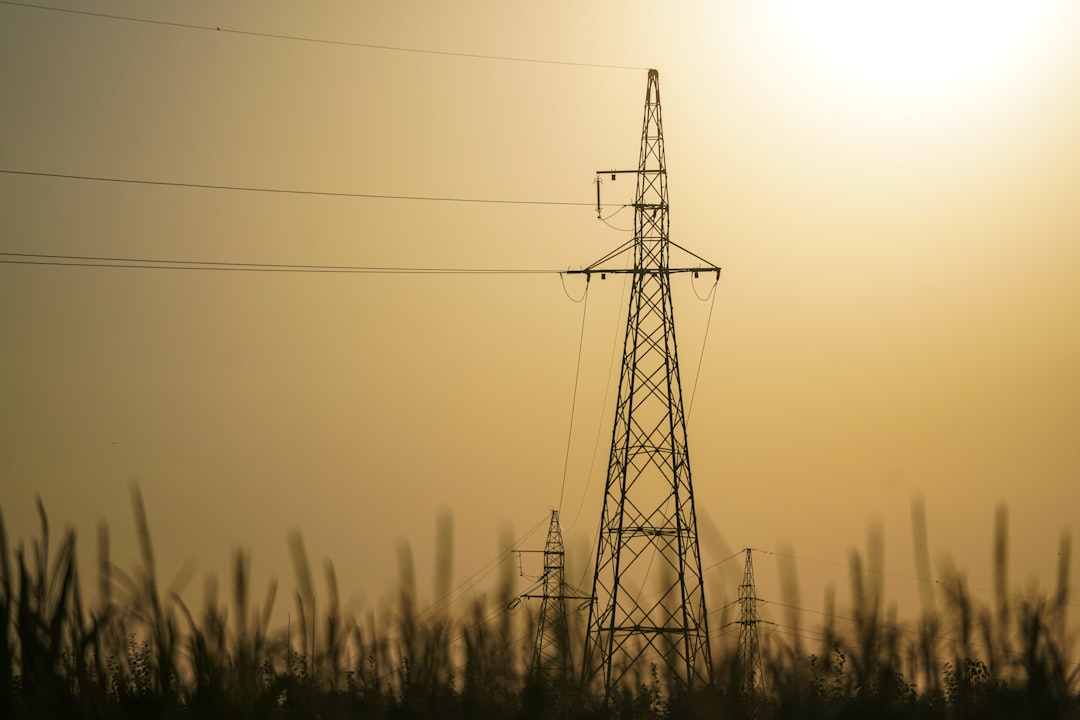
According to a Wall Street Journal investigation, data centers are increasingly disconnecting from power grids all at once during demand spikes, creating dangerous instability for electrical infrastructure. The AI computing boom is straining grid operators who weren't designed to handle such massive, sudden load changes.
Here's the problem: modern data centers consume enormous amounts of electricity - we're talking megawatts per facility. When they're running, they're one of the largest loads on the power grid. When they suddenly disconnect during peak demand periods, it creates a massive, instantaneous change in grid load that operators struggle to balance.
Think of it like this. Your local utility manages electricity supply by carefully matching generation to demand in real-time. If demand drops suddenly, they need to reduce generation just as quickly, or the grid becomes unstable. Data centers that disconnect en masse during emergencies create exactly this scenario.
The AI boom is making this exponentially worse. Nvidia is shipping chips as fast as they can manufacture them. Microsoft, Google, and Meta are building data centers at unprecedented scale. Everyone's racing to train larger models and run more inference workloads.
But that infrastructure isn't just consuming power - it's creating new grid management challenges that nobody planned for. Traditional large industrial loads like factories or steel mills change their power consumption gradually. Data centers can go from full load to zero in seconds.
Grid operators are accustomed to managing variability from renewable energy sources like wind and solar. But at least those changes are somewhat predictable based on weather patterns. Data center disconnections can happen with little warning, often triggered by automated systems responding to power quality issues or demand response signals.
This is the infrastructure story hiding behind the AI hype - and it affects everyone, not just tech companies. Grid instability doesn't just impact the data centers themselves. It can cause voltage fluctuations, equipment damage, and in worst-case scenarios, cascading failures that lead to blackouts.
The WSJ reports that grid operators are starting to treat large data centers differently from other industrial customers, imposing stricter interconnection requirements and demanding better coordination during demand response events. But regulation is playing catch-up with technology deployment.
For AI companies, this creates a new constraint on expansion. You can't just build a data center wherever land is cheap and network connectivity is good. You need to consider whether the local power grid can handle both your normal load and the instability created when you disconnect.
Some companies are exploring on-site generation and battery storage to reduce their grid impact. Microsoft has experimented with small modular reactors. Google is investing in grid-scale batteries. But these solutions are expensive and won't scale fast enough to match AI infrastructure buildout.
The technology is impressive. GPT-4, Claude, and other large models demonstrate capabilities that seemed impossible a few years ago. But those capabilities come with hidden costs in infrastructure strain.
I've talked to energy industry analysts who worry we're building AI infrastructure faster than our power grid can adapt. They're probably right. Tech companies move at internet speed. Power grids evolve at regulatory speed. That mismatch creates risk.
The question isn't whether AI is worth the electricity cost - reasonable people can debate that. The question is whether we're considering the systemic risks created by concentrating so much computing power in facilities that can disconnect from the grid in seconds.
Based on this reporting, the answer is: not enough. We're optimizing for AI capability without seriously planning for grid stability. That's a recipe for problems we're only beginning to understand.