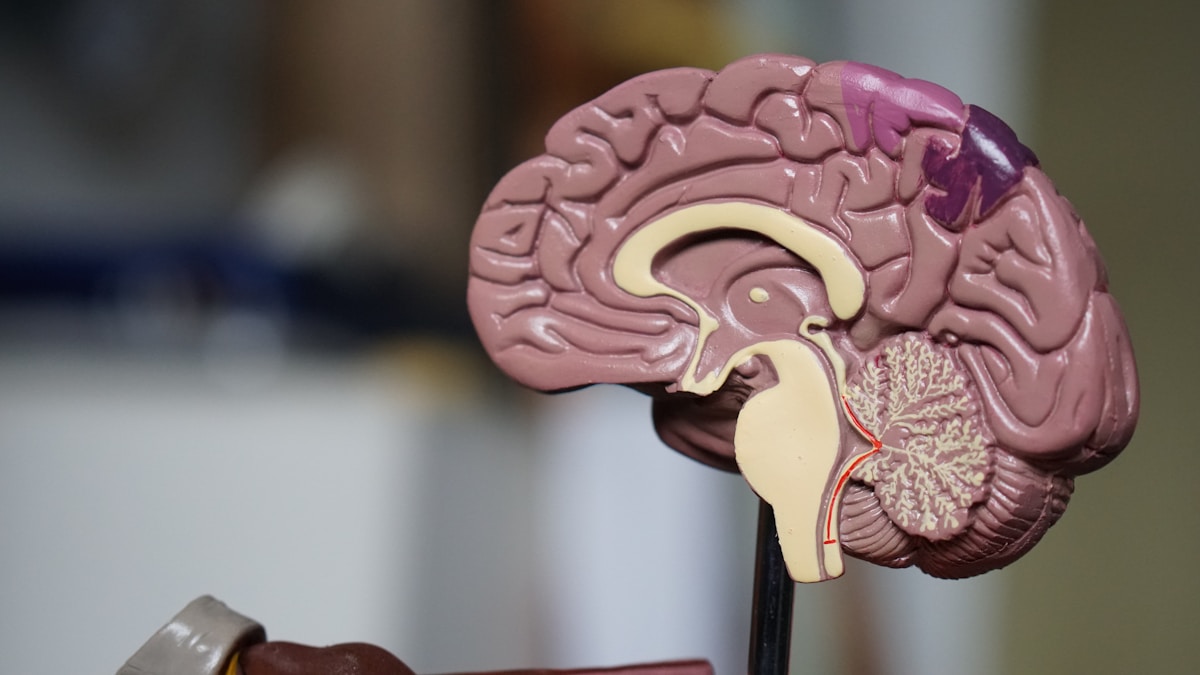
Researchers at Worcester Polytechnic Institute have developed an AI system that predicts Alzheimer's disease from MRI scans with 92.87% accuracy by analyzing patterns of brain volume loss. The peer-reviewed research, published in the journal Neuroscience, also revealed that anatomical changes differ significantly by age and sex - suggesting we need personalized baselines for brain health.
Let me explain why this is one of those rare AI healthcare stories that's actually backed by real science and not just hype. The model isn't diagnosing from symptoms or questionnaires - it's identifying structural brain changes in MRI scans that humans might miss. This is machine learning doing what it's genuinely good at: finding subtle patterns in high-dimensional data.
Here's how it works: the researchers used machine learning to analyze 815 MRI scans, measuring volume in 95 different brain regions. Then they deployed an algorithm to detect differences in those measurements between healthy individuals, people with mild cognitive impairment, and those with Alzheimer's disease. The system achieved 92.87% accuracy in distinguishing between these groups.
What makes this particularly interesting is the discovery about age and sex differences. The anatomical changes associated with Alzheimer's aren't uniform - they vary depending on whether you're looking at a 65-year-old man or an 80-year-old woman. That suggests current diagnostic baselines, which tend to be one-size-fits-all, might be missing important nuance.
From a technical perspective, this is exactly the right application of AI in healthcare. The model is analyzing objective, quantifiable data (brain volumes from MRI scans). The results are interpretable (we know which regions show volume loss). The research is peer-reviewed and published in a legitimate journal. It's not some startup claiming their app can diagnose cancer from a selfie.
The potential impact is significant. Early diagnosis of Alzheimer's is difficult because symptoms can be mistaken for normal aging. By the time cognitive decline is obvious, substantial brain damage has already occurred. If we can identify anatomical changes before symptoms appear, that creates a window for intervention - whether that's existing treatments, lifestyle changes, or enrollment in clinical trials.
But - and this is important - there's a huge gap between a research result and actual clinical practice. The study analyzed 815 scans in a controlled environment with standardized imaging protocols. Real-world clinical deployment means dealing with different MRI machines, varying scan quality, diverse patient populations, and integration with existing diagnostic workflows.