
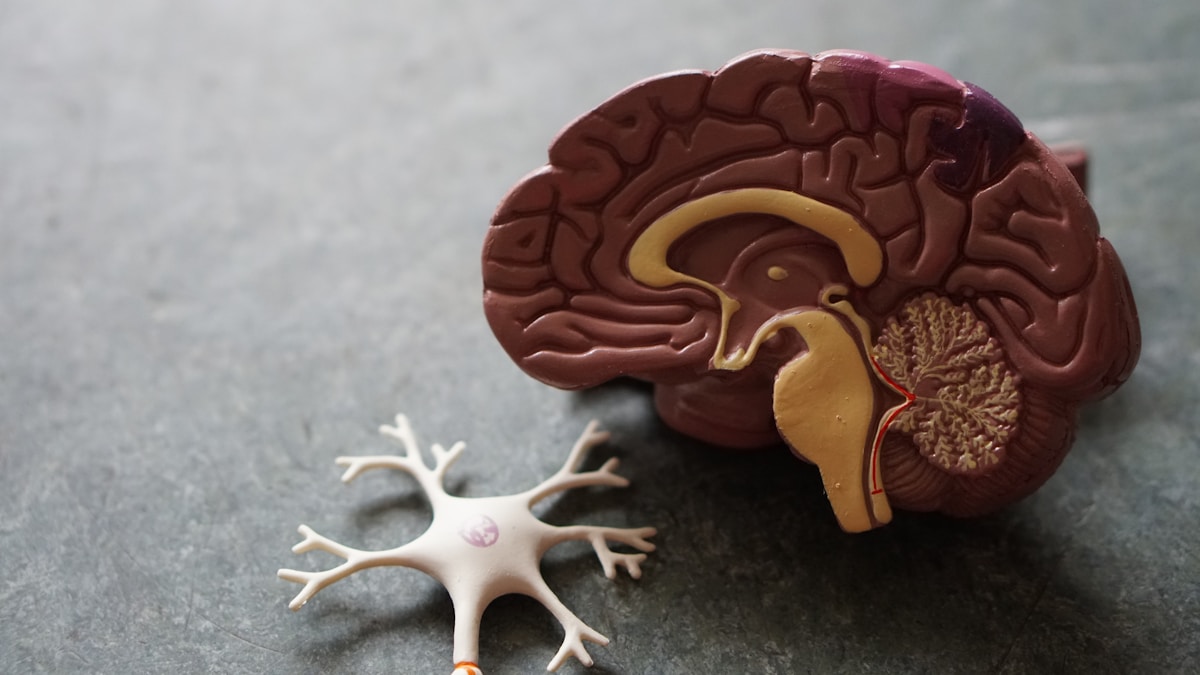
For decades, ADHD has been diagnosed behaviorally—do you fidget? Can you focus? Do you interrupt people? Now neuroscience is revealing something measurable happening in ADHD brains: they experience two to three times more sleep-like brain waves while fully awake, directly causing those characteristic attention lapses.
This isn't metaphorical. These are actual slow-wave oscillations—the kind your brain generates during deep sleep—intruding into waking consciousness. It's as if parts of the ADHD brain are briefly nodding off while the person is trying to concentrate.
The research, conducted using EEG monitoring of adults with ADHD, found these intrusive sleep waves occurring at dramatically higher rates during tasks requiring sustained attention. When these waves appeared, attention performance dropped measurably. The correlation was direct and consistent.
Think of it this way: Imagine trying to stay focused on a conversation while someone keeps dimming the lights in your brain. That's essentially what's happening. These micro-intrusions of sleep-state neural activity disrupt the cognitive control networks needed for sustained attention.
What makes this particularly elegant is how it reframes what stimulant medications are actually doing. We've known for years that drugs like methylphenidate and amphetamines help ADHD symptoms, but the mechanism was always framed as "improving focus." This research suggests something more fundamental: These medications may work primarily by keeping the brain awake—suppressing those intrusive sleep waves rather than directly enhancing attention.
It's the difference between trying to focus harder and simply preventing your brain from falling into micro-sleep states. The latter is a much more mechanistic explanation.
This shift from behavioral syndrome to measurable neural signature has profound implications. It could eventually lead to objective diagnostic tests rather than subjective behavioral assessments. It might explain why ADHD symptoms often improve with better sleep hygiene—you're reducing the overall sleep pressure that's leaking into waking hours. And it suggests entirely new therapeutic approaches targeting sleep-wake regulation rather than attention networks directly.
Now, the important limitations: This study focused on adults, and ADHD manifests differently across ages. The sample sizes in neural studies are typically modest. And correlation between sleep waves and attention lapses, while strong, doesn't fully explain the complexity of ADHD, which includes impulsivity, emotional regulation challenges, and executive function deficits beyond simple attention.
But as a piece of the puzzle? It's a beautifully clear one. ADHD brains aren't just "easily distracted"—they're experiencing intrusive neural states that shouldn't be active during waking hours. That's not a character flaw. It's a measurable neurophysiological difference.
The universe doesn't care whether we frame ADHD as a behavioral problem or a neural regulation disorder. Let's find out what's actually true.