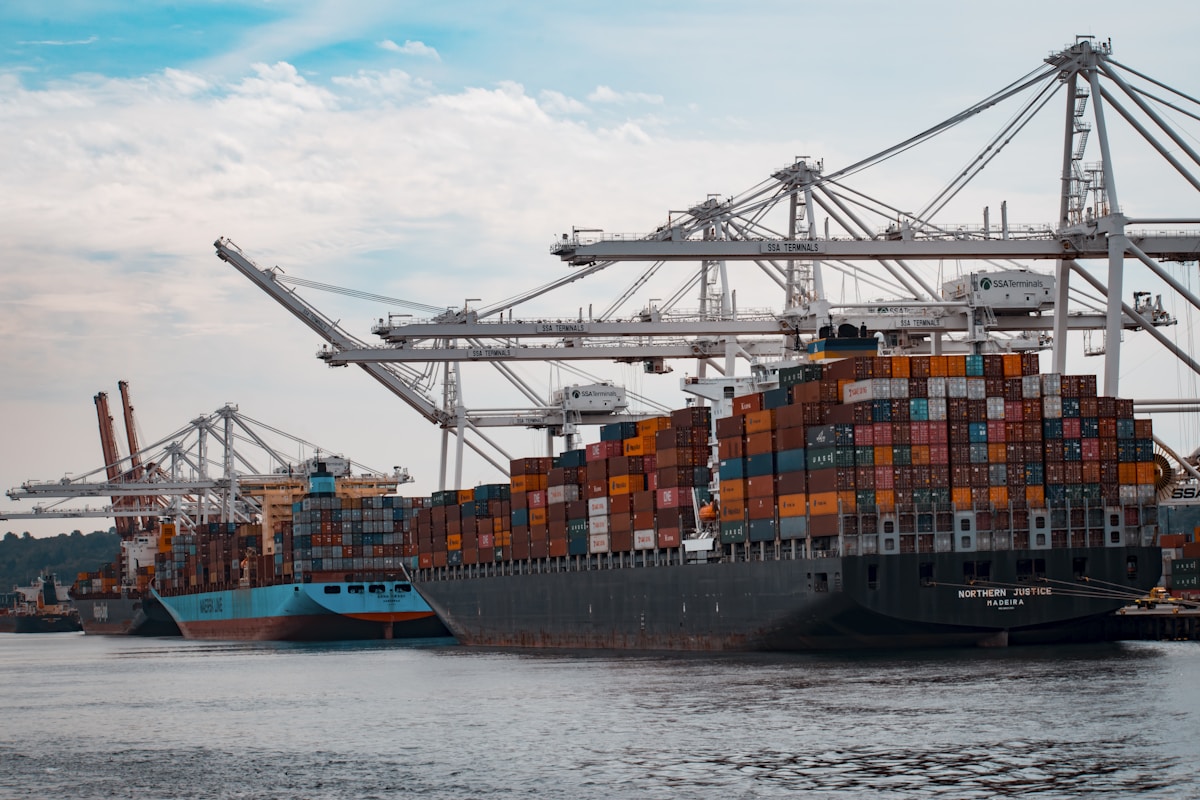
Eight hundred commercial vessels—carrying everything from crude oil to consumer electronics—remain trapped in the Strait of Hormuz as shipowners calculate whether a fragile 14-day ceasefire offers enough time to transit the world's most critical energy chokepoint. The maritime traffic jam represents billions in frozen capital and will reshape global shipping rates for years.
Let's talk numbers. A single Suezmax crude carrier costs roughly $35,000 to $50,000 per day to charter. An LNG tanker? $75,000 to $150,000 daily. Multiply that by 800 vessels sitting idle, and you're burning through $40 million to $80 million every 24 hours—just in charter costs. That doesn't include cargo depreciation, insurance premiums, or the cascading delays rippling through supply chains from Rotterdam to Shanghai.
The Strait of Hormuz handles roughly 21 million barrels of oil per day—about 21% of global petroleum consumption. When that flow stops, prices spike. When it reopens uncertainly, insurance and risk premiums don't disappear—they get baked into freight rates permanently. This isn't a temporary disruption. It's a structural repricing of Middle Eastern energy logistics.
Shipowners face an impossible calculation. The ceasefire clock is ticking—14 days to transit a strait that, under normal conditions, takes hours. But "normal" died when Iran began enforcing a de facto blockade. Do you risk a $100 million vessel and $50 million in cargo on a ceasefire that could collapse before you reach open water? Or do you wait—and watch charter costs compound while your cargo loses value?
The insurance markets have already made their bet. War risk premiums in the Persian Gulf have spiked to levels not seen since the 1980s tanker wars. Lloyd's syndicates are requiring additional coverage for any vessel transiting Hormuz, and some underwriters have stopped writing policies entirely. Translation: even if the ceasefire holds, the cost of moving oil through this strait just went up permanently.
For global supply chains, this is a nightmare scenario. Just-in-time inventory models assume predictable transit times. When 800 vessels get stuck for weeks, manufacturers from Germany to South Korea face parts shortages. Retailers miss seasonal inventory windows. Commodity traders get crushed on futures contracts they can't deliver.
The broader implication: the Strait of Hormuz has always been a geopolitical flashpoint, but this crisis proves it's also a single point of failure for the global economy. Alternatives exist—pipelines through Saudi Arabia, longer routes around Africa—but they add weeks and millions in costs. The world's energy infrastructure assumed Hormuz would stay open. That assumption just got repriced.
Shipowners are now watching the ceasefire countdown like it's a market close. Fourteen days to move 800 vessels through a contested waterway, or watch billions more in capital burn. The numbers don't lie: this isn't just a logistical problem. It's a permanent tax on global trade.